
Blown-wing technology pushes boundaries of fixed-wing STOL performance.
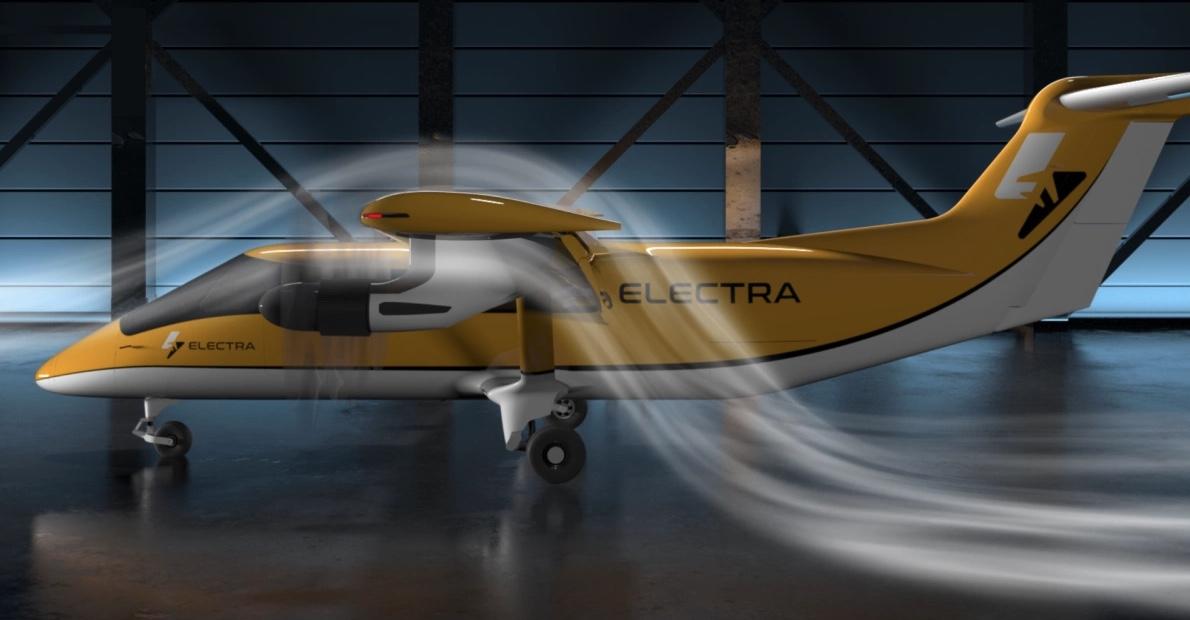
Electra Aero has achieved a significant milestone in its drive to redefine regional air mobility. The Virginia-based aerospace innovator announced this week that wind tunnel testing of a 20% scale model of its hybrid-electric EL9 aircraft has confirmed its blown wing design can generate the lift needed to take off and land in just 150 feet.
The tests, conducted in the Wright Brothers Wind Tunnel at the Massachusetts Institute of Technology (MIT), validated lift coefficients greater than 20—approximately seven times higher than conventional aircraft, which typically range between 2.5 and 3. This breakthrough paves the way for ultra-short takeoff and landing (uSTOL) operations in areas as compact as a soccer field, expanding access to regional aviation without the infrastructure constraints of traditional airports.
“This is a major milestone in demonstrating the EL9’s ability to take off and land in spaces never before possible for fixed-wing aircraft,” said Chris Courtin, Electra’s director of technology development. “Verification of the effectiveness of the optimised EL9 wing shows that the EL9 is both transformative and practical.”
The nine-passenger EL9 is being developed for both civilian and military applications. It is backed by funding from the U.S. Army, and supported by major aerospace players including Honeywell, Lockheed Martin, and Safran. Electra has also secured pre-order agreements with over 50 prospective operators, underscoring the strong market interest in the platform.
Speaking at EBACE 2025 on May 20, Marc Ausman, Electra’s vice president for sales and support, said that air blown over the wings at 80 to 90 knots enables approach speeds as low as 35 knots. He contrasted Electra’s incremental and tested approach to development with the “crazy timeframes” promised by many eVTOL developers, which he said have only served to confuse investors.
“To speed up the certification process and reduce program risk, we are breaking down the phases of development, starting with a subscale model and using the EL2 technology demonstrator under experimental certification,” Ausman explained. “This buys down risk and accelerates our learning as we move towards full-scale type certification.”
Electra expects to begin flight testing of the full-scale EL9 in 2027, with FAA Part 23 certification and first customer deliveries slated for 2029.
In parallel with its engineering progress, the company has bolstered its leadership team with the appointment of Max Ochoa as chief financial officer. A former aerospace engineer with GE Aerospace Engines, Ochoa most recently served as CFO of Satelles and was involved in its acquisition by Iridium Satellite Communications.
With momentum building, Electra appears well-positioned to bring a certified, practical hybrid-electric aircraft to market—one that could redefine where and how regional air travel happens.
SOURCE AND IMAGE: ELECTRA AERO