

A significant evolution in sport aviation rules is set to begin this October, when thousands of existing legacy aircraft—many of them certified under Part 23—will become flyable by sport pilots using only a driver’s licence in place of a medical certificate. This marks the first phase of the FAA’s wider overhaul of light-sport aircraft (LSA) regulations, which aims to separate pilot privileges from aircraft specifications and broaden access to general aviation.
From October 2025, sport pilots will be permitted to fly aircraft with a clean stall speed (VS1) of up to 59 knots—opening the door to popular general aviation types such as many Cessna 150/152, 170, 172 and even some 182 models, along with Piper PA–28 series aircraft. For pilots flying under sport privileges, the maximum stall speed remains the defining limit rather than aircraft weight.
Part 22 on the Horizon
The wider rule reform culminates on 24 July 2026, when a new aircraft category—part of a future FAR Part 22—replaces the original light-sport aircraft definition established in 2004. This new class will formally remove the 1,320 lb (1,430 lb for seaplanes) weight limit and instead adopt stall speed performance limits. Aircraft eligible for the light-sport category may have up to four seats (two for helicopters), retractable gear, constant-speed propellers, and even electric or turbine engines—dramatically expanding the types of aircraft eligible for special airworthiness certificates.
While these changes modernise manufacturing and certification pathways—reducing certification costs compared to Part 23—the FAA is careful to note that sport pilot privileges do not automatically extend to all light-sport category aircraft. To remain within sport pilot limits, an aircraft must still adhere to a clean stall speed (VS1) of 59 knots KCAS.
Why Stall Speed Matters
The FAA chose to base sport pilot eligibility on clean stall speed (VS1) rather than indicated airspeed (IAS), citing safety data and flight testing accuracy. This means aircraft such as the Mooney M20 and Beech Bonanza—which have VS1 in the 61–68 knot range—will remain outside sport pilot privileges. By contrast, pilots holding at least a Private Pilot certificate may ultimately operate aircraft certified under the new light-sport category, which can include VS0 stall speeds up to 61 knots.
Advisory Circular 90-89C provides methods for determining VS1 CAS where not explicitly published, since IAS may contain errors of up to 5 knots.
Industry Excitement and Aircraft Candidates
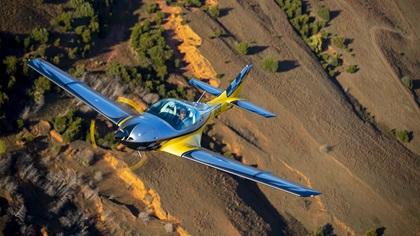
Manufacturers already operating in the experimental or European ultralight markets are eyeing the new U.S. opportunities in 2026. Likely contenders include the GoGetAir G750, Bristell B23M, the ScaleWings SW–51 Mustang replica, and the Italian Porto Risen with its distinctive V-tail. For flight schools and new pilots, popular trainers such as the Cessna 152 and Piper PA–28 are expected to become more available for rental under sport pilot rules.
A new generation of sport aviation
The regulatory redesign reflects the FAA’s desire to match pilot privileges to actual aircraft handling characteristics. As noted in the final rule, “training requirements would not sufficiently prepare sport pilot applicants to operate airplanes that have a stalling speed greater than 59 knots KCAS VS1.” This remains a key boundary for safety.
Helicopters and gyroplanes, which can already be flown by sport pilots under experimental certificates with the necessary endorsements, may receive special airworthiness certificates under the new light-sport category once industry standards are finalised.
In summary, this October marks the start of a new era where many legacy aircraft become accessible to sport pilots—while 2026 will usher in a broader, modernised framework distinguishing between aircraft design and pilot qualifications. It is a major step toward opening general aviation to more pilots and more innovation, with flexibility and safety balanced in equal measure.
IMAGE: The retractable-gear, Rotax-powered VL3 from JMB Aircraft is among a crop of European ultralights that appear likely to qualify under the new FAA light sport rules. Photo by Mike Fizer.
SOURCE: AOPA