
Scoot, the low-cost arm of Singapore Airlines, has partnered with OutSystems to overhaul its flight disruption management system, significantly improving operational efficiency and real-time communication across departments during irregular operations.
The airline has replaced its previous system of fragmented, text-based group chats—with more than 600 notifications manually issued each day—with a unified, AI-powered platform built on OutSystems’ low-code development technology. This shift is designed to streamline coordination among teams and accelerate decision-making when managing flight delays or service disruptions.
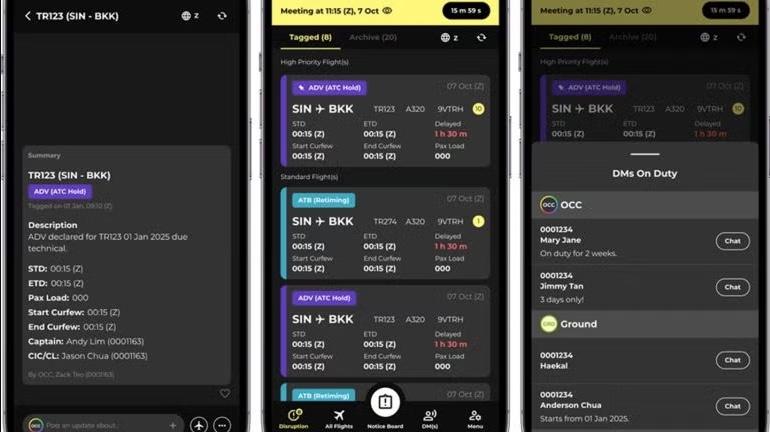
Scoot’s new Virtual Operations Command Centre (vOCC) application was developed in just two-and-a-half months—down from an estimated eight months—by leveraging OutSystems’ low-code tools. The digital platform consolidates internal communication channels and automates notifications to stakeholders, reducing the delays that previously hindered flight status updates and impacting customer satisfaction.
Leonard Tan, Regional Director for OutSystems (Greater China Region, Singapore, Malaysia & Brunei), highlighted the wider significance of the project: “The impact of low-code and AI today goes beyond operational optimisation and efficiency; these combined technologies are actively reshaping the way industries function at their core. Scoot’s breakthrough in developing its first disruption-handling mobile application, alongside the clear business results it achieved, exemplifies how AI-powered low-code is a true game-changer.”
Key features of Scoot’s new vOCC system include:
- Real-time linkage with Scoot’s Operations Command Centre
- Automated flight delay updates and disruption alerts
- Integration with commercial systems for passenger notifications via SMS and email
- Dashboards to monitor flight retiming and affected connecting passengers
Since implementing the OutSystems solution, Scoot has reported a 90% improvement in data visibility for all stakeholders and a 60% reduction in manual processing time. Teams can now access disruption metrics instantly, enabling more efficient, data-driven responses.
Looking forward, Scoot plans to expand the vOCC’s capabilities by incorporating AI-powered features using OutSystems Mentor. The goal is to move toward automated and personalised passenger communications in future disruption events.
Jaya Balaji MV, Vice President of Information Technology at Scoot, said: “As a digital-first airline, we believe modern technology is essential to enhancing customer satisfaction while maintaining cost efficiency. Digital innovation is key to unlocking these possibilities at Scoot, and our vOCC application reflects this vision.”
SOURCE AND IMAGE: PR NEWSWIRE