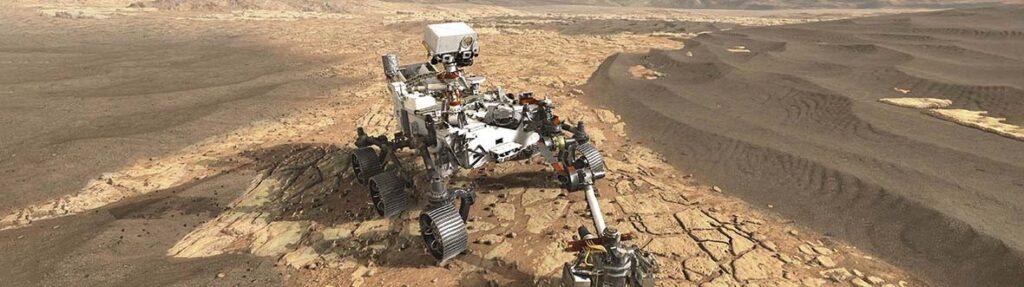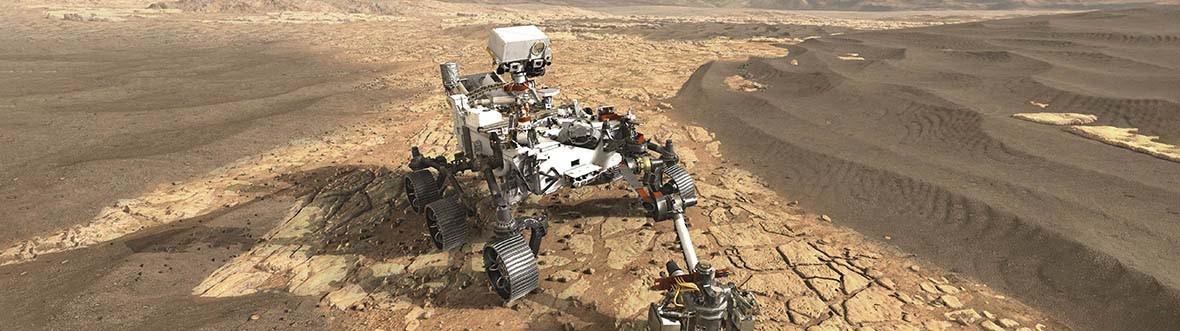
CANADA / MARS – September 2025 – Three Canadian scientists from the University of Alberta, University of Winnipeg, and Brock University have played a key role in new discoveries arising from NASA’s Perseverance Mars rover mission. The rover’s investigation of rocks in the Bright Angel formation—located in what is believed to be an ancient river channel that once fed Jezero Crater with freshwater—has yielded data pointing to a potential “biosignature.”
Analyses of minerals within the Bright Angel rocks suggest they may have formed through chemical reactions involving organic, carbon-rich matter. On Earth, similar mineral signatures are often associated with microbial life, though non-biological processes cannot yet be ruled out. Researchers emphasise that additional study of samples collected from the formation is needed to confirm whether life could have existed on the Red Planet.
Perseverance conducts its investigations using highly precise onboard instruments, targeting locations identified by mission scientists as most likely to reveal signs of past habitable conditions. The new findings bring researchers closer to understanding whether Mars once had environments capable of supporting life, reinforcing the mission’s broader objective of exploring the planet’s geological and potentially biological history.
The Bright Angel formation remains a prime focus for ongoing analyses, as scientists continue to unravel the clues hidden in Martian rocks that may reveal the story of life beyond Earth.
CAPTION: The area of Mars known as Bright Angel, as seen by the Perseverance rover. (Credit: NASA/JPL – Caltech)
SOURCE: CALTECH