
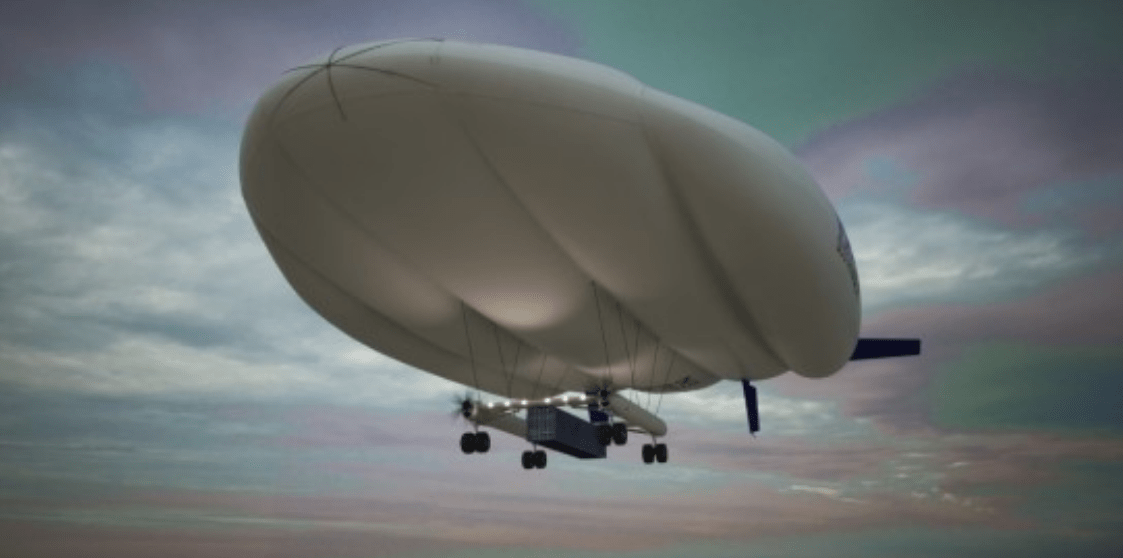
Michelin has joined forces with French aerospace company Voliris to develop a hydrogen-ready, runway-free cargo aircraft known as the Automated Aerial Shuttle for Container Transport (NATAC). Designed to operate as a hybrid between an airship and a cargo plane, the NATAC combines hydrogen lift with traditional aerodynamic lift to deliver zero-emission freight transport to remote or infrastructure-poor regions.
Michelin’s Contribution
Through its subsidiary Michelin Inflatable Solutions, the company will contribute its expertise in polymer composites and assembly to develop the aircraft’s inflatable wing envelope. The flexible wing is segmented into five lobes, with a total volume of 25,000 cubic metres. The material used must withstand internal pressure, aerodynamic forces, cargo stress, and remain impermeable to both hydrogen and helium.
Designed for practical deployment, the wing can be folded and shipped in ten standard 40-foot containers for on-site assembly, simplifying logistics and reducing infrastructure requirements.
NATAC Aircraft Features
The NATAC is designed for autonomous, unpiloted operation, supporting a hybrid system in which hydrogen serves as both fuel and lift source. This configuration allows for runway-free take-off and landing, making the aircraft suitable for regions with limited infrastructure.
The aircraft is intended to carry up to 30 tons of containerized cargo, providing a flexible solution for logistics in remote locations while reducing environmental impact.
Project Timeline
A 1:7 scale prototype of the NATAC has already completed successful flight tests. The partnership aims to manufacture a full-scale demonstrator wing by 2028, which will be used for ground testing and further development toward operational deployment.
The NATAC project represents a novel approach to cargo aviation, combining hydrogen propulsion, modular inflatable wings, and autonomous flight technology to expand the reach of zero-emission freight transport.
SOURCE AND IMAGE: VOLARIS