
Asset-backed, interest-free aviation finance is gaining momentum in emerging markets as airlines seek risk-sharing, shariah-compliant, and ESG-aligned alternatives to traditional debt. These models offer cost-effective fleet expansion, resilience, and ethical investment advantages.
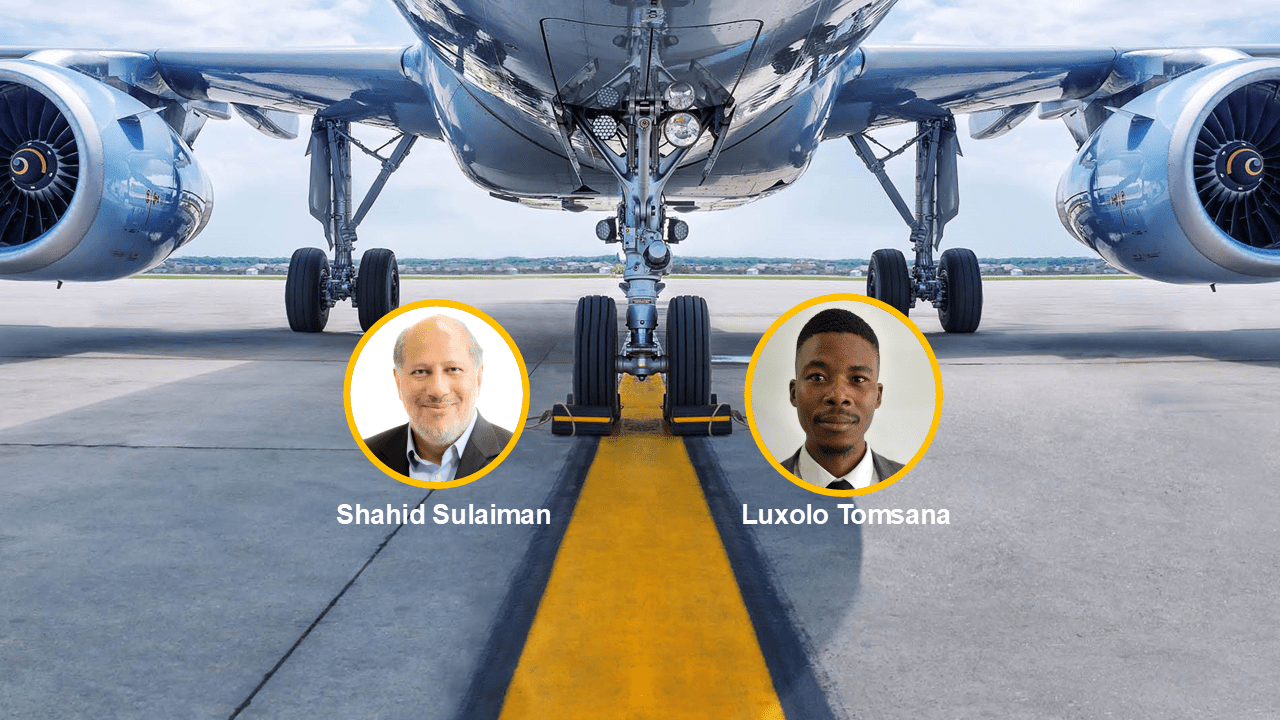
By Shahid Sulaiman & Luxolo Tomsana
10 November 2025 – As global credit conditions tighten and ESG mandates reshape investment priorities, the aviation sector is exploring alternatives to conventional debt financing. Among these, asset-backed, interest-free finance structures are emerging as a viable option, particularly for airlines in emerging markets that struggle to access traditional lending.
Unlike conventional finance, which relies on interest and places risk largely on the borrower, these structures operate on a principle of risk-sharing and are tied to tangible assets. Instruments such as leasing arrangements, cost-plus financing, and asset-backed bonds allow airlines to expand fleets or acquire aircraft without incurring traditional interest-based debt. In a leasing arrangement, for example, a financier owns the aircraft and leases it to an airline, assuming responsibilities such as maintenance and insurance. Ownership may transfer at the end of the lease term, creating a flexible financing pathway aligned with both operational needs and financial prudence. These alternative funding mechanisms are often structured in accordance with shariah law principles, which make them attractive to market participants that require compliance with shariah law.
Emerging markets in Africa, particularly South Africa and Nigeria, illustrate the potential of these alternative financing models. Post-pandemic growth in air travel has created demand for new aircraft, with Airbus estimating a need for 1,180 new aircraft in Africa by 2042. Asset-backed, risk-sharing structures offer cost-effective access to capital for fleet expansion without the pressure of conventional interest payments. A notable example is Saudia Airlines’ 2015 acquisition of 50 Airbus aircraft through a leasing arrangement structured to align with the airline’s financial outlook, valued at approximately USD 8 billion.
Government frameworks and institutional support play a critical role in fostering adoption. Countries such as Malaysia and Indonesia have enacted legislation, dual banking systems, and tax provisions that level the playing field between conventional and alternative financing models. Asset-backed bonds issued by governments further deepen capital markets while supporting infrastructure development.
These financing structures also align closely with ESG priorities, increasingly important in the aviation sector. Ethical, asset-based finance allows airlines to tie lease or profit terms to sustainability targets such as carbon emission reductions, adoption of sustainable aviation fuels, or improved social governance metrics. By linking financial outcomes to ESG performance, airlines are incentivised to achieve measurable environmental and social impact.
Post-pandemic recovery has highlighted the resilience of these structures. Airlines leveraging cost-plus and leaseback arrangements were able to unlock liquidity, manage debt, and invest in fleet modernisation more effectively than some of their conventionally financed counterparts. The emphasis on tangible assets and risk-sharing mitigated financial strain, allowing carriers to navigate a volatile market while maintaining operational continuity.
While challenges remain — including regulatory harmonisation and broader market familiarity — asset-backed, interest-free finance is establishing itself as a credible alternative in aviation. Its combination of financial stability, ethical investment principles, and ESG alignment positions it as a strategic tool for airlines navigating a shifting global landscape.
SOURCE NAD IMAGE: DENTONS