
Rising fuel costs, noise constraints and emissions pressure reshape regional aviation
For regional operators, the transition to electric aviation is moving beyond long-term planning into immediate operational consideration, particularly in niche segments such as seaplane operations where route flexibility and environmental constraints intersect.
COST PRESSURES ACCELERATE TRANSITION
According to Ole Christiansen, CEO of Nordic Seaplanes, the shift toward electric propulsion is increasingly being driven by economics rather than purely environmental ambition.
Fuel price volatility has become a critical factor. Christiansen notes that fuel costs have risen to more than double previous levels within a short period, significantly impacting operators reliant on short, high-frequency routes.
Electric propulsion introduces a fundamentally different cost structure, with potential reductions in operating costs over time, mirroring the transition seen in ground transport.
NOISE AND EMISSIONS REDEFINE ACCESS
Beyond cost, regulatory and community pressures are emerging as equally decisive factors. Emissions constraints and noise limitations are directly influencing where and how aircraft can operate.
Lower-noise electric aircraft could allow access to routes and destinations that are currently restricted, particularly in environmentally sensitive or urban-adjacent regions. This creates a dual advantage: operational expansion without corresponding infrastructure development.
For seaplane operators, this is especially significant, as their business models depend on flexible access to waterways and city-adjacent terminals.
OPERATIONAL MODEL UNDER REVIEW
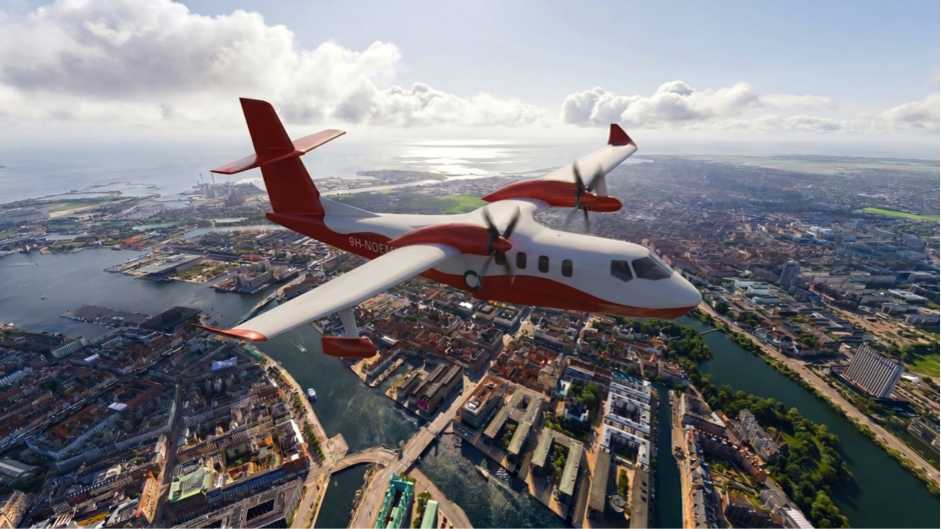
The discussion took place during a visit to Noemi Aerospace, where the focus is on developing electric amphibious aircraft designed for regional operations.
The aim is not only to achieve technical feasibility, but to deliver aircraft capable of integrating into existing operational frameworks without requiring extensive infrastructure changes.
This approach reflects a broader industry shift, where new propulsion technologies are increasingly evaluated against real-world operational constraints rather than purely performance metrics.
A DECADE-DEFINING INFLECTION POINT
For operators such as Nordic Seaplanes, the transition is framed in practical terms rather than long-term aspiration. The combination of rising fuel costs, tightening environmental regulations, and evolving community expectations is accelerating decision timelines.
Christiansen’s assessment is direct: without adopting new propulsion models, the long-term viability of certain regional operations could be at risk.
INFRASTRUCTURE LIGHT, IMPACT HIGH
Electric seaplanes present a distinct advantage within the broader aviation transition. Unlike conventional airport-dependent operations, amphibious aircraft can leverage existing water-based infrastructure, reducing the need for large-scale capital investment.
This positions the segment as a potential early adopter of electric aviation, particularly in regions where infrastructure constraints limit the scalability of traditional aviation models.
SOURCE: Nordic Seaplanes / Noemi Aerospace