
Electra has unveiled a turbo-electric commercial aircraft concept for NASA’s AACES 2050 programme, exploring advanced aerodynamics and electrification technologies for future 100-plus passenger airliners.
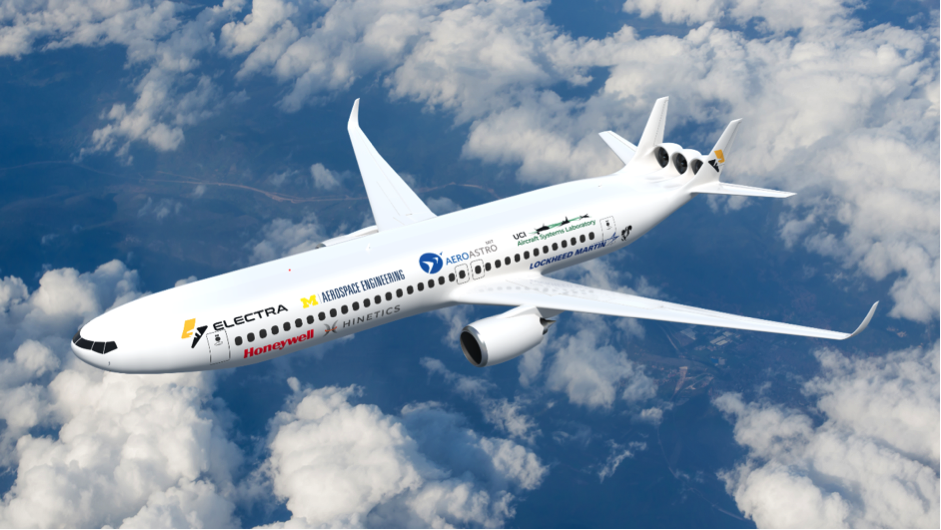
MANASSAS, VIRGINIA – Electra has unveiled a new conceptual aircraft design for next-generation commercial airliners as part of NASA’s Advanced Aircraft Concepts for Environmental Sustainability (AACES) 2050 programme. The study examines how electrification, advanced aerodynamics and integrated airframe-propulsion design could improve the efficiency of future aircraft carrying more than 100 passengers.
Concept combines electrification and advanced aerodynamics
The proposed aircraft incorporates a wide “double-bubble” lifting fuselage, allowing the aircraft body to contribute additional lift during flight. The design also features two underwing turbofan engines that generate both thrust and electrical power for electric tail-mounted fans. These fans utilise boundary layer ingestion technology, re-energising slower-moving airflow over the fuselage to improve overall aerodynamic performance.
According to Electra’s analysis, the configuration could provide up to a 17% efficiency improvement beyond gains expected from future advances in structures, propulsion systems and aerodynamics by 2050.
Designed around existing airline operations
Electra stated that the concept has been developed with compatibility in mind, allowing operation within existing airport infrastructure and gate configurations. The aircraft would be capable of operating on conventional jet fuel or Sustainable Aviation Fuel (SAF) and would not require airport charging infrastructure or alternative fuel systems.
The configuration also introduces a twin-aisle cabin arrangement within a narrowbody aircraft class, with the aim of improving passenger comfort and facilitating more efficient boarding and disembarkation processes.
Building on previous NASA research
The research was led by Dr Alejandra Uranga, Electra’s Chief Engineer for Research and Future Concepts. The work builds upon earlier NASA-sponsored studies conducted at the Massachusetts Institute of Technology (MIT) that explored double-bubble aircraft architectures, including the D8 concept. Electra’s study revisits these ideas using advances in electrification and distributed propulsion technologies.
The company produced 11 technical papers as part of the project and adopted NASA’s open-source Aviary multidisciplinary design and optimisation tool. Electra also developed an electrified aircraft design suite intended for public use to support wider aviation research activities.
Industry and academic collaboration
The AACES 2050 project involved collaboration with a range of industry and academic organisations, including American Airlines, Honeywell Aerospace, Lockheed Martin Skunk Works, Hinetics, MIT, the University of Michigan and the University of California, Irvine.
NASA’s AACES 2050 programme is focused on examining aircraft concepts and technologies that could influence commercial aviation development during the 2040s, 2050s and beyond. Electra said its study contributes an electrification pathway alongside other research efforts investigating advanced propulsion systems, alternative fuels and future aircraft architectures.
SOURCE AND IMAGE: ELECTRA