
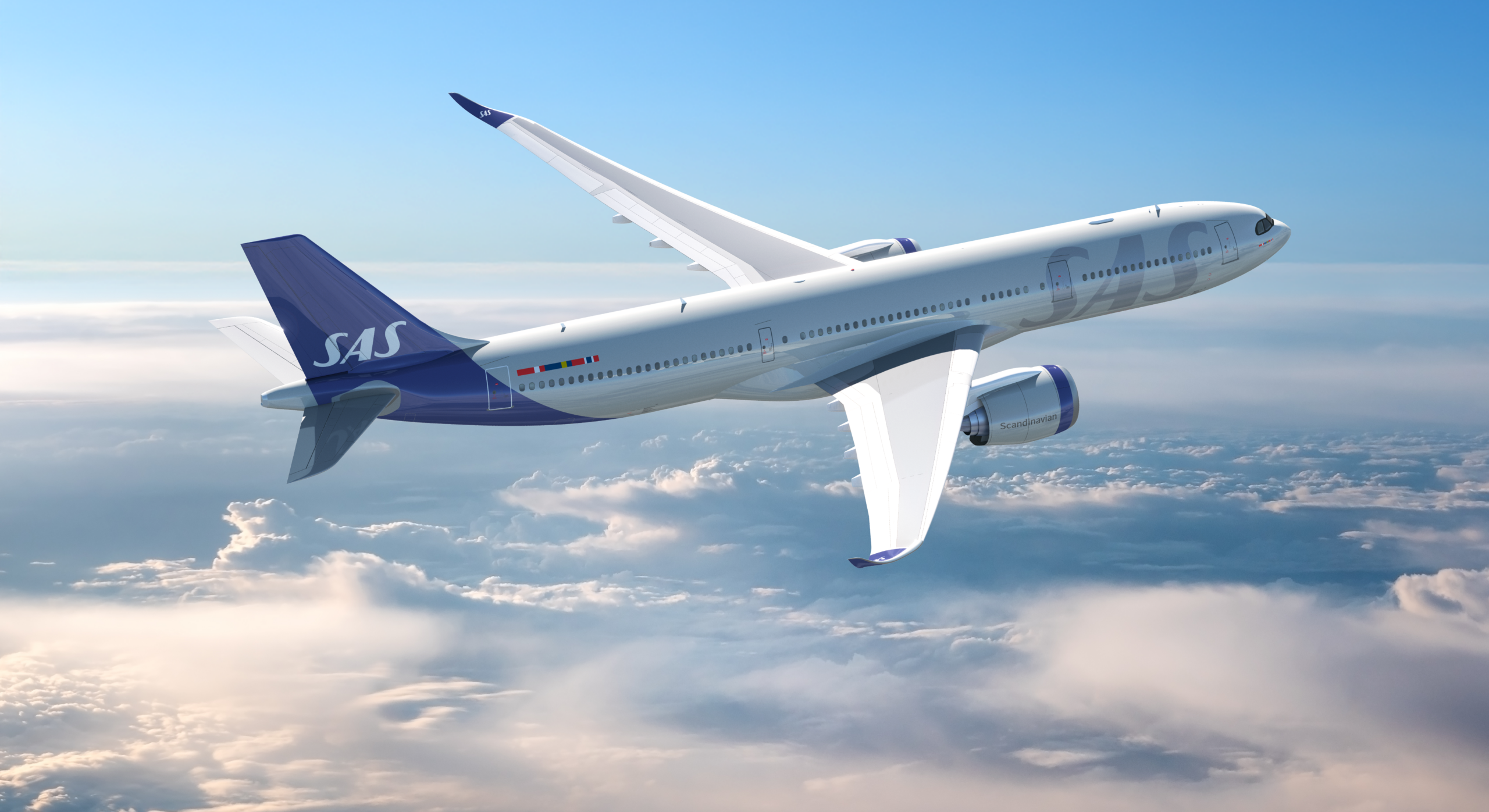
Scandinavian carrier SAS has signed a firm order for A330neo aircraft with Airbus in a ceremony in Copenhagen, with the jets to be powered exclusively by Rolls-Royce Trent 7000 engines, marking the airline’s first commitment to the widebody type as it expands its international network.
FIRST A330NEO ORDER SIGNED IN COPENHAGEN
SAS has placed a firm order for A330-900 aircraft with Airbus as part of its ongoing fleet renewal strategy. The agreement was signed in Copenhagen by Anko van der Werff, President and Chief Executive of SAS, and Benoît de Saint-Exupéry, Executive Vice-President Sales for Airbus Commercial Aircraft. Rolls-Royce separately confirmed that the transaction includes purchase rights for additional aircraft, offering SAS flexibility to accommodate future growth opportunities.
Van der Werff said the order reflected the aircraft’s economics and environmental credentials and would play a key role in the airline’s long-term fleet strategy. He said the A330-900 would allow SAS to deliver an improved customer experience, expand its network, and offer greater flexibility and convenience for passengers, and that the airline looked forward to continuing its partnership with Airbus. Saint-Exupéry described the A330-900 as the benchmark for efficiency and versatility in its category, saying the order would give SAS unbeatable seat-mile economics and operational synergies with its existing Airbus fleet.
ENGINE AND PERFORMANCE CREDENTIALS
The A330neo is powered exclusively by Rolls-Royce Trent 7000 engines. Rob Watson, President of Civil Aerospace at Rolls-Royce, said the order reflected the strength of the company’s technology and its partnership with SAS, which this year marks its 80th anniversary. He said the Trent 7000 delivered outstanding efficiency and sustainability benefits and that SAS could be confident in the reliability and support available for the fleet.
The A330neo and Trent 7000 combination delivers a 14% improvement in fuel burn per seat compared to the previous generation aircraft it replaces. Airbus states that the A330neo reduces fuel burn, CO2 emissions and operating cost by 25% compared to previous generation competitor aircraft, and that the type is designed to fly up to 8,100 nautical miles (15,000 km) non-stop. The Trent 7000 has accumulated more than five million flying hours since entering service and is based on Trent XWB technology.
SUSTAINABILITY AND SAF COMPATIBILITY
Both the aircraft and engine are configured for Sustainable Aviation Fuel (SAF) use. The Trent 7000 is currently certified to operate on a 50% SAF blend and has been proven compatible with up to 100% SAF for future operations. As with all Airbus aircraft, the A330 family is already cleared for up to 50% SAF, with Airbus targeting 100% SAF capability by 2030.
The A330neo’s Airspace cabin offers passengers and crews the latest in-flight products for a comfortable flying experience. At the end of May 2026, the A330 family had received more than 1,950 orders from 133 customers worldwide. The new aircraft will support SAS’s ongoing international network expansion, allowing the carrier to increase capacity on existing routes and introduce new services.
Source and Images: Rolls-Royce plc, AIRBUS