
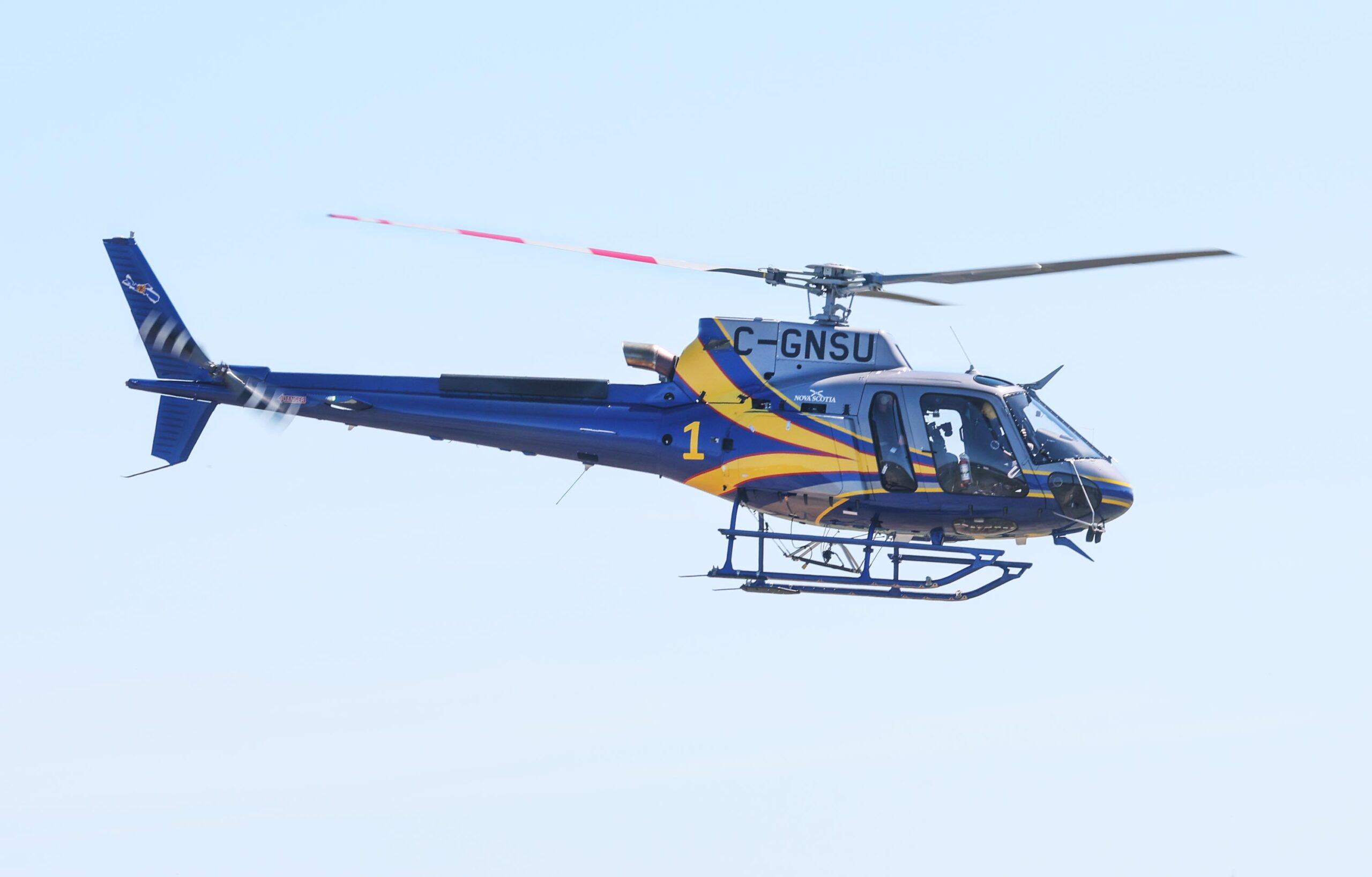
The Government of Nova Scotia has placed four new Airbus H125 helicopters into service for wildfire suppression, search and rescue, emergency transport and aerial surveillance, with each aircraft named through a public competition that drew nearly 10,000 suggestions and concluded with the four ‘Spirit of the’ names going to a province-wide vote.
SPIRIT OF THE OSPREY, EAGLE, HAWK AND FALCON ENTER SERVICE AT SHUBENACADIE
The Government of Nova Scotia has commissioned a fleet of four new Airbus H125 helicopters now in active service, funded through a federal-provincial agreement on wildfire equipment and training to which each level of government contributed $12.6 million, for a combined investment of $25.2 million. The helicopters are based at Shubenacadie and replace the previous fleet, which was also composed of Airbus H125 aircraft. The H125 is a versatile single-engine helicopter certified for a wide range of mission profiles and has been selected for its proven performance in demanding Canadian environments.
The naming of the four aircraft was conducted through a public competition that attracted nearly 10,000 name suggestions from Nova Scotians. Four groups of thematically related names were brought to a public vote; the winning names, each prefixed with ‘Spirit of the’ in keeping with aviation and maritime naming tradition, are: Spirit of the Osprey, Spirit of the Eagle, Spirit of the Hawk and Spirit of the Falcon. Tory Rushton, Nova Scotia’s Minister of Natural Resources, said the aircraft did serious work keeping Nova Scotians safe especially during emergencies, and that the final names reflected the province while respecting the serious nature of the work the helicopters performed.
OPERATIONAL ROLES AND TECHNICAL CAPABILITIES
The four H125s are tasked across a broad mission spectrum: wildfire suppression, search and rescue, scientific research support, emergency personnel and equipment transport, and aerial surveillance in support of other government departments. In the wildfire role, the H125’s ability to scoop and dump water at a rate faster than fixed-wing aerial tankers — and to draw from smaller water bodies such as Nova Scotia’s numerous lakes and ponds — makes it particularly well suited to the province’s geography and fire environment. For search and rescue, the helicopter’s versatility and range enable it to reach difficult terrain across Nova Scotia’s varied landscape.
Dwayne Charette, President of Airbus Helicopters Canada, said completing the fleet renewal gave Nova Scotia a modern, capable and versatile fleet ready to support critical work carried out by the Department of Natural Resources, and that the H125 had proven itself in demanding environments across Canada. He said Airbus was grateful for Nova Scotia’s continued confidence in the aircraft and committed to keeping crews equipped and ready to respond when communities and natural resources were at risk. Sherry Veinot, President of the Nova Scotia Ground Search and Rescue Association, said the new fleet ensured that when rescue calls were received, the province was more prepared than ever to bring people home safely.
Source and Images: Government of Nova Scotia / Airbus Helicopters Canada