

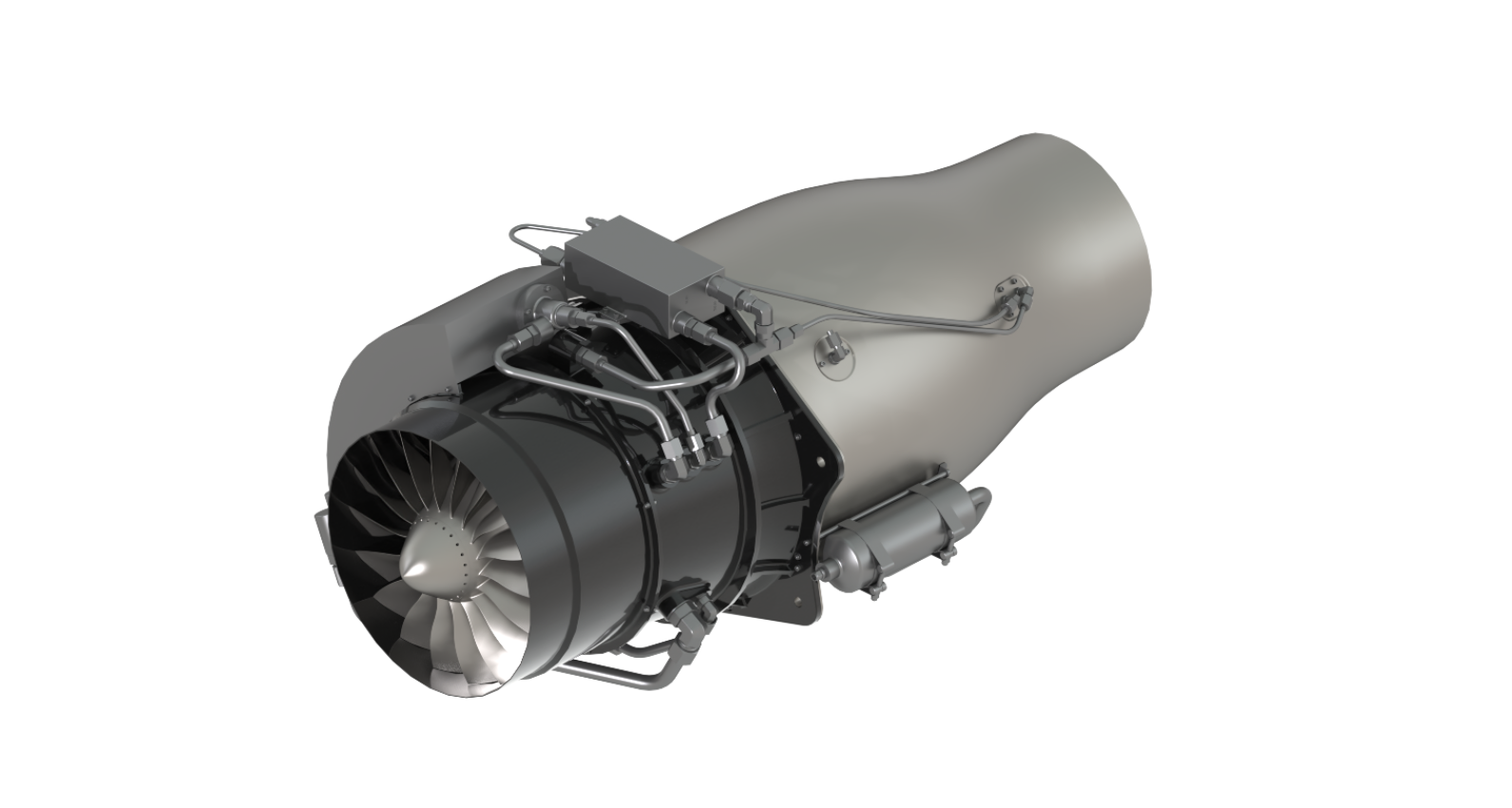
GE Aerospace and Kratos have announced that their GEK800 engine has received the United States military type designation F143-ZZ-100 and won an Engineering, Manufacturing and Development contract with the US Air Force as a second-source propulsion system for the Joint Air-to-Surface Standoff Missile.
A DESIGNATION AND A DEVELOPMENT CONTRACT TOGETHER
GE Aerospace and Kratos Defense & Security Solutions have announced that the GEK800 engine has received the United States Military Engine Type Designation F143-ZZ-100 and has been awarded an Engineering, Manufacturing and Development contract with the United States Air Force as a second-source propulsion system for the Joint Air-to-Surface Standoff Missile. The two companies describe the designation and contract as marking advancement of a programme designed to provide small, low-cost, high-performance engines for cruise missiles, collaborative combat-type aircraft and other uncrewed aerial vehicles.
Both elements of the announcement matter, and they matter differently. A military type designation is the formal identifier assigned to an engine within the United States tri-service designation system; receiving one moves a company-designated product into the official inventory nomenclature and is a precondition for it being specified in programme documentation. The EMD contract is the funded development phase in which a design is matured to a producible standard. Together they move the GEK800 from a jointly funded technology effort into a programme of record.
WHAT SECOND-SOURCING IS FOR
The award is specifically as a second-source propulsion system for JASSM. Second-sourcing is a deliberate procurement strategy rather than a competitive loss for the incumbent: it establishes an additional qualified supplier for a component on which a programme depends, so that production rate is not limited by a single production line and so that a disruption at one supplier does not halt deliveries. For a long-range strike missile being procured in quantity, propulsion is precisely the component where a single source represents concentrated risk.
Eric DeMarco, President and Chief Executive of Kratos, framed the award in industrial base terms, saying the company had been working with GE Aerospace and the United States Air Force to support the Department of War in reindustrialising United States manufacturing capacity and capability in the area of low-cost, rapidly manufacturable jet engines produced in large quantities for drones, cruise missiles and other systems. He said the department was providing industry with clear demand signals including multi-year contractual framework agreements for missile systems, and that both companies had responded with significant investments alongside their government partners.
THREE YEARS FROM PARTNERSHIP TO DESIGNATION
The engine itself is an 800-pound thrust turbofan designed to power long-range missiles and other uncrewed applications. Kratos and GE Aerospace began working together in 2023, combining internal investment with support and funding from the Air Force Research Laboratory, to complete a Technology Maturation and Risk Reduction phase including engine testing. The joint team has completed more than 50 engine starts in ground testing at Kratos and GE Aerospace facilities, and in 2025 completed altitude testing at Purdue University’s Maurice J. Zucrow Laboratories.
Altitude testing is the more demanding of those two milestones. An engine that runs correctly at sea level on a test stand has not been shown to start, accelerate or operate stably at the reduced pressures and temperatures of its operating altitude, and for a missile engine that must light and reach thrust immediately after release from an aircraft, altitude relight behaviour is a defining characteristic rather than a refinement.
Amy Gowder, President and Chief Executive of GE Aerospace Defense & Systems, said the designation and EMD award were a testament to the performance and capability of the GEK800 engine and to the strength of the partnership with Kratos, reflecting years of disciplined engineering to deliver propulsion systems meeting the evolving mission-critical requirements of military customers.
Source and Image: GE Aerospace / Kratos Defense & Security Solutions