
A Falcon 9 carried four astronauts to orbit for what NASA says will be the fastest launch-to-docking in the station’s history, ahead of a science programme spanning stem-cell tissue research to a new plant growth system.
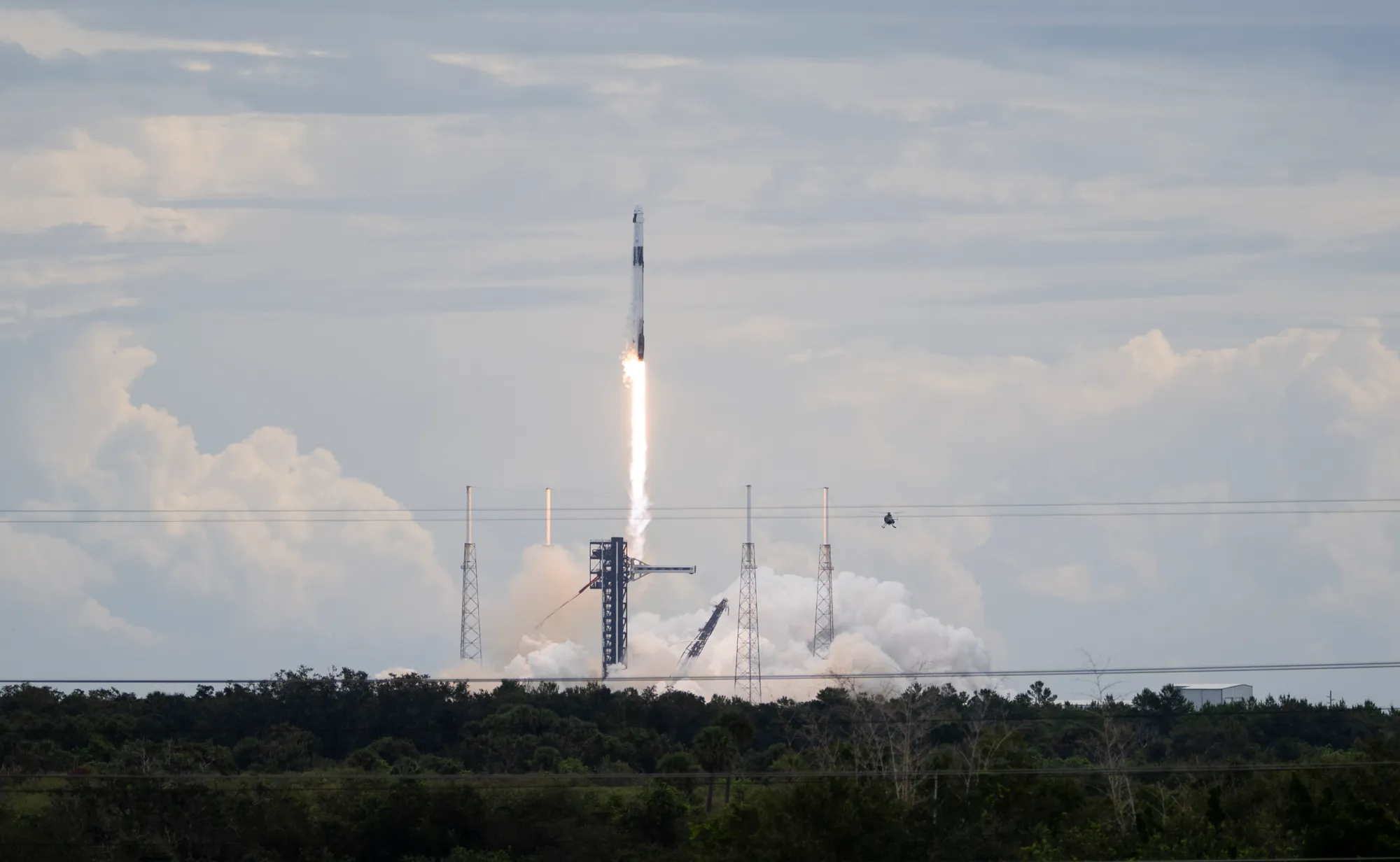
Four crew members of NASA’s SpaceX Crew-13 mission launched at 11:10 a.m. EDT on Thursday from Space Launch Complex 40 at Cape Canaveral Space Force Station for a science expedition aboard the International Space Station. A SpaceX Falcon 9 rocket propelled a Dragon spacecraft into orbit carrying NASA astronauts Jessica Watkins and Luke Delaney, CSA astronaut Joshua Kutryk, and Roscosmos cosmonaut Sergey Teteryatnikov. The spacecraft was due to dock autonomously to the forward port of the station’s Harmony module at approximately 7 p.m., which NASA said would make it the fastest launch-to-docking by a US spacecraft in the station’s history.
“Crew-13 is another demonstration of America’s unmatched capability in human spaceflight and the strength of our commercial partnerships,” said NASA Administrator Jared Isaacman. “Jessica, Luke, Joshua, and Sergey will carry forward important work aboard the International Space Station while helping us build the experience and capabilities needed for ambitious missions to the Moon and beyond.” “Our steady cadence of commercial crew launches demonstrates the essential role the International Space Station plays in sustaining our presence in Earth’s orbit and sharpening the tools we’ll take forward to the Moon and Mars,” said Dr Lori Glaze, associate administrator of NASA’s Human Spaceflight Mission Directorate.
RESEARCH PLANNED ABOARD THE STATION
During its mission, Crew-13 will use microgravity to produce human stem cell-derived tissues for personalised medicine, disease modelling and pharmaceutical testing for conditions such as heart disease and Parkinson’s. The crew will also explore crop production through a new, largely autonomous plant growth system, continue human-health studies examining blood-flow abnormalities in microgravity, and test a new inflight diagnostic device to monitor astronaut health.
Watkins, Delaney, Kutryk and Teteryatnikov will join the Expedition 75 crew already aboard the station. After a brief handover, NASA’s SpaceX Crew-12 mission will return to Earth. Crew-13 is part of NASA’s Low Earth Orbit Program, which partners with private companies to provide access to space and support research ahead of future missions beyond low Earth orbit.
Source and Images: NASA