
Chapman Freeborn explains why the fastest route for a time-critical aircraft part is not always a dedicated charter, drawing on a case in which a thrust reverser was moved from California to London in six days.
For airlines, a missing aircraft component can have consequences far beyond the maintenance hangar, and for the freight forwarders and logistics providers supporting them, the pressure to find a solution is just as immediate. When an aircraft cannot return to service as planned, the disruption can affect future flight schedules, reduce available capacity and create additional operational costs. Even during scheduled maintenance, an unexpected finding can put pressure on the timeline for returning an aircraft to operation.
In time-critical aerospace logistics, the challenge is not simply to move a replacement part as quickly as possible, but to identify the transport option most likely to meet the operational deadline. Depending on the cargo, size, weight, route and available capacity, that could mean Next Flight Out, on-board courier, part-charter or a dedicated aircraft.
FROM SOURCING THE PART TO CHOOSING THE RIGHT TRANSPORT
Finding a replacement component can be a challenge in itself. Airlines may draw on their own inventory, access shared parts pools, or arrange a loan or purchase, depending on availability. For high-value components such as thrust reversers, these decisions involve additional considerations, including inventory limitations and the cost of securing replacement material. Once a suitable part has been sourced, the next challenge is ensuring it reaches the maintenance facility before the delay affects the aircraft’s return to service.
Dedicated charters provide greater control over routing and departure times, but securing a suitable aircraft can take time, particularly when capacity is limited or the cargo requires specialised handling. For smaller urgent parts, on-board courier and Next Flight Out services can provide fast transport options, although both are subject to cargo size, weight and available capacity. Larger shipments may require dedicated freighter capacity, while part-charter allows customers to secure guaranteed space on an existing freighter service without chartering an entire aircraft.
The comparison also needs to account for the entire journey rather than the flight alone. Aircraft positioning, airport handling restrictions and onward ground transport can all affect delivery times, meaning an indirect route may sometimes prove faster than a dedicated charter.
“The urgency of an aerospace shipment does not automatically mean that the customer needs to charter an entire aircraft,” said Ben Cupidi, Aerospace Manager, Europe, at Chapman Freeborn. “The priority is to understand the cargo, deadline and operational constraints, and then identify the solution that can deliver the part in time.”
WHEN THE MOST DIRECT ROUTE IS NOT THE FASTEST
While urgent aerospace logistics is often associated with unexpected aircraft-on-ground events, delays during scheduled maintenance can also affect an airline’s operations. If an aircraft is not returned to service on time, the airline may need to revise future flight schedules or source replacement capacity.
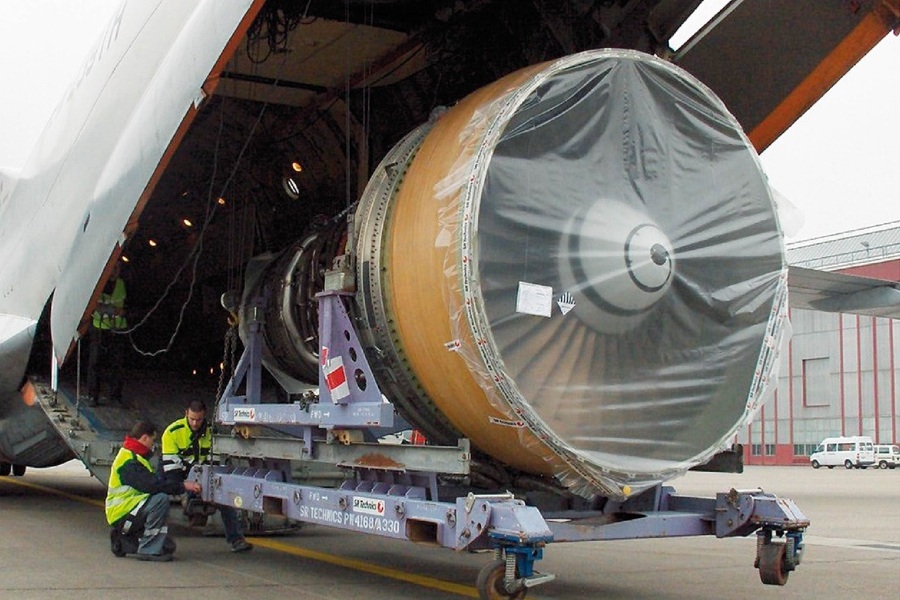
This was the challenge facing a European airline when a replacement thrust reverser needed to be transported from California to London within six days, following a fault discovered during scheduled maintenance. The component required main-deck capacity on a Boeing 777 or Boeing 747 freighter, but limited fourth-quarter availability and a lack of suitable handling equipment at the destination airport made a direct charter impractical.
Instead, Chapman Freeborn sourced and coordinated part-charter capacity on a scheduled freighter service into continental Europe and arranged onward road transport to the maintenance facility in London. The component arrived within the required six-day timeframe.
“Looking only for the most direct flight can narrow the available options,” Cupidi explained. “In this case, combining available main-deck capacity into Europe with road transport to the final destination created a faster and more workable solution than waiting for an aircraft that could operate the entire movement directly.”
BEYOND THE FASTEST AVAILABLE AIRCRAFT
“The dimensions of the cargo are usually the first filter, but they are not the only consideration,” Cupidi said. “The destination, deadline, available capacity and onward transport can completely change which solution is fastest. Customers benefit from comparing the full set of options rather than defaulting to the largest aircraft.”
For airlines and the supply chain partners supporting them, the value of time-critical aerospace logistics extends beyond the delivery of an individual component. By assessing available transport options against maintenance deadlines and operational constraints, logistics providers can help reduce the risk of prolonged disruption and support the timely return of aircraft to service.
Chapman Freeborn Europe launched its dedicated aerospace vertical in June 2026, bringing together full charter, part-charter, Next Flight Out and on-board courier capabilities with a 24/7/365 AOG desk. The service is built around assessing each shipment’s operational challenges, anticipating potential obstacles and exploring alternative solutions, recognising that the most effective route is not always the most obvious one.
Chapman Freeborn has more than 50 years of experience and provides private air passenger and cargo charter services for corporations, governments, NGOs, relief agencies and high net-worth individuals. The company is part of Avia Solutions Group, which it describes as the world’s largest ACMI (Aircraft, Crew, Maintenance and Insurance) provider, operating a fleet of 136 aircraft and parent to more than 250 subsidiaries, supported by 11,000 aviation professionals across six continents.
Note: The fleet, subsidiary and staffing figures in the closing company description are Avia Solutions Group’s own standard boilerplate; this group-wide boilerplate has previously carried inconsistent figures across different subsidiaries’ releases, so these numbers are reproduced as given rather than independently verified.
Source and Images: Chapman Freeborn