
Aeromexico intends to fit SURF-A across its entire Boeing 737 NG and 737 MAX fleet, making it an early adopter of a cockpit alerting system that warns crews when another aircraft is on, entering or crossing the runway they are using. Honeywell expects certification on the 757, 737 NG and 737 MAX by the end of 2026.
THE LAST LAYER, AND THE ONE CLOSEST TO THE AIRCRAFT
Aeromexico announced at the Farnborough International Airshow in July that it intends to adopt Honeywell Aerospace’s SURF-A across its entire Boeing 737 NG and 737 MAX fleet of more than 100 aircraft. The commitment makes the Mexican flag carrier an early adopter of a technology aimed at one of the more stubborn categories of aviation risk: conflicts on and around the runway during taxi, take-off and landing.
Honeywell frames runway safety as a layered system, in the manner of the Swiss cheese model long used in aviation safety analysis – multiple imperfect defences arranged in series, each with gaps, on the assumption that an accident requires the gaps to line up. The layers include pilot procedures and training, airport signage and lighting, ground surveillance systems, air traffic control coordination and, increasingly, cockpit alerting. Priya Poyil, Traffic and Surveillance Product Director at Honeywell Aerospace, identifies where the last of those sits in the sequence. Pilots, she says, are the last line of defence against runway incidents and accidents because they command the aircraft and can take immediate action to avoid a conflict, and cockpit alerting technologies provide the right information to the right people at the right time.
The distinction matters because most of the other layers are indirect. Signage informs, air traffic control instructs, ground surveillance alerts a controller who must then transmit. Each involves a step between detection and the aircraft actually changing what it is doing. A cockpit alert removes those steps, which is its entire value in a situation measured in seconds.
WHAT THE SYSTEM DOES
SURF-A alerts flight crews to potential runway conflicts during taxi, take-off and landing, detecting when another aircraft is on, approaching or crossing an active runway and issuing visual and aural warnings so that crews can take evasive action. A further version, SURF-IA (indications and alerts) adds a cockpit display showing traffic and potential conflict areas directly on an airport surface map.
The system draws on GPS position, automatic dependent surveillance–broadcast traffic data and detailed airport maps, continuously comparing the aircraft’s own position, speed and direction against the location and movement of other aircraft nearby. Thea Feyereisen, a Distinguished Technical Fellow at Honeywell, describes it as functioning like an extra set of eyes while an aircraft is operating on or near a runway.
The reliance on ADS-B is worth noting, because it defines both the capability and its boundary. ADS-B is a cooperative surveillance technology: an aircraft broadcasts its own position, and other aircraft receive it. That makes the system independent of ground infrastructure and available at any airport, which is what allows a retrofit programme to be fleet-wide rather than route-specific. It also means the system sees what broadcasts. Vehicles and aircraft not transmitting ADS-B remain outside its picture, which is one reason cockpit alerting is presented as a layer rather than a solution.
TESTING BY FLYING TWO AIRCRAFT AT EACH OTHER
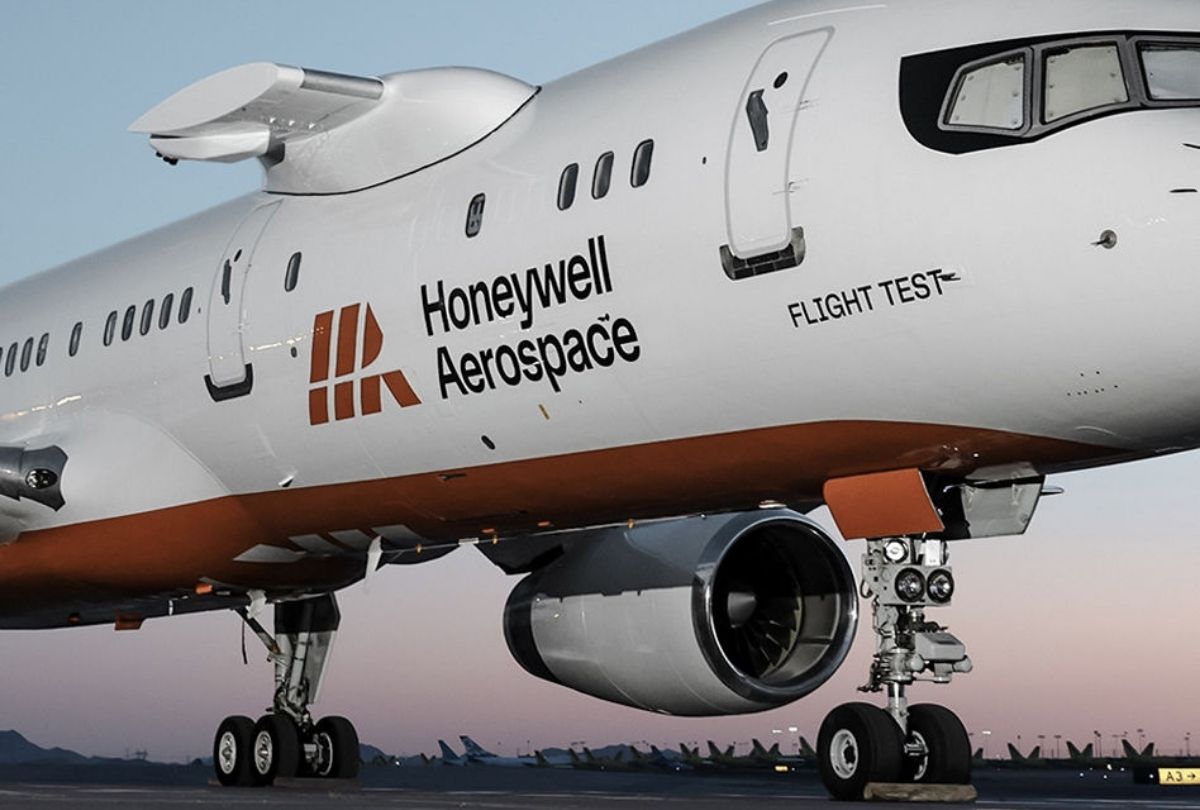
Honeywell expects SURF-A certification on the Boeing 757 and the Boeing 737 NG and MAX by the end of 2026, and is using its own 757 flying testbed for flight tests and demonstrations. The method is more direct than the phrase suggests. Kirk Vining, a Senior Test Pilot at Honeywell Aerospace, says that with appropriate safety margins in place the company sets its 757 on a collision course with another Honeywell test aircraft during taxi, take-off and landing, allowing the system to be tested across a range of challenging scenarios.
Deliberately converging two aircraft to validate a collision alerting system is the only way to establish that it alerts when it should, and equally important, that it does not alert when it should not. A system that warns too readily is disabled by its users, formally or in practice, which is a failure mode collision avoidance technology has encountered before. Vining says the alerts are clear and urgent in collision-risk situations, and that demonstration feedback has been positive and useful to the development team.
A LINEAGE RUNNING BACK TO 1996
SURF-A and SURF-IA derive from Honeywell’s work on the Enhanced Ground Proximity Warning System introduced in 1996, applying the same predictive, pilot-focused logic to the airport surface rather than to terrain. Feyereisen attributes the concept to Don Bateman, the Honeywell engineer whose work on terrain awareness is among the more consequential contributions to civil aviation safety, saying he envisaged using the same predictive principles that transformed terrain awareness to help pilots identify and avoid hazards on the runway.
The intervening steps are visible in the product line. The Runway Awareness and Advisory System, introduced in 2004 and hosted within the EGPWS platform, uses GPS and a high-precision runway database to give aural advisories confirming runway position, announcements such as approaching a given runway, being on it, or having a thousand feet remaining, and a warning if an aircraft begins accelerating on a taxiway rather than a runway. Five years later RAAS evolved into the SmartX offering, comprising SmartRunway and SmartLanding. SmartRunway adds visual messaging and enhanced aural advisories on approach; SmartLanding addresses runway excursions by alerting crews to unstable approach conditions including excessive speed or altitude, insufficient runway remaining and long landings, and provides protection against mis-set altimeters. Airlines including Emirates, Alaska Airlines, Ryanair and Southwest have adopted elements of the SmartX portfolio.
WHY THE CATEGORY REMAINS A PRIORITY
Runway incursions (where an aircraft, vehicle or person is incorrectly present on an active runway) and runway excursions, where an aircraft unintentionally leaves the runway surface during take-off or landing, rank among the most frequent causes of serious aviation accidents according to ICAO, notwithstanding that commercial aviation accidents remain rare. Recent incidents at Nice and at New York LaGuardia have renewed attention on serious incursions and ground safety events at busy airports, and the FAA has identified hundreds of hot spots across the United States marking runways with complex layouts, heavy traffic or a history of close calls. Category A and B events (a collision, or a close call requiring immediate evasive action) are of greatest concern.
Poyil’s argument for the technology rests on deployability rather than novelty. SURF-A, she says, represents a practical and scalable safety upgrade for existing fleets that can be deployed now rather than years hence on aircraft not yet built. That is the commercially relevant point for operators: a retrofit to an existing avionics platform across a fleet already in service reaches the aircraft flying today, which is where the exposure actually sits. The approach also converges with work elsewhere in the sector – Garmin’s AXIS flight display system, announced in July, incorporates Runway Occupancy Awareness using ADS-B traffic data together with its SurfaceWatch system, applying comparable logic to the general and business aviation fleet.
Source and Images: Honeywell Aerospace