
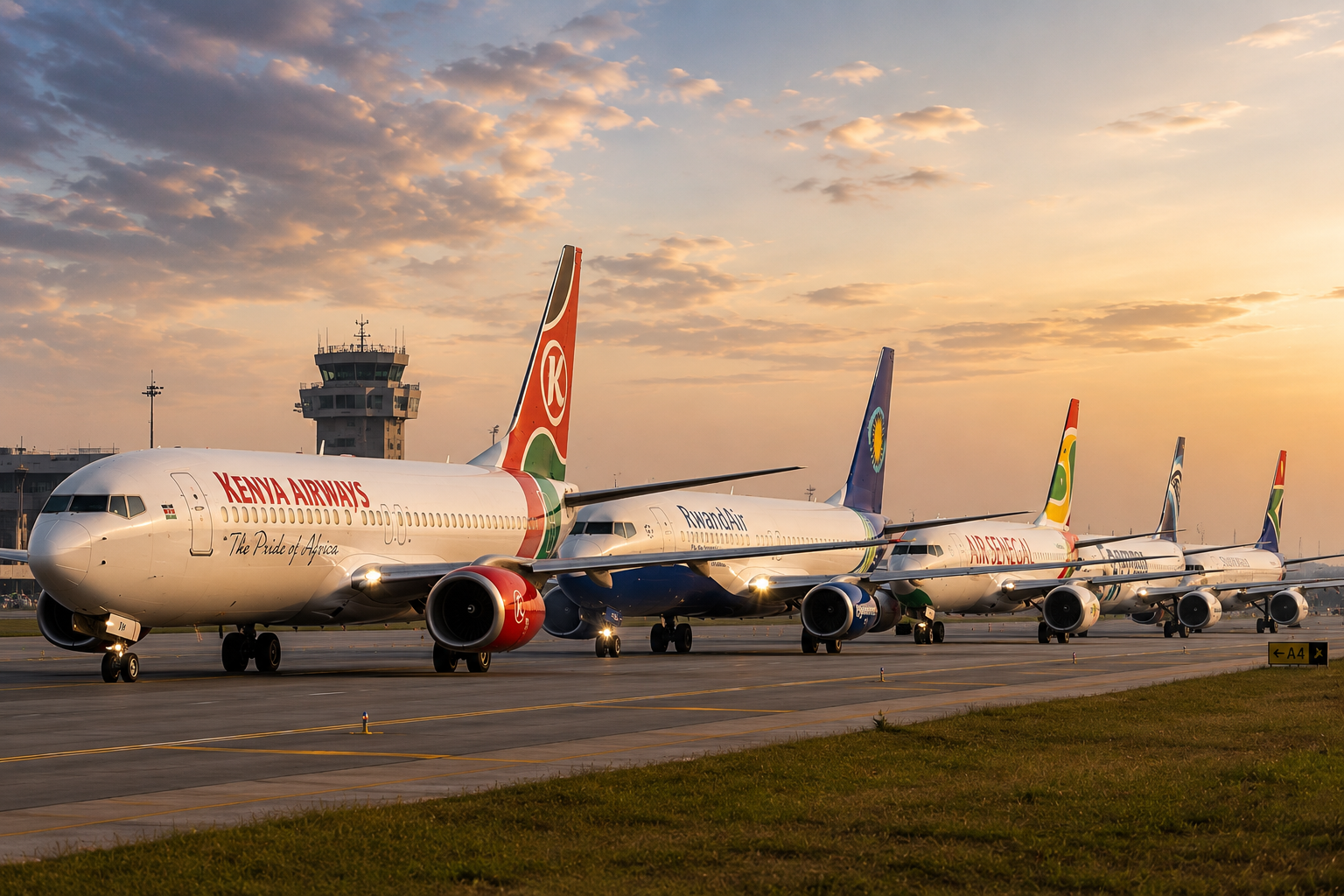
Speaking at an industry conference in Gaborone, Botswana, ACC Aviation Associate Director Tristan Brouard has outlined the central paradox facing African aviation: a continent with the world’s fastest-growing projected air traffic demand, yet airlines that struggle to access competitive financing because of elevated risk perceptions and thin operating margins.
THE FASTEST-GROWING AVIATION REGION FACES ITS STIFFEST FINANCIAL HEADWINDS
Africa is producing some of the most compelling structural growth metrics in global aviation. Boeing forecasts the continent’s passenger traffic will grow at approximately 6.4% annually through to 2043 — the fastest rate of any region in the world — with the commercial aircraft fleet expected to more than double over the same period. Despite representing nearly one-fifth of the world’s population, Africa currently accounts for approximately 2% of global passenger traffic, an imbalance that represents the scale of unrealised demand still available across the continent. In April 2026, according to IATA, Africa was the only region globally to report positive passenger traffic growth — 2.8% — at a time when global traffic declined by 3.4%, largely due to disruptions affecting demand in the Middle East.
Yet Tristan Brouard, Associate Director at ACC Aviation, who addressed a recent industry conference in Gaborone, Botswana, argues that demand is no longer the primary challenge facing the continent’s aviation sector. His assessment is direct: Africa does not have a demand problem; it has a bankability problem. The opportunity is clear, he says, but airlines must be able to demonstrate that their growth plans are financially sustainable, operationally credible and capable of meeting the requirements of lenders, investors and lessors.
THE OPERATING ECONOMICS THAT CREATE THE RISK PREMIUM
The financial picture that underlies Brouard’s analysis is stark. IATA forecasts that African carriers will generate an average net profit of approximately US$1.30 per passenger in 2026, compared with a global industry average of US$7.90 — a differential that reflects the structural cost burdens facing the continent’s airlines. Jet fuel prices can run 20% to 30% higher than in many other regions due to supply chain inefficiencies, import dependencies and limited refining capacity. Taxes, fees and charges frequently account for 30% to 35% of the total ticket price, roughly double the proportion seen in many European markets.
These economics create what Brouard identifies as the African risk premium: the additional costs applied by lessors and lenders when placing aircraft with African operators, driven by concerns around asset recovery, regulatory consistency, foreign exchange availability and the repatriation of lease payments. The effect is compounding — thin margins lead to elevated risk perceptions, which lead to higher financing costs, which further compress margins. This cycle has historically been treated as evidence of a capital shortage, a characterisation Brouard challenges. He argues that global capital exists; the challenge is not a shortage of funding but a shortage of investment-ready airlines.
FROM DEMAND STIMULUS TO INVESTMENT READINESS
A growing number of industry stakeholders are reframing the question accordingly: not how to stimulate demand, but how to help African airlines become more attractive to investors, lenders and lessors. The African Development Bank launched its Integrated Aviation Transformation Program (IATP) in 2026 — a continent-wide initiative designed to improve access to aviation financing, strengthen connectivity and mobilise private-sector investment into the ecosystem. Industry organisations including AFRAA have also intensified efforts to strengthen engagement between airlines, lessors, OEMs, commercial lenders and development finance institutions to improve the overall investment readiness of African carriers.
At the same time, aviation stakeholders continue to advocate for wider implementation of the Cape Town Convention, which provides internationally recognised protection for aircraft financiers and lessors. Countries that fully implement the convention typically benefit from stronger investor confidence, improved aircraft financing conditions and lower risk premiums — a direct lever on the cost of capital for carriers operating within those jurisdictions. Brouard identifies governance, transparent ownership structures and disciplined financial management as the attributes that allow airlines to place themselves in a stronger position to access financing on more competitive terms — capital follows credibility, in his formulation. He also identifies equity partnerships, alternative financing mechanisms and strategic investor participation as pathways for carriers seeking to expand outside conventional debt and leasing structures.
Brouard’s conclusion for carriers across the continent is pointed: aircraft availability remains constrained, capital remains selective and investor scrutiny continues to increase. Those airlines that prepare well — building the financial credibility, governance and operational track record that investors require — before the opportunity arrives will be the ones positioned to secure aircraft, attract financing and execute their growth strategies. Successful fleet growth increasingly depends on helping airlines become investment-ready before they enter the market for aircraft.
Source and Images: ACC Aviation