
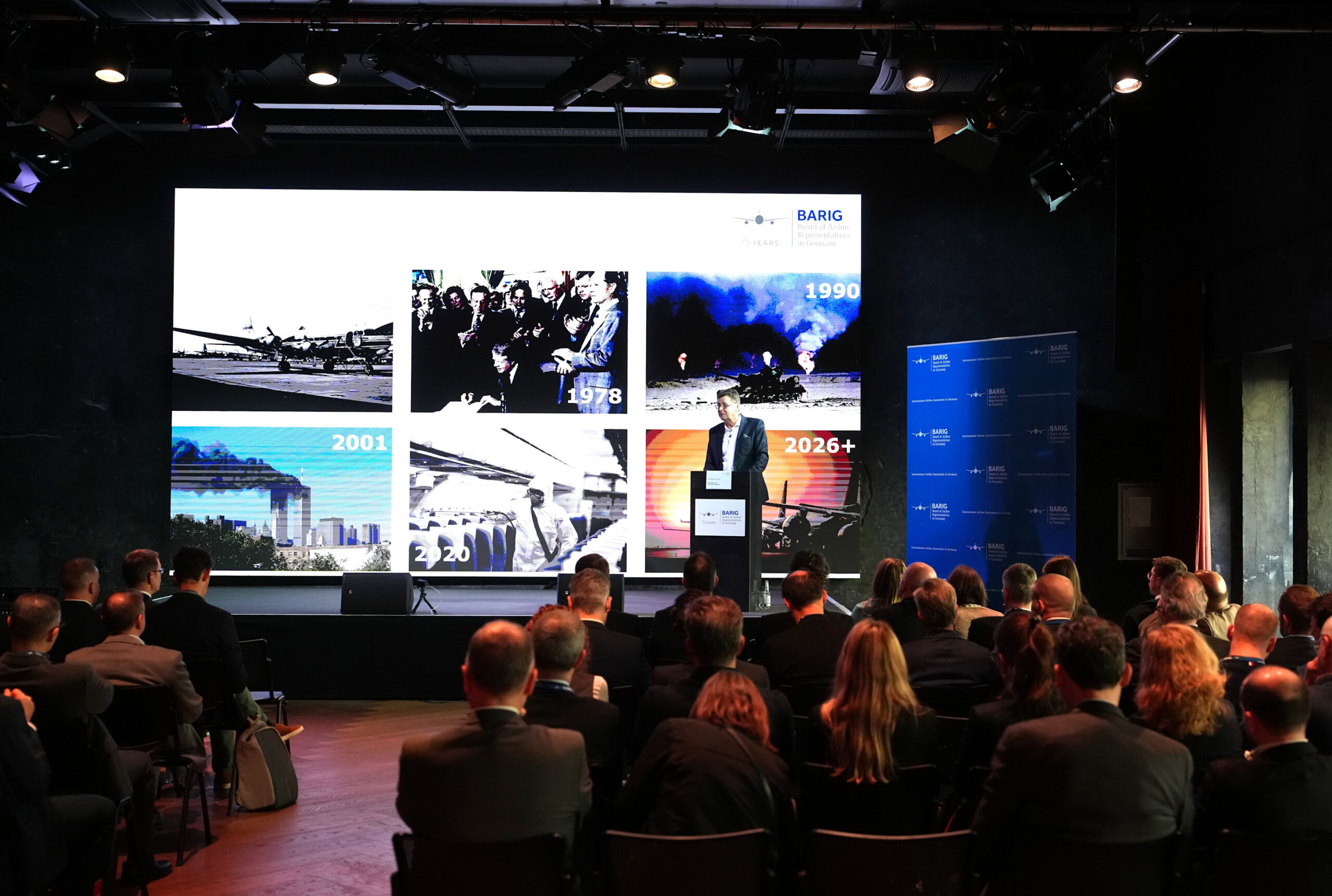
Industry leaders, government representatives and aviation stakeholders met in Berlin ahead of ITB Berlin 2026 to discuss regulatory pressures, operating costs and the need to strengthen Germany’s aviation sector.
Berlin – The Board of Airline Representatives in Germany (BARIG) has called for stronger political support for aviation, tourism and the broader economy following discussions between airlines, government representatives and industry stakeholders in Berlin.
The call was made during the BARIG Networking & Conference Day held on 2 March 2026 at Fotografiska in Berlin, ahead of the ITB Berlin 2026 travel trade fair. The event brought together representatives from federal ministries, aviation infrastructure organisations and tourism stakeholders to address key challenges affecting passenger and cargo air transport.
INDUSTRY AND GOVERNMENT DISCUSS AVIATION CHALLENGES
Discussions focused on several pressing issues currently affecting the aviation sector. Participants highlighted the impact of geopolitical developments, including the recent escalation in the Middle East, which has affected air traffic operations.
In addition, stakeholders examined the continuing challenges related to operating costs, regulatory developments and administrative requirements within the German aviation sector. Reducing bureaucracy and improving regulatory efficiency were identified as priorities to support the competitiveness of air transport in Germany.
Dialogue with politicians: Future agenda for aviation and tourism
Michael Hoppe, Chairman and Executive Director of BARIG, said the strong participation at the event demonstrated the importance of cooperation between industry and government.
“The great response to our event clearly shows how important constructive cooperation and shared priorities are to all parties involved,” Hoppe said. “Decisive progress and stability in aviation and tourism are only possible by working together with politicians and key industry stakeholders.”
From the government perspective, Stefan Schnorr, State Secretary at the German Federal Ministry of Transport, emphasised the need for coordinated action across the aviation sector.
He noted that the global aviation industry faces significant challenges that require close cooperation between governments, authorities, airports and airlines. Schnorr highlighted the importance of reliable aircraft operations, stable passenger and cargo connectivity, and efficient infrastructure supported by clear regulatory frameworks.
AIRPORT AND AIRLINE COOPERATION
Aletta von Massenbach, Chief Executive Officer of Flughafen Berlin Brandenburg GmbH and President of the German Airports Association (ADV), highlighted the role of operational cooperation between airports and airlines.
She said that continued dialogue between airports and airline operators supports improvements in processes and procedures, helping airlines strengthen operational performance while enhancing the passenger experience.
BARIG MARKS 75 YEARS OF INDUSTRY REPRESENTATION
The conference also reflected on the long-standing role of BARIG within the aviation sector. The association represents more than 100 national and international airlines across scheduled, charter, low-cost and air cargo operations.
Hoppe, who was recently re-elected as Secretary General and Chairman of BARIG until December 2029, noted that the organisation has spent 75 years representing the interests of airlines operating in Germany.
He said that during this period the association has worked closely with industry partners and policymakers while navigating geopolitical crises and global disruptions affecting the aviation sector.
According to Hoppe, fair regulatory conditions and efficient processes remain essential for the sustainable development of global air transport.
SOURCE AND IMAGE: BARIG / Board of Airline Representatives in Germany e.V.