
Harris Aerial, Skyline Nav AI and UtopiaCompression took the show’s annual pitch competition on day one of Commercial UAV Expo in Las Vegas, while the opening keynote’s State of the Industry Survey found most operators still reliant on foreign-made hardware and largely unprepared for the FAA’s incoming Part 108 beyond-visual-line-of-sight rule.
PITCH THE PRESS WINNERS NAMED AS SURVEY FLAGS A CAUTIOUS INDUSTRY
Day one of Commercial UAV Expo 2026, running from 1 to 3 September at Caesars Forum in Las Vegas, combined an awards presentation with a pointed look at where the commercial drone industry stands as the FAA’s Part 108 rule approaches. Part 108 is the FAA’s forthcoming rule for routine beyond-visual-line-of-sight, or BVLOS, drone operations, long anticipated by the industry as the regulatory step that would allow uncrewed flights to operate without a visual observer in most circumstances.
PITCH THE PRESS WINNERS
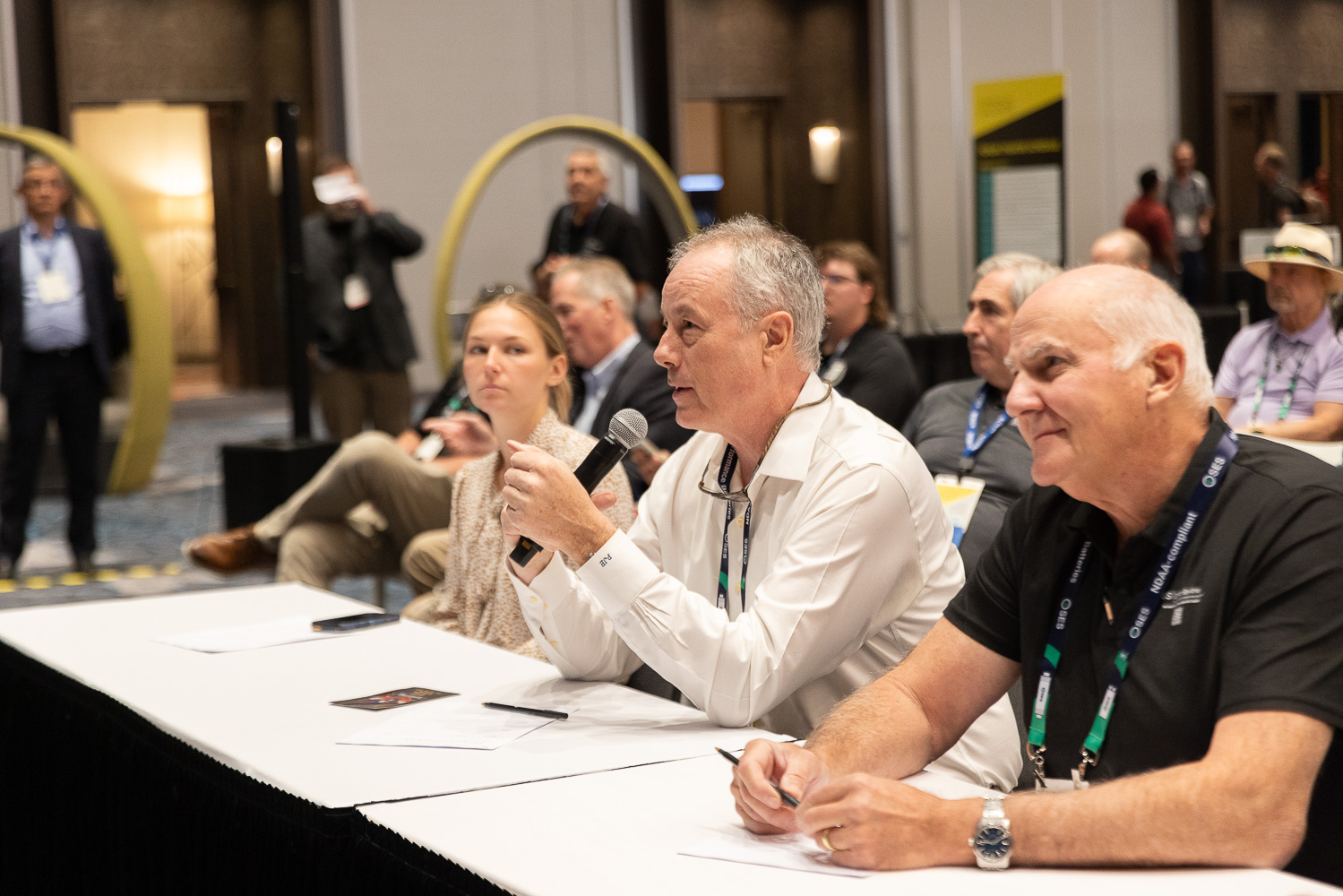
Harris Aerial, Skyline Nav AI and UtopiaCompression Corporation were named winners of the show’s annual Pitch the Press competition, in which exhibitors delivered two-minute pitches to a panel of trade media judges: David Oakes, editor of US Drone Review; Haye Kesteloo, owner of DroneXL.CO; and Patrick Egan, chief executive of sUAS News USA. Harris Aerial’s win centred on the H4C Quad, a compact, medium-lift, NDAA-compliant drone due to reach the market later this year, with judges highlighting the company’s US-based manufacturing and its status as a complete system rather than a single component. Skyline Nav AI’s Pathfinder Edge, a lightweight, plug-and-play hardware unit offering GPS-independent navigation, was recognised for its relevance to public safety missions where satellite positioning cannot be relied on. UtopiaCompression’s Aero Vision Detect, an aircraft-detection system, was cited for its bearing on airspace safety as drone traffic volumes increase. Matt Collins, content manager at Commercial UAV News and the session’s moderator, said the presentations reflected “solutions filling real needs in the current market.”
A CAUTIOUS INDUSTRY, UNEVENLY PREPARED FOR PART 108
The opening keynote paired Collins with Greg Reverdiau, co-founder of Pilot Institute, to walk through the results of Commercial UAV Expo’s State of the Industry Survey, which drew responses weighted heavily toward independent operators over programme managers and service providers. The results underlined how exposed the industry remains to the FCC’s ongoing Covered List action against foreign-made drones and components: 62.8 percent of respondents reported that between 76 and 100 percent of their active fleet is DJI or other foreign-manufactured hardware, even as the regulatory pressure to move away from it builds. Collins said cost, not policy or availability, was the larger barrier to switching. “The other barriers are important, but the fact that cost remains the largest barrier tells us a lot. It’s an opportunity for folks who are in manufacturing to hear what the industry needs the most,” he said. Reverdiau agreed that domestic manufacturing capacity would take time to build, and cautioned that operators flying under Part 107 today may be left without access to the aircraft they currently rely on as the transition plays out. Almost half of respondents said they were taking a “wait and see” approach before committing to NDAA-compliant alternatives, a hesitation Reverdiau linked directly to weak demand signals reaching manufacturers: “We have people who cannot replace the platform they have now, so what do you tell them? The issue is that this takes away the demand from manufacturers to make all these aircraft now.”
On Part 108 itself, 43 percent of survey respondents said they had not yet started preparing, citing a lack of clarity on how the rule will affect their processes. Reverdiau argued the industry should build on what it has already learned from autonomous BVLOS operations before extending the same freedoms to manual BVLOS flight, summarising his position as “Part 108 is running. We need to walk first.” Both speakers returned to the industry’s grassroots origins toward the end of the session, with Reverdiau appealing directly to manufacturers in the audience for an affordable entry-level drone, calling it “still a tool people need to get into the industry.”
ERIC TALLEY MEMORIAL AWARD
The keynote closed with DRONERESPONDERS’ presentation of the annual Officer Eric Talley Memorial Award, named for the Boulder police officer killed in 2021 while responding to an active shooter incident and given each year to recognise leadership in public safety UAS operations. Jason Day, deputy director of DRONERESPONDERS, introduced the award, which was presented by 2025 recipient Matt Rowland, a retired Fort Wayne Police Department officer, to Greg Whiting, sUAS programme manager at the Texas Military Department. Whiting was recognised for building a three-week training programme that draws on state, local and military expertise to prepare pilots for complex missions, and for coordinating crewed and uncrewed aviation resources during the response to this year’s Texas floods.
Source and Images: Commercial UAV News