
ANRA Technologies, Wing, Manna Air Delivery and Lancashire Fire and Rescue Service have demonstrated how multiple drone operators using different traffic management systems can safely coordinate flights in the same UK airspace, in a trial approved by the Civil Aviation Authority.
ANRA Technologies, alongside Wing, Manna Air Delivery, and Lancashire Fire and Rescue Service, has successfully demonstrated how multiple drone operators can coordinate flights in the same UK airspace using different traffic management systems.
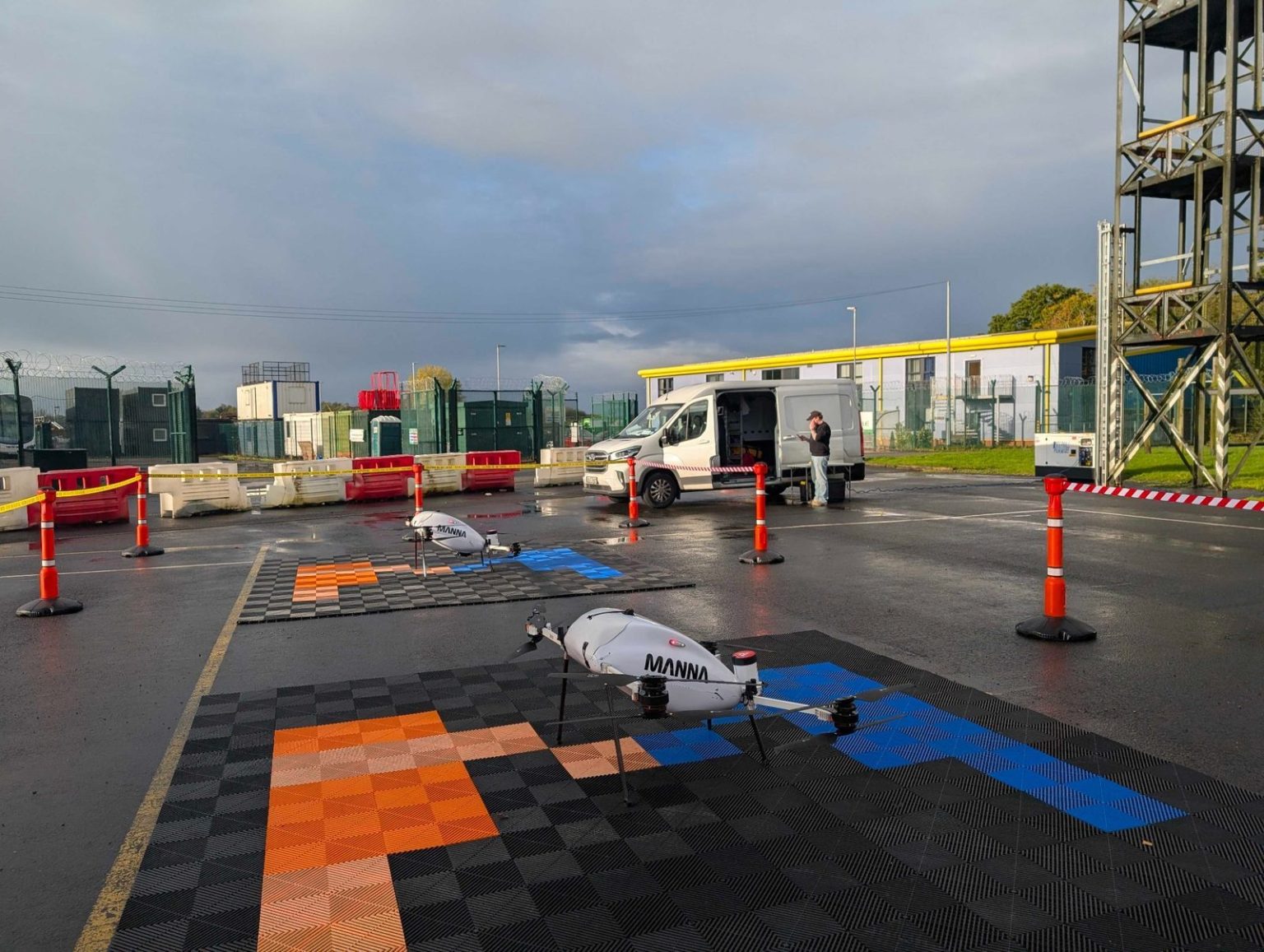
The UK Civil Aviation Authority (CAA) approved the digital airspace coordination approach used in the demonstration, which brought together commercial drone delivery and emergency service operations within the same Temporary Danger Area in Chorley, Lancashire. The operators conducted live beyond visual line of sight and visual line of sight flights using strategic deconfliction to exchange flight intentions and identify potential conflicts before flights took place.
ANRA provided unmanned aircraft system traffic management (UTM) services for Manna Air Delivery and Lancashire Fire and Rescue Service, while Wing used its own vertically integrated UTM system. Using the internationally recognised ASTM F3548-21 standard, the systems exchanged flight intentions across independent UTM service providers, with interoperability supported by governance structures and open-source automated testing through the InterUSS Platform.
FROM OPERATIONAL EVALUATION TO SCALABLE SHARED AIRSPACE
As drone delivery, emergency response, and other commercial applications expand, the ability for multiple operators to safely share airspace is becoming increasingly important. Historically, flights beyond visual line of sight have often relied on segregated airspace or individually coordinated operating areas, approaches that become harder to manage as drone activity increases. The UK UTM Implementation demonstrated in Chorley represents a step towards a more scalable approach, allowing operators to coordinate flights digitally across different UTM service providers rather than relying solely on separate operating areas or manual coordination.
BUILDING A REPEATABLE FRAMEWORK FOR THE UK
The Chorley demonstration is part of an ongoing industry-led initiative to establish a common framework for shared airspace operations that can be adopted across multiple locations and operators. Drawing on experience from US shared airspace initiatives, the consortium is adapting internationally recognised standards and operating practices for the UK.
The initiative focuses on five areas: technical interoperability, meaning standards-based exchange and coordination of flight intentions between independent UTM service providers; operational procedures, covering common approaches to strategic deconfliction, airspace coordination, contingency management and operational accountability; governance, setting out clear roles, responsibilities and participation requirements for operators and UTM service providers; scalable onboarding, meaning consistent processes for adding operators and service providers; and regulatory alignment, through continued collaboration with the CAA to inform policies supporting routine beyond visual line of sight operations.
INDUSTRY AND REGULATORY PERSPECTIVES
“The operational evaluation in Chorley is an important milestone, but it is only the beginning of what we are working to achieve. Our goal is not simply to demonstrate that multiple drone operators can safely share airspace, but to establish the technical, operational, and governance foundations that allow this capability to scale across the UK. Interoperability is fundamental to that vision. Operators should be able to use different UTM service providers while maintaining a common framework for safety, coordination, and accountability. The collaboration among our consortium partners and the engagement with the CAA are helping turn that vision into an operational reality,” said Amit Ganjoo, Founder and CEO of ANRA Technologies.
“The safe integration of drones into shared airspace is fundamental to unlocking the benefits they can bring across the UK, from commercial services and infrastructure inspection to supporting emergency responders. This first in-kind demonstration of UTM in the UK is an important milestone, demonstrating how operators can coordinate safely using common standards and interoperable systems. By working closely with industry, we are building the evidence needed to support routine beyond visual line of sight operations and the long-term modernisation of UK airspace. The lessons learned through initiatives such as this will help shape a future airspace environment that is safe, innovative and accessible to a growing range of users. We are encouraged by the collaboration shown across the consortium and look forward to seeing further progress as these capabilities continue to mature,” said Giancarlo Buono, Group Director, Safety, Airspace and Regulatory Group at the UK Civil Aviation Authority.
“Sharing the sky is an essential enabler for expanding beyond visual line of sight operations. Wing welcomes the first steps in the UK to share airspace using strategic deconfliction with beyond visual line of sight and public safety operators. This work lays the foundation for a national approach with open frameworks to easily add service providers and operators across the country, build on proven industry standards, and for the UK CAA to oversee and review progress. It also builds on global learnings in other markets. We look forward to sharing the sky more as the UK drone services market continues to expand,” said Reinaldo Negron, Head of UTM at Wing.
“For drone delivery to scale, multiple operators must be able to share the same airspace safely and seamlessly. In Chorley, delivery and emergency service drones did exactly that, using different technology providers to coordinate flights through a common international standard. It shows interoperability works in live operations, not just on paper. An open, standards-based framework like this is what will make routine drone delivery possible across the UK. Manna is delighted to have worked alongside ANRA, our fellow operators and the CAA to demonstrate what’s possible,” said Alan Hicks, Chief Technology Officer at Manna Air Delivery.
“The use of airspace is evolving, and emergency services must be able to deploy their aircraft quickly and safely to help the communities they serve. By being involved in this project from the very start, we are helping to ensure lower airspace can be prioritised for critical operations while still allowing other users to operate safely around us. We are grateful to the Civil Aviation Authority for including us in this project, and for the opportunity to help shape the future use of UK airspace,” said Tim Murrell, Drone Manager at Lancashire Fire and Rescue Service.
NEXT STEPS: CONTINUING OPERATIONS AND EXPANDING ACROSS THE UK
Building on the Chorley demonstration, the consortium will continue working with the CAA and industry partners to refine interoperability, operating procedures, and governance requirements while introducing additional drone operators and UTM service providers. The goal is to establish a repeatable, standards-based framework that supports continued operations in Chorley and expansion across the UK.
The UK Shared Airspace Consortium brings together ANRA Technologies, Wing, Manna Air Delivery, and Lancashire Fire and Rescue Service to advance interoperable UTM capabilities and shared beyond visual line of sight operations. Working with the UK Civil Aviation Authority and industry stakeholders, the consortium is developing a standards-based framework to enable multiple drone operators to safely share airspace across the UK.
Source and Images: ANRA Technologies