
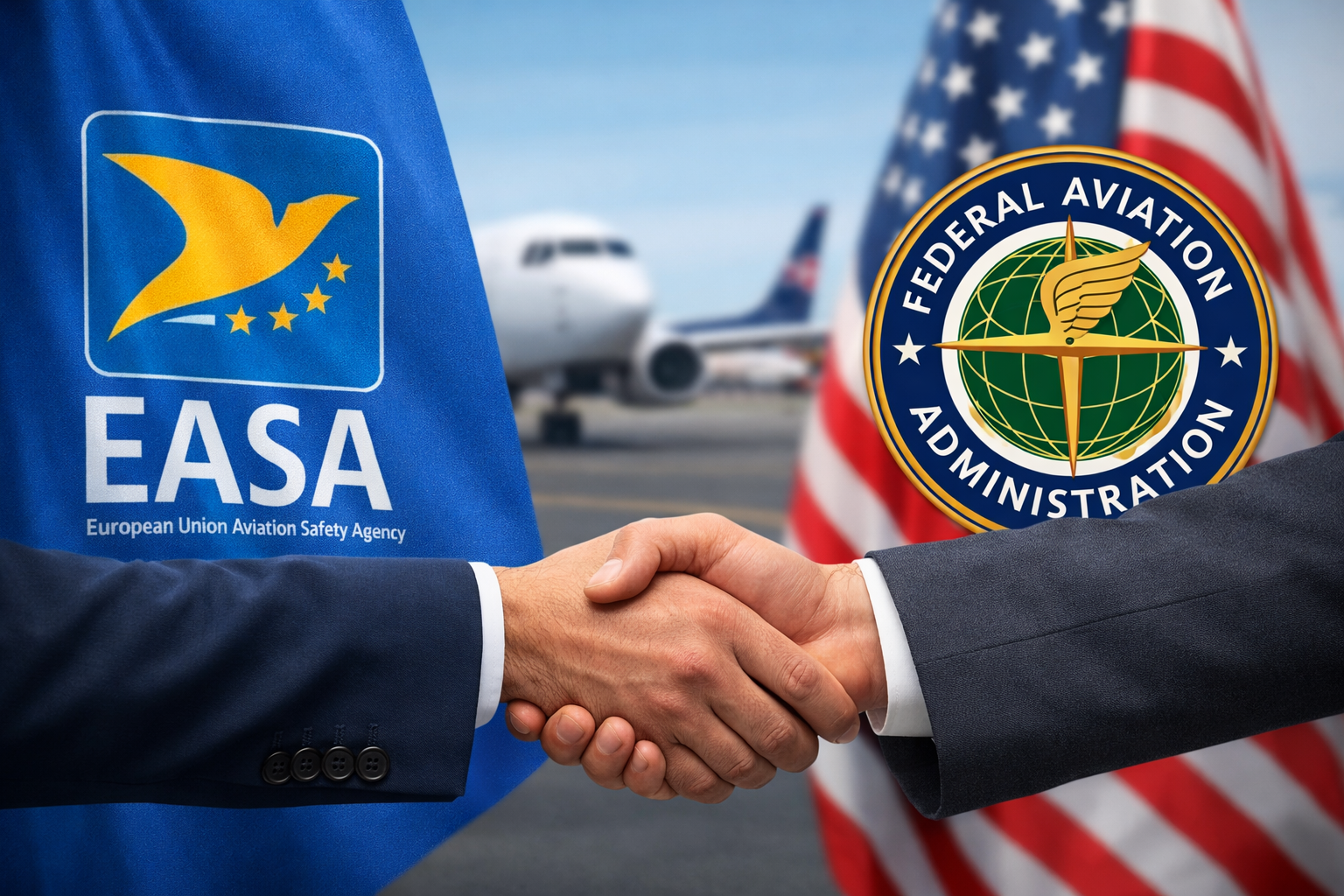
Comments from the European Union Aviation Safety Agency (EASA) indicate improved cooperation with the US Federal Aviation Administration (FAA), following a period of heightened regulatory tension after the Boeing 737 MAX accidents.
REGULATORY ALIGNMENT
Leadership signals renewed cooperation
EASA Executive Director Florian Guillermet said that cooperation between the two regulators has strengthened, with both now operating as “trustful partners” in areas including aircraft certification and production oversight.
He noted that the agencies are in a phase of renewed confidence, adding that there is no current indication that the FAA is not fulfilling its regulatory responsibilities or that Boeing is not responding appropriately to oversight requirements.
POST-737 MAX CERTIFICATION ENVIRONMENT
Stronger scrutiny reshaped regulatory interaction
Relations between EASA and the FAA were strained following the 2018 and 2019 Boeing 737 MAX accidents, which were linked to aircraft design and oversight issues. In response, EASA adopted a more independent and detailed approach to reviewing aircraft certification.
These developments contributed to a shift in how the two authorities interact on certification and production oversight.
CERTIFICATION FRAMEWORK AND GOVERNANCE
Maintaining a technical basis for certification
Guillermet emphasised that aircraft certification must remain a technical process, independent of political or commercial influence.
The global certification framework relies on mutual recognition between authorities such as EASA and the FAA, supported by bilateral agreements that allow each regulator to validate the work of the other while retaining the ability to conduct detailed reviews where required.
INDUSTRY CONTEXT
The stabilisation of relations between major aviation regulators is a key factor in maintaining confidence in global certification systems. Alignment between EASA and the FAA supports continuity in aircraft programmes and contributes to consistency in regulatory oversight.
SOURCE: Reuters (reporting comments from EASA Executive Director Florian Guillermet)
IMAGE: WAN©