
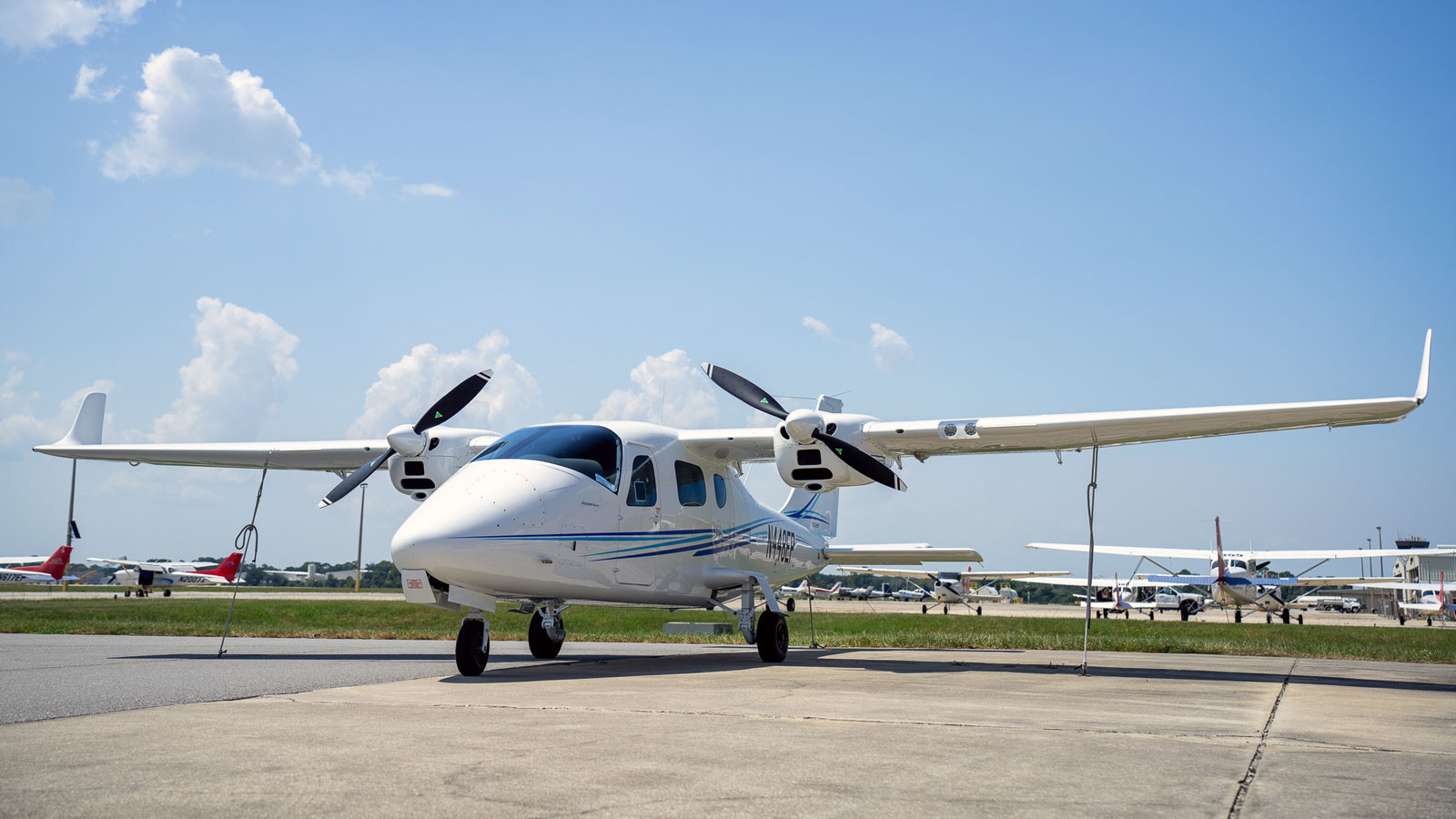
The largest Part 141 flight school in the United States has added two Tecnam P2006T twin-engine aircraft to bolster multi-engine training capacity for its roughly 600 active students.
TWO NEW TWINS JOIN THE LARGEST PART 141 SCHOOL’S FLEET
Epic Flight Academy, a Florida-based flight school founded in 1999 and recognised as the largest Part 141 flight school in the United States, has added two Tecnam P2006T twin-engine aircraft to its fleet, immediately expanding its multi-engine training capacity for a student roster of roughly 600. “We are continually looking for ways to make flight training more affordable while maintaining the modern, technologically advanced fleet our students have come to expect from us,” said Josh Rawlins, chief operating officer of Epic Flight Academy. Walter da Costa, chief sales officer at Tecnam, said the manufacturer was “proud to support their growing operations and to play a role in developing the next generation of global commercial pilots.”
WHY THE P2006T
The P2006T is powered by two Rotax 912iSc3 Sport engines that can run on unleaded automotive fuel as well as Avgas, burning around 3.7 US gallons per hour per engine, and the type is certified as the lightest twin-engine aircraft on the market, characteristics that keep operating costs down for a school running a high volume of multi-engine training hours. Its glass cockpit is intended to bridge the gap between primary trainers and airline-style flight decks, which both Epic and Tecnam point to as useful preparation for the academy’s international students moving toward commercial careers.
Note: Tecnam’s own figures, describing its single and twin-engine training fleet as able to save up to 10 tonnes of CO2 per student completing a Commercial Pilot Licence, a claimed 60 percent reduction against a fleet using 100LL fuel across a 155-hour syllabus including 30 hours on a twin, are the manufacturer’s own calculation and have not been independently verified by WAN.
Source and Images: Tecnam