
Garmin has unveiled AXIS, a new family of flight displays combining an IFR GPS, VHF NAV/COMM radio and a four-place audio panel within a single certified display unit — an industry first — with coverage spanning hundreds of certified piston aircraft models, as well as experimental and Light Sport Aircraft.
A SINGLE DISPLAY REPLACES MULTIPLE SEPARATE UNITS
Garmin (NYSE: GRMN) has announced AXIS, an entirely new family of flight displays designed from the ground up to consolidate cockpit avionics into a smaller number of highly integrated units. Available in three display sizes — an 11.6-inch landscape format and two 8-inch variants in portrait and landscape orientations — AXIS is available for certified Part 23 Class I and II piston-powered single and twin-engine aircraft under an Approved Model List (AML) Supplemental Type Certificate covering hundreds of models, and is also compatible with experimental and Light Sport Aircraft operating under the FAA’s MOSAIC regulatory framework. FAA and EASA Technical Standard Order (TSO) certification has been achieved for the 11.6-inch display, which is available from July 2026; the 8-inch variants are expected in early 2027.
Carl Wolf, Garmin Vice President of Aviation Sales, Marketing, Programmes and Support, described AXIS as redefining Garmin’s flight display portfolio and delivering an industry-first capability from a single unit. He said the system delivered a modern, highly capable cockpit experience while significantly reducing the time, complexity and cost of installation through the integration of navigation, communication and audio functions into a single display.
WHAT AXIS INTEGRATES AND HOW IT WORKS
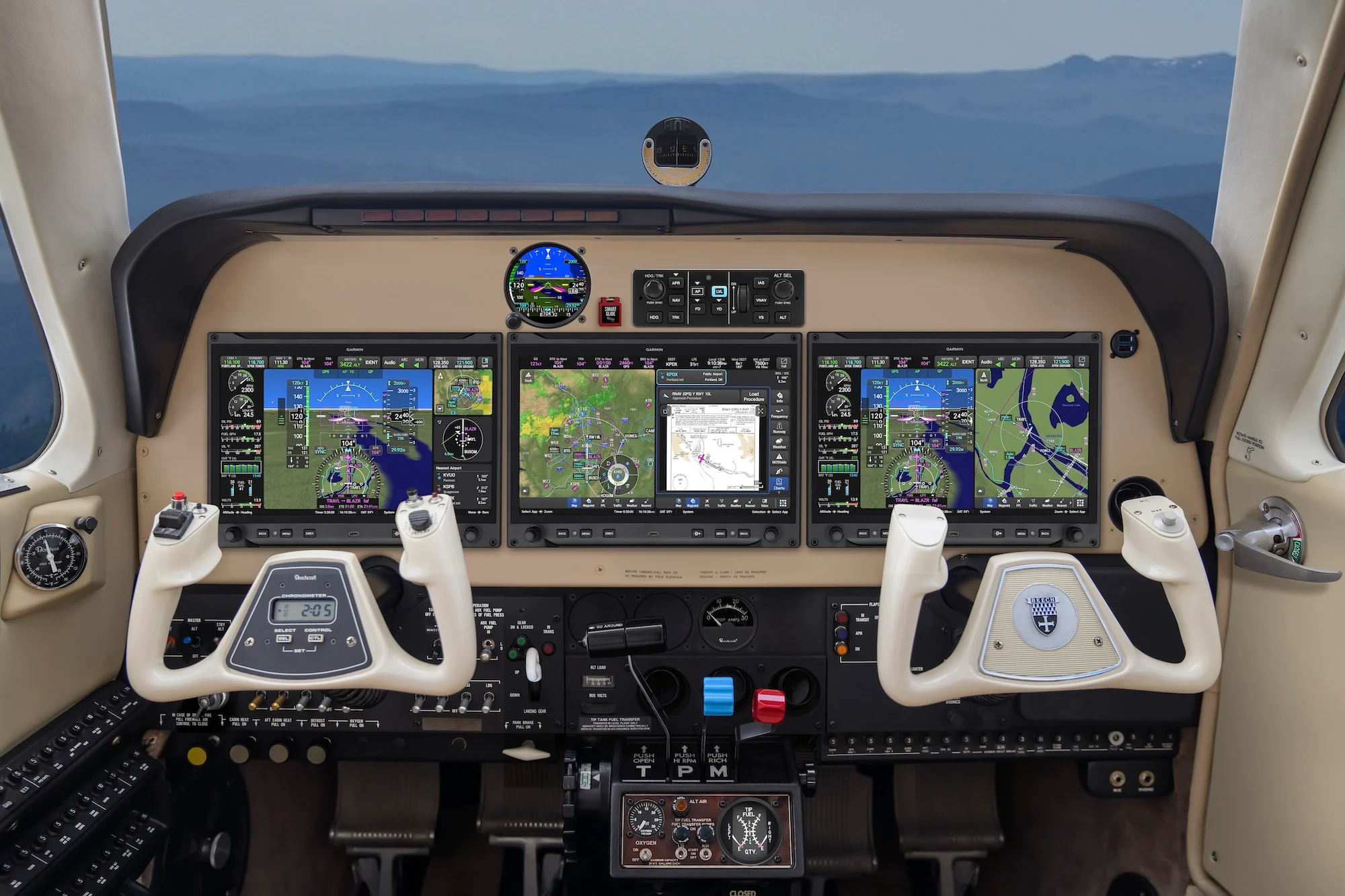
The headline capability of the AXIS 11.6-inch display is the optional integration of a TSO-certified IFR GPS, a VHF COMM radio, a NAV radio and a four-place intercom audio panel within the display itself — a combination previously requiring four separate units. The COMM radio offers 10 watts of transmit power, supports 8.33 kHz frequency tuning and standby COMM monitoring, which allows pilots to monitor a standby frequency while tuned to the active ATC frequency. The built-in audio panel supports dual-COMM switching with one external radio, COMM playback and Bluetooth connectivity for music and phone calls. The GPS provides access to a full IFR flight plan including waypoints, VORs, holds, GPS and ILS procedures. The 11.6-inch display is available in three TSO-certified variants: a base PFD/MFD configuration, a GPS/COMM version and a full GPS/NAV/COMM version. Experimental and LSA aircraft can leverage both certified TSO and non-TSO versions.
Each AXIS display can be configured as either a primary flight display (PFD) or multi-function display (MFD), with an optional engine indication system (EIS). The PFD supports full-screen and split-screen operating modes and includes a horizontal situation indicator with an embedded map or traffic view, compact MFD widget panels showing map, flight plan, weather and traffic data, and Garmin’s Enhanced Synthetic Vision Technology (SVT), which presents a 3D depiction of terrain, obstacles and runway and taxiway markings. Three-dimensional SafeTaxi gives pilots an exocentric view of the airport environment directly on the PFD. The MFD supports dynamic mapping, ADS-B traffic, weather overlays, terminal charts and expanded EIS, with an HDMI video input on each display for live camera monitoring.
SAFETY SYSTEMS AND EMERGENCY FEATURES
AXIS incorporates a dedicated emergency button on the display bezel providing quick access to emergency procedure options. Smart Glide, part of Garmin’s Autonomi suite, supports pilots experiencing loss of engine power by automatically navigating the aircraft to an airport within glide range; when paired with a GFC 500 or GFC 600 autopilot, the system can auto-engage to fly the aircraft to the selected airport without pilot input. Runway Occupancy Awareness uses ADS-B traffic data to alert crews to potential runway incursions from airborne aircraft, taxiing aircraft and ground vehicles. The optional SurfaceWatch system provides general airport situational awareness and issues visual and aural cues to help prevent take-off or landing on a taxiway.
ENGINE MONITORING, CONNECTIVITY AND UPGRADE PATH
The integrated EIS supports most normally aspirated and turbocharged four- to six-cylinder piston engines, as well as radial and turbine-powered experimental aircraft, with colour-coded gauges and bar displays for numerical precision. Flight and engine data logs are automatically uploaded to flyGarmin.com on landing via the Garmin Pilot app or the optional GDL 60 datalink and PlaneSync service, and can be shared with engine health platforms such as FlySto or SavvyAviation. Built-in Wi-Fi and Bluetooth support in-flight connectivity with Garmin Pilot for GPS, traffic, weather and flight plan sharing, and a USB-C data port supports database transfers and device charging at up to 27 watts.
An important practical advantage of AXIS is its upgrade compatibility with Garmin’s G3X Touch system. AXIS uses the same sensors, line-replaceable units, panel cutouts and mounting points as the G3X Touch, substantially reducing the cost and complexity of upgrading an existing installation. Garmin’s Team X, a group of engineers, pilots and aircraft builders specialising in experimental aircraft, contributed to the development of AXIS to ensure its suitability for the builder and experimental community.
Source and Images: Garmin International