
An inside look at the role of Avia Solutions Group’s Head of Aviation Safety, Ugne Maciejauskaite, exploring global safety leadership, cultural diversity and emotional intelligence in aviation.
From coordinating pilot training to overseeing safety across one of the world’s largest aviation groups, Ugne Maciejauskaite’s career reflects both the breadth of aviation and the human skills required to keep it safe. Today, as Head of Aviation Safety at Avia Solutions Group, she operates at a global level, splitting her time between Lithuania and Asia while working closely with leadership teams across continents.
Maciejauskaite did not enter aviation through a traditional pathway. With a background in sociology and experience in market research, she spent several years working outside the industry before seeking a new challenge. Almost fifteen years ago, a chance encounter with a job opening for a pilot training coordinator changed her direction. Although unfamiliar with the specifics of the role, her experience in project coordination encouraged her to apply. It was only after the first interview that she began exploring the company behind the role, BAA Training, and in 2011 she was struck by how modern and forward-looking it was. The decision to enter aviation was immediate.
Over the years, she has observed that many aviation professionals are drawn into the industry through family connections. Her own experience challenges that pattern. As the first in her family to work in aviation, she later saw her sister follow a similar path, starting as a flight attendant and building a successful career within one of Avia Solutions Group’s companies. For Maciejauskaite, this underlines a key message: aviation is not a closed world. Beyond pilots and cabin crew, the industry relies on specialists from hundreds of disciplines, including law, sales and psychology. For those drawn to international environments with clear structures but constantly changing variables, aviation offers wide-ranging opportunities.
Those changing variables, she explains, are a defining feature of aviation’s complexity. The industry is built on interconnected systems, where even a small oversight can affect an entire operation. While aircraft maintenance is governed by detailed manufacturer manuals that leave little room for interpretation, flight operations introduce far more uncertainty. Weather, airports, wildlife and other unpredictable factors mean that not every scenario can be anticipated or found in a textbook. This balance between strict regulation and operational variability is central to aviation safety.
At group level, Maciejauskaite’s role carries particular responsibility. Safety and compliance leadership positions are mandated by international aviation organisations, but Avia Solutions Group created its group-wide role three years ago to reflect the scale of its operations and its focus on safety. Managing a fleet of more than one hundred aircraft, the group places strong emphasis on identifying and managing risk across all companies. Her responsibility is to provide assurance to board members and investors that operations are running smoothly, while working closely with CEOs and senior leaders to share best practices and provide safety recommendations.
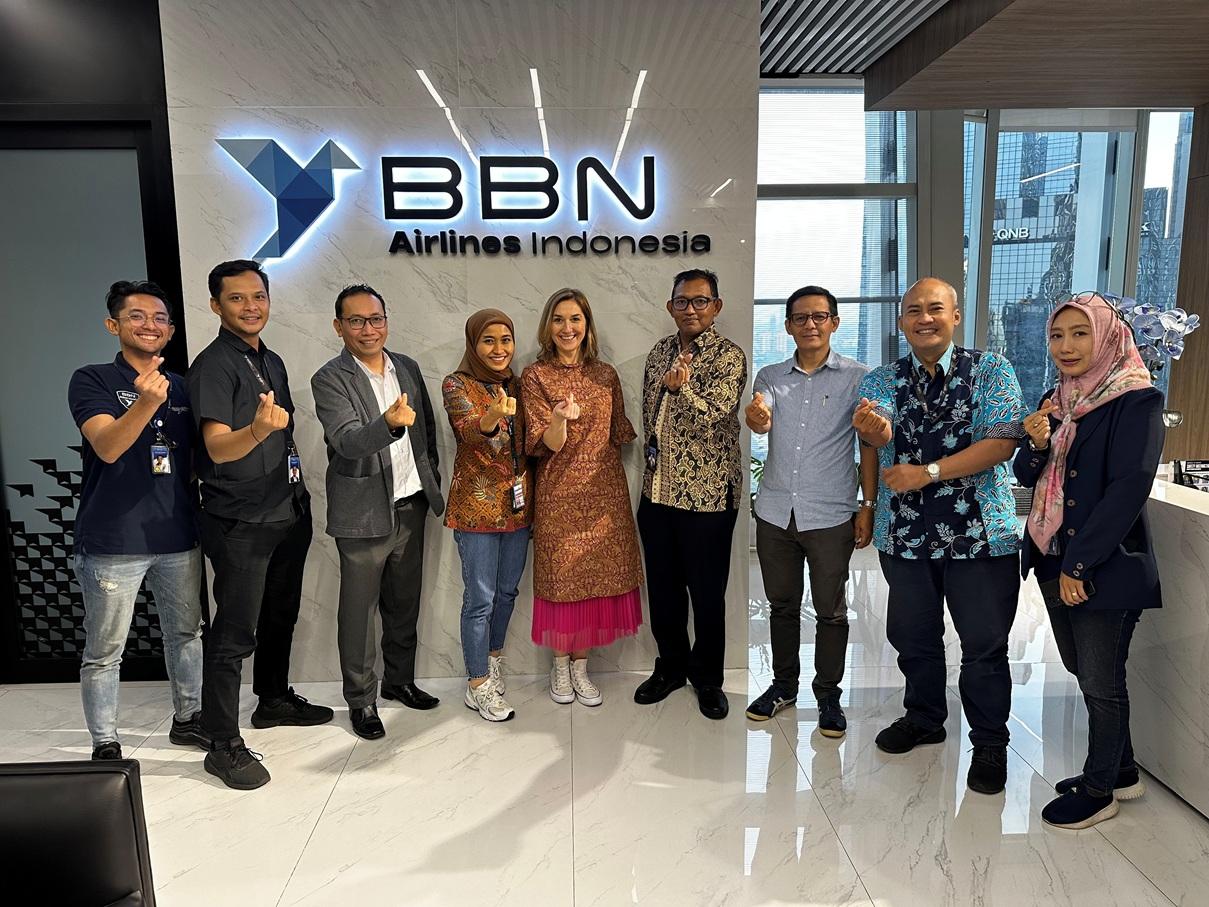
Rapid growth is a constant theme when launching new airlines, particularly in a competitive global market. Maciejauskaite notes that strong safety processes must be embedded quickly. Experience in Asia highlighted that written guidelines alone are not always sufficient. Cultural differences can affect how safety practices are understood and applied, making on-the-ground presence essential. As a result, she now divides her time equally between Europe and Asia.
Working across regions from Brazil to Australia, multiculturalism has become a major source of motivation in her work. Over the past two years, she has gained experience across Europe, Australia, Thailand, the Philippines, Malaysia and Indonesia, with further regions to follow. Each country brings its own customs, hierarchies and working styles, from daily routines to decision-making processes. These differences are not always visible in virtual meetings and only become clear through extended time spent together. By staying in each location for at least a month, she aims to build trust while gaining a deeper understanding of local contexts.
This international exposure has shaped her leadership approach. Flexibility, openness to different perspectives and acceptance that the same goals can be achieved in different ways have become central to her role. She emphasises that emotional intelligence and tolerance are essential, particularly when working with experienced safety managers who have held their roles for many years. Change, she notes, cannot simply be imposed.
As a woman in a senior aviation safety role, Maciejauskaite acknowledges that progress is gradual in a traditionally male-dominated industry. She encourages women to consider not only technical roles but also administrative and leadership positions within aviation. Within Avia Solutions Group, she is actively involved in the “Spread Her Wings” mentorship initiative, both as a mentor and a learner. Confidence, she says, is critical — speaking up, contributing ideas and making decisions are all part of being effective in leadership environments.
Emotional intelligence, increasingly recognised as a vital future skill, is a recurring theme in her experience. While some people may have a natural aptitude, she believes it is best developed through real interaction and working across cultures. Travel alone is not enough; meaningful engagement and willingness to step outside one’s comfort zone are what drive growth. By embracing different perspectives rather than insisting on familiar approaches, both professional outcomes and personal development are strengthened.
This philosophy extends to her own behaviour when working abroad. Aware of hierarchical expectations, particularly in parts of Asia, she makes a conscious effort to connect with colleagues on a personal level. Small actions, such as sharing meals with local teams where managers traditionally would not, become opportunities for mutual learning. For Maciejauskaite, stepping out of one’s comfort zone is essential. Not every experience will be comfortable, but accepting and processing differences is part of moving forward in a global aviation environment.
SOURCE AND IMAGES: AVIA SOLUTIONS GROUP