
Iranian missile and drone strikes launched on 1 March have disrupted aviation operations across the Gulf region, prompting airspace closures and widespread flight cancellations at several of the world’s busiest transit hubs. Although some limited services have resumed, airlines continue to reroute or suspend flights as security conditions remain uncertain.
REGIONAL AIRSPACE CLOSURES
The escalation triggered immediate airspace restrictions across several Middle Eastern states. Authorities in the United Arab Emirates, Qatar, Bahrain, Kuwait and parts of Iraq imposed temporary closures or significant limitations on civilian air traffic.
Flight-tracking services showed large areas of the Gulf region cleared of commercial traffic in the hours following the attacks, forcing airlines to reroute aircraft away from traditional East-West corridors linking Europe, Asia and Africa.
According to aviation monitoring data reported by Reuters, airlines diverted aircraft across alternative routes over Central Asia, the Mediterranean and the Arabian Sea to avoid restricted airspace.
NOTAM advisories issued by regional aviation authorities have allowed airspace restrictions to be adjusted rapidly as the security situation evolves.
MAJOR TRANSIT HUBS AFFECTED
Several major international aviation hubs experienced operational disruption during the escalation.
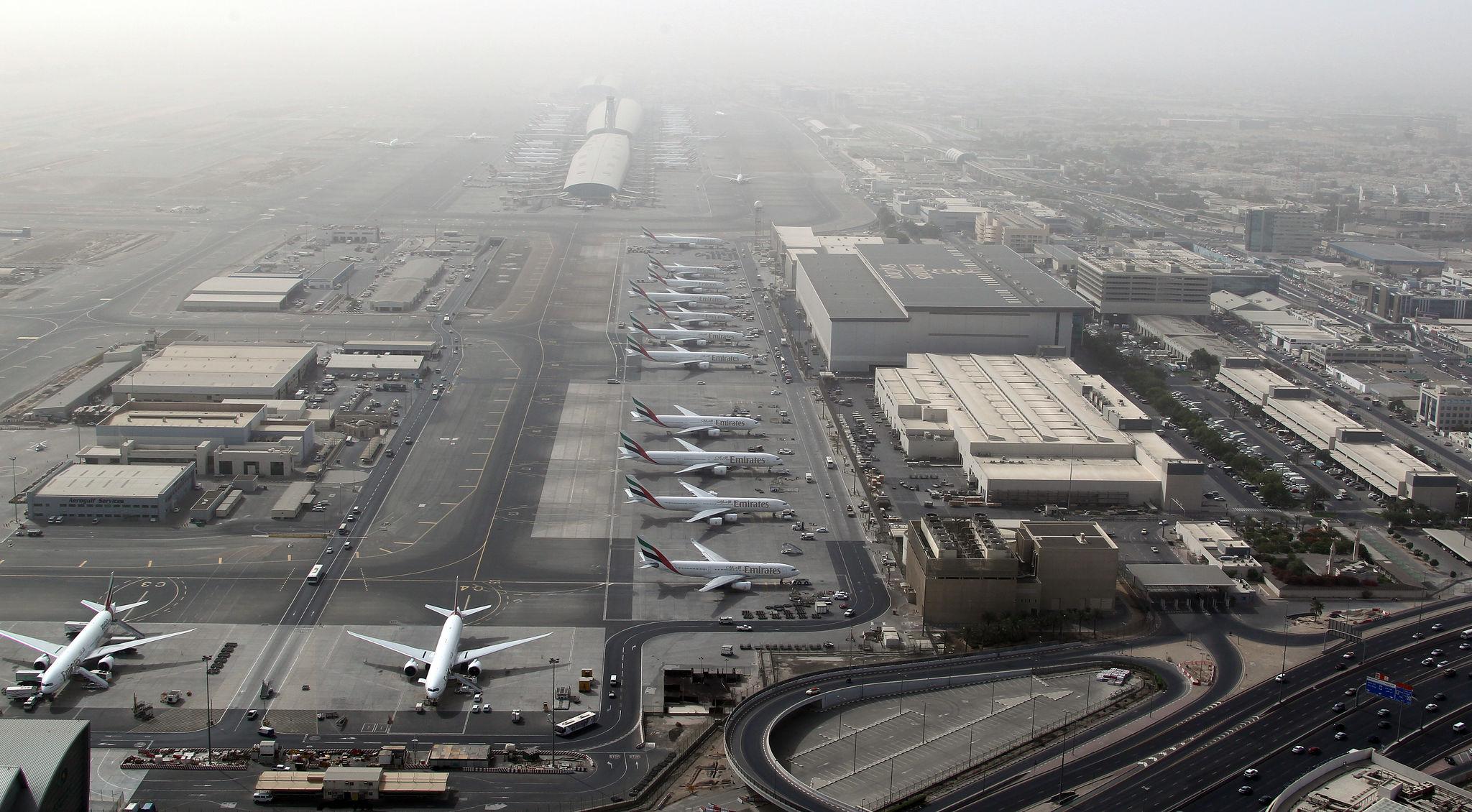
Dubai International Airport temporarily suspended operations following the strikes before gradually resuming limited services. Abu Dhabi International Airport also implemented operational restrictions as air defence systems were activated across the United Arab Emirates.
Hamad International Airport in Doha suspended most flight operations after Qatar closed its airspace during the missile attacks.
These airports collectively handle tens of millions of passengers annually and serve as critical intercontinental transit points for global airline networks.
THOUSANDS OF FLIGHTS CANCELLED
Airspace closures and airport disruptions resulted in extensive flight cancellations across the region.
Airline schedule data indicated that thousands of flights were cancelled or delayed in the immediate aftermath of the strikes, leaving large numbers of passengers stranded across international transit hubs.
Airlines operating long-haul routes between Europe, Asia, Africa and Australia were particularly affected because many of these flights normally transit Gulf airspace.
Aircraft and crew displacement has created additional operational challenges as airlines attempt to rebuild schedules and reposition fleets.
AIRLINES ADJUST OPERATIONS
A number of international carriers suspended services to affected destinations or rerouted flights around the conflict zone.
Airlines including British Airways, Lufthansa, Cathay Pacific, Virgin Atlantic and Air India temporarily halted services to several Gulf destinations or altered routes to avoid the restricted airspace.
Regional carriers also reduced operations during the immediate crisis period. Some airlines based in the United Arab Emirates have since resumed limited flights primarily to assist stranded passengers and restore essential connectivity.
However, airline schedules across the region remain unstable as operators continue to assess operational risks.
GLOBAL AVIATION IMPACT
The disruption illustrates the strategic importance of Gulf aviation hubs within the global air transport system.
Dubai, Doha and Abu Dhabi function as major transit points linking Europe, Asia, Africa and Australia. When airspace in the region is restricted, airlines are forced to divert around the Middle East, increasing flight distances, fuel consumption and operating costs.
Industry analysts note that even short-term closures can create cascading effects across airline networks as aircraft rotations and crew schedules are disrupted.
OUTLOOK
Some flights have resumed from airports in the United Arab Emirates as of 4 March, although capacity remains limited and airlines continue to monitor the security situation closely.
The pace of recovery will depend on the reopening of regional airspace corridors and the stabilisation of the broader geopolitical environment.
IMAGE: Wiki Commons