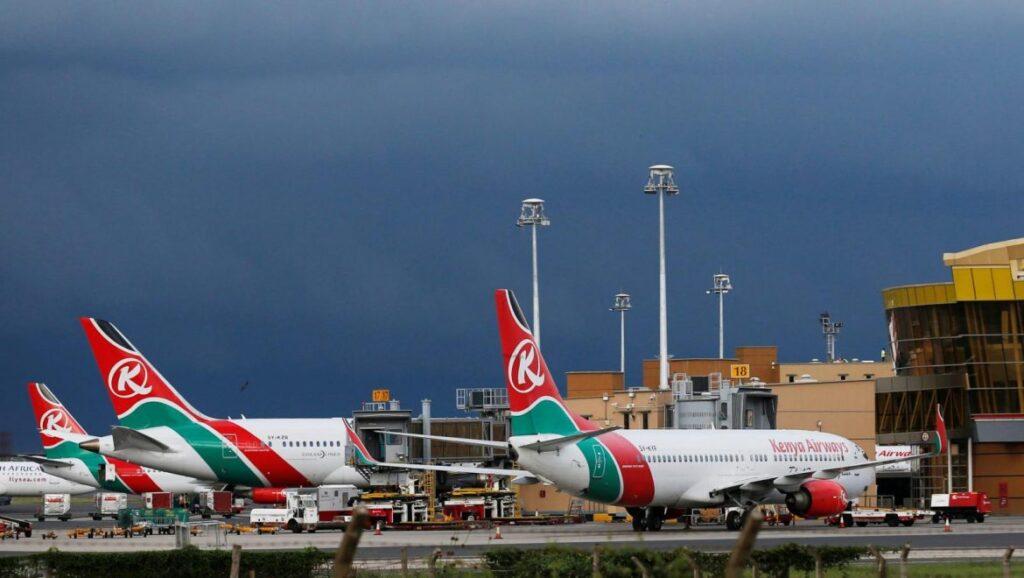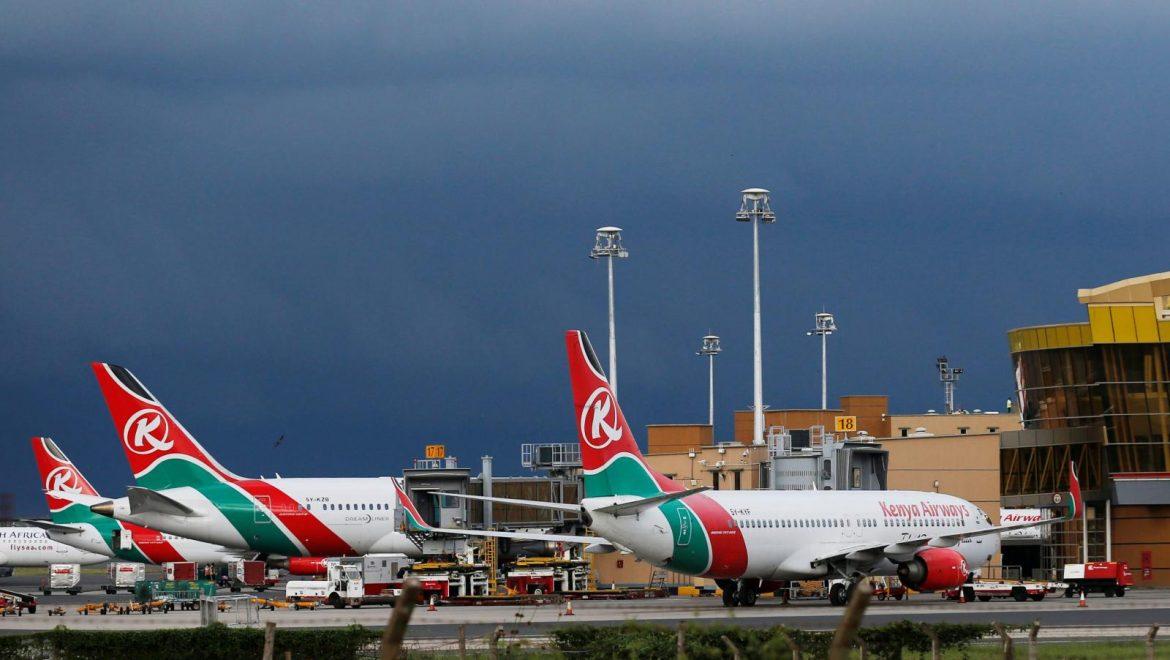
Nairobi, August 2025 – Kenya Airways PLC has reported its financial results for the six months ending 30 June 2025, a period marked by significant operational and financial pressures. The airline faced a temporary grounding of three Boeing 787-8 Dreamliners—representing one-third of its wide-body fleet—due to global supply chain disruptions and engine availability constraints.
Despite these headwinds, the carrier implemented strict cost management and operational efficiencies to stabilise performance and safeguard long-term resilience.
Financial Performance
Revenue for the half year declined by 19 percent (KShs 17 billion), reflecting a 14 percent drop in passenger numbers and a 16 percent reduction in available seat capacity. Operating costs were reduced by 10 percent in line with scaled-down operations, but fleet ownership costs rose 29 percent following the remeasurement of leased assets and the introduction of a new Boeing 737.
The airline recorded an operating loss of KShs 6.2 billion, compared to an operating profit of KShs 1.3 billion in the prior period. The net result was a loss of KShs 12 billion, against a profit of KShs 513 million in the previous year. Available Seat Kilometres (ASKs) fell to 6,715 million, down from 7,991 million, while total revenue closed at KShs 75 billion, compared with KShs 91 billion last year.
On a positive note, one Dreamliner resumed operations in July, with the remaining two expected to rejoin the fleet later in the year.
Management Outlook
Group MD and CEO Allan Kilavuka acknowledged the scale of industry-wide challenges, noting the direct impact of the aircraft grounding on performance. “While the financial results reflect these headwinds, we have taken decisive actions to stabilise operations and protect the long-term resilience of Kenya Airways,” he said.
Kilavuka emphasised continued strong demand on international routes, underscoring the airline’s role in connecting Africa to global markets. “Our focus remains clear: restoring full fleet capacity, advancing cost optimisation, and completing our capital raising programme to strengthen our balance sheet,” he added.
Industry Context
The broader aviation sector is steadily recovering from pandemic aftershocks and supply chain pressures. According to IATA, global passenger traffic is projected to grow by 5.8 percent in 2025, while cargo demand growth is expected to moderate to 0.7 percent.
Commitment to Recovery
Kenya Airways is prioritising the restoration of grounded aircraft, expanding capacity, and enhancing efficiency to counteract inflationary and fuel-related cost pressures. Its capital raising strategy remains central to reducing leverage, increasing liquidity, and positioning the airline for sustainable growth.
In conclusion, Kilavuka reaffirmed the carrier’s commitment: “Our recovery plan gives us confidence in our ability to navigate near-term challenges while building a more competitive and sustainable airline. Kenya Airways remains dedicated to serving as a key enabler of connectivity and trade in Africa.”
SOURCE NAD IMAGE: KENYA AIRWAYS