
Lockheed Martin Skunk Works® and the U.S. Air Force Test Pilot School (TPS) have collaborated on the Have Remy Test Management Project (TMP), focused on developing tactical artificial intelligence capable of operating alongside human pilots. Announced on 23 February 2026, the initiative integrates TPS students directly into the design, testing and evaluation of autonomous agents under an accelerated development cycle.
A RAPID, HANDS-ON AI DEVELOPMENT CYCLE
Student-led scenario definition
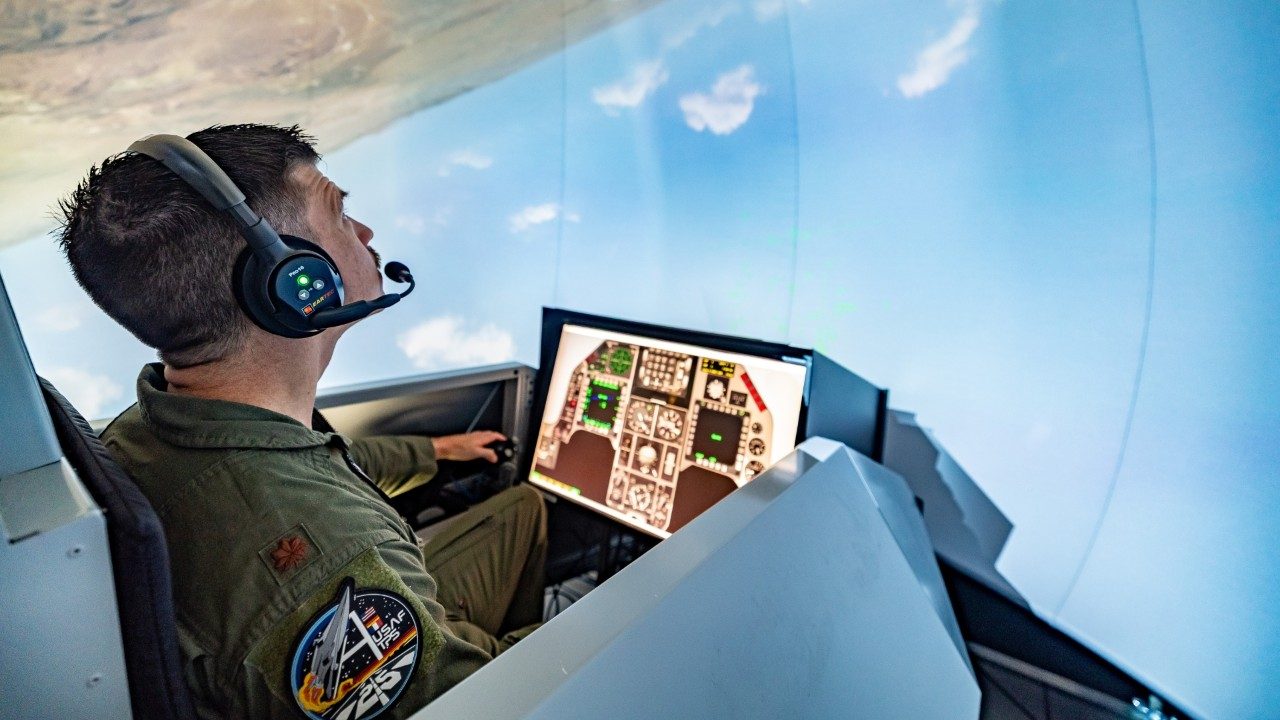
At the centre of the Have Remy project is the structured involvement of TPS students in operationally relevant AI development. Participants defined a missile evasion scenario requiring split-second decision-making and three-dimensional manoeuvring at the limits of the VISTA flight envelope.
Simulation-driven training
Training of the AI agents was conducted over hours, drawing on billions of simulated missions using Skunk Works’ Supermassive simulation engine. This approach enabled rapid iteration within a controlled digital environment.
High-fidelity virtual testing
Development was guided using a high-fidelity F-16 simulator, allowing virtual validation prior to live execution. This ensured that AI behaviour could be evaluated against realistic operational parameters before transition beyond the simulated environment.
Monitoring real-world replication
TPS students also provided feedback on AI monitoring algorithms designed to assess how effectively autonomous agents replicate simulated performance in real-world conditions. This element of the programme focused on characterising consistency between digital training outcomes and operational execution.
SOURCE, IMAGE AND VIDEO: © Lockheed Martin
TACTICAL AI IN OPERATIONAL CONTEXT
For decades, Lockheed Martin Skunk Works has been associated with advanced aerospace programmes. Through the Have Remy Test Management Project, that focus is directed towards tactical artificial intelligence designed to decide, act and adapt alongside human pilots.
The initiative demonstrates a structured pathway from classroom-based development to cockpit-relevant application, integrating training, simulation and evaluation within a compressed timeline. By combining engineering expertise with test pilot training environments, the programme seeks to accelerate understanding of autonomous agent behaviour in complex flight scenarios.