

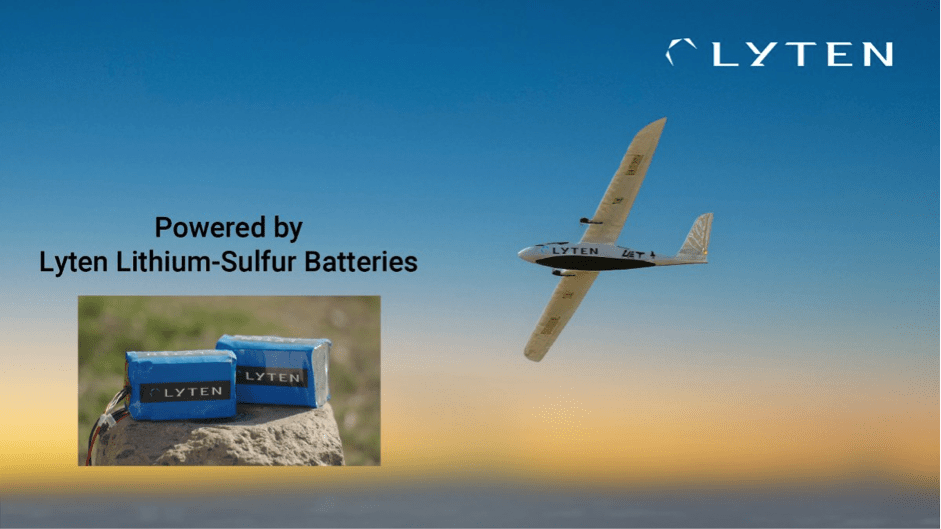
San Jose, California, May 2025 — U.S. advanced materials company Lyten has announced a milestone breakthrough in domestic battery manufacturing by producing battery-grade lithium-metal foil entirely within the United States. This development marks a pivotal step forward in reducing dependency on foreign-sourced critical minerals and bolstering national energy and defence security.
Lyten’s lithium-sulfur battery technology, which eliminates the need for nickel, manganese, cobalt, and graphite, has now advanced to include a fully U.S.-manufactured lithium-metal anode — creating an entirely American-made anode and cathode supply chain. This innovation places Lyten at the forefront of tariff-free, next-generation battery manufacturing in North America.
“To build a U.S. battery industry, we must solve the supply chain challenge,” said Dan Cook, Co-Founder and CEO of Lyten. “We have already eliminated the need for critical minerals such as nickel and cobalt. Now, by sourcing and processing lithium domestically, Lyten becomes the only U.S. battery manufacturer fully shielded from both tariffs and critical minerals risks.”
Lyten’s proprietary lithium alloys are now being produced in collaboration with Creative Engineers, Inc. in Pennsylvania, while lithium feedstock is sourced from the Eastern U.S. These are then converted into lithium-metal foils at Lyten’s custom-built extrusion and rolling facility in San Jose, California. The company’s lithium foil production capacity is among the largest in North America, supporting Lyten’s lithium-sulfur battery cell production for both civilian and defence applications.
Unlike traditional lithium-ion batteries, of which only 2% of anodes and cathodes are manufactured in the U.S., Lyten has manufactured its entire lithium-sulfur battery — including both electrodes — on American soil since 2023. Its batteries, NDAA-compliant and tariff-free, are now in demand across energy storage, electric vehicles, aerospace, micromobility, and defence sectors.
The materials used in Lyten’s lithium-sulfur technology are not only abundant in the U.S., but also environmentally benign. Sulfur, a byproduct of oil, gas, and mining industries, forms the basis of Lyten’s cathode, allowing the company to replace imported mined materials with a widely available and sustainable alternative.
“Lithium is abundant in the U.S., but processing capacity has been the bottleneck,” said Celina Mikolajczak, Lyten’s Chief Battery Technology Officer. “By engineering our own lithium-metal alloys and foils, we’ve unlocked a transformative capability for America’s battery supply chain.”
Lyten is currently scaling up operations following its acquisition of Northvolt’s battery facility in San Leandro, California. A $650 million Letter of Interest from the Export-Import Bank of the United States, announced in December 2024, is set to accelerate the production and deployment of Lyten’s lithium-sulfur batteries for grid storage and national infrastructure.
This year, the company also announced strategic integrations of its technology into Chrysler’s Halcyon Concept EV, AEVEX Aerospace’s UAV platforms, and a scheduled on-orbit demonstration aboard the International Space Station (ISS) later in 2025.
Founded in 2015, Lyten has raised over $425 million in equity funding and holds over 510 patents granted or pending. Its proprietary Lyten 3D Graphene materials platform underpins breakthroughs across energy storage, lightweight composites, and ultra-sensitive sensors. With recognition from Fast Company and Time as one of the world’s top green tech innovators, Lyten is defining the next chapter in sustainable battery manufacturing.
SOURCE AND IMAGE: LYTEN.