
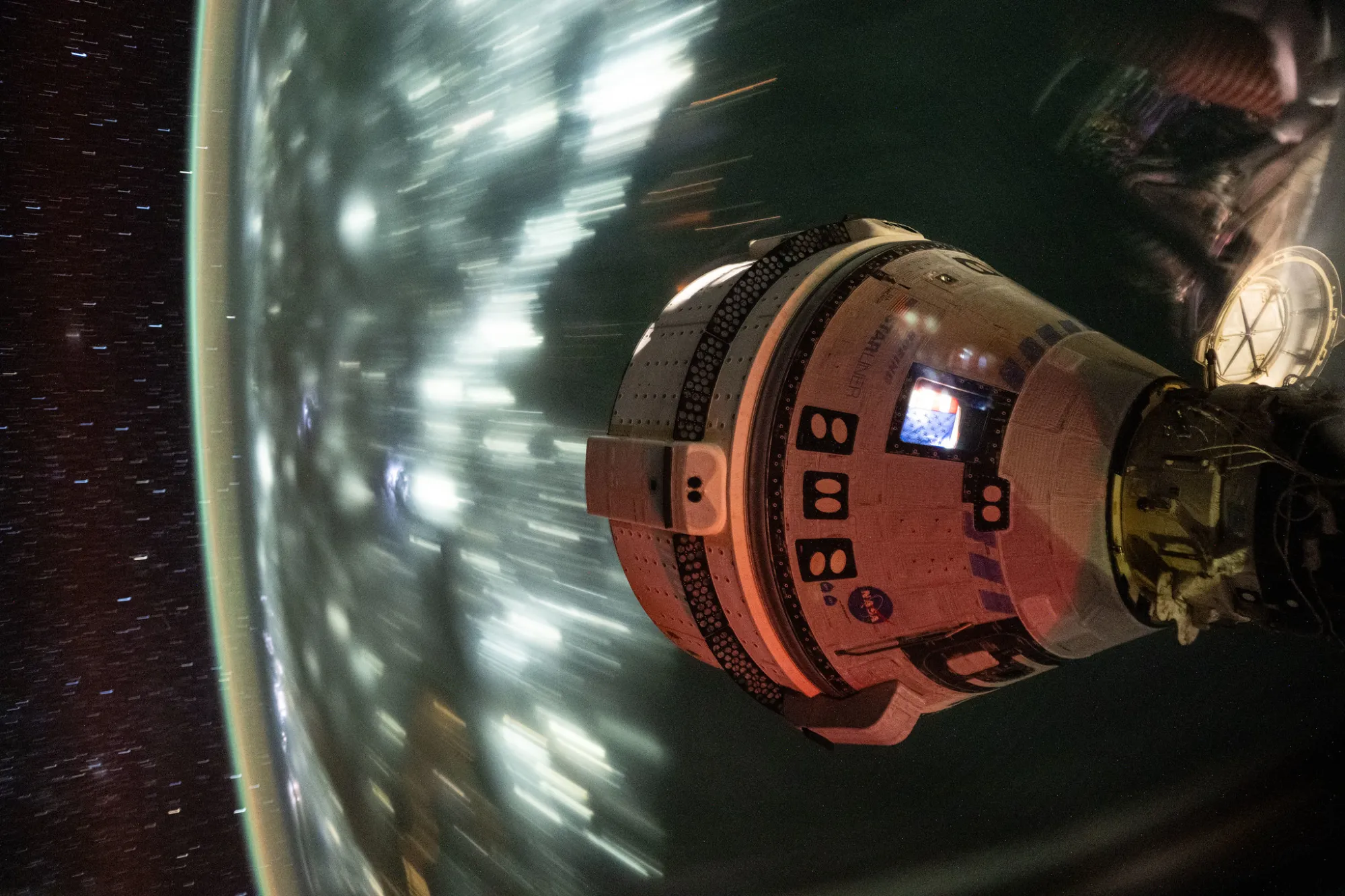
An uncrewed Starliner-1 mission could fly as soon as December, with crewed flights targeted for 2028 once thermal and thruster fixes identified after 2024’s troubled crewed test are validated.
NASA and Boeing have updated their plans for Starliner’s return to flight, with NASA intending to exercise options for a fifth and sixth crew mission to the International Space Station using the spacecraft and to work with Boeing and United Launch Alliance to certify the Vulcan rocket for crew transportation once the Atlas V retires. “We are living through the most exciting era of space exploration since Apollo,” said NASA Administrator Jared Isaacman. “We have worked closely with Boeing to address the issues identified on previous Starliner flights, and we intend to see this vehicle return to flight in support of the International Space Station and future commercial destinations.” An uncrewed Starliner-1 mission, which could fly as soon as December this year or in January 2027, will validate the spacecraft’s improvements and gather qualification data ahead of crewed flights. “Our current plan is to return astronauts on Starliner-2 by 2028,” Isaacman said.
WHAT WENT WRONG, AND WHAT’S BEING FIXED
A NASA Program Investigation Team report released in February identified 61 recommendations after finding that Starliner’s service module reaction control thrusters operated outside their engineering qualification during its 2024 crewed flight test, a combination of thermal environment and design factors that led to a loss of control and the spacecraft’s uncrewed return. Boeing has since made thermal modifications to the service module, and the two companies have jointly agreed to an additional thruster valve design change; after Starliner-1 flies, Boeing will complete that valve modification, addressing poppet seal extrusion, and add new crew module thrusters, batteries and parachute system improvements ahead of full certification. “Starliner’s next flight is a critical step on the path to achieving full system certification and ensuring a sustained human presence in low Earth orbit,” said Dana Weigel, manager of NASA’s Low Earth Orbit Program. “With the safety of our space station crew and the public as our highest priority, we will test Starliner’s propulsion system through targeted demonstration objectives and disciplined operational controls.”
Source and Images: NASA