
Airbus Helicopters’ third annual International Utility Summit in Vancouver brought together operators, regulators and fire service leaders to discuss safety culture, night firefighting and the integration of drones into shared airspace.
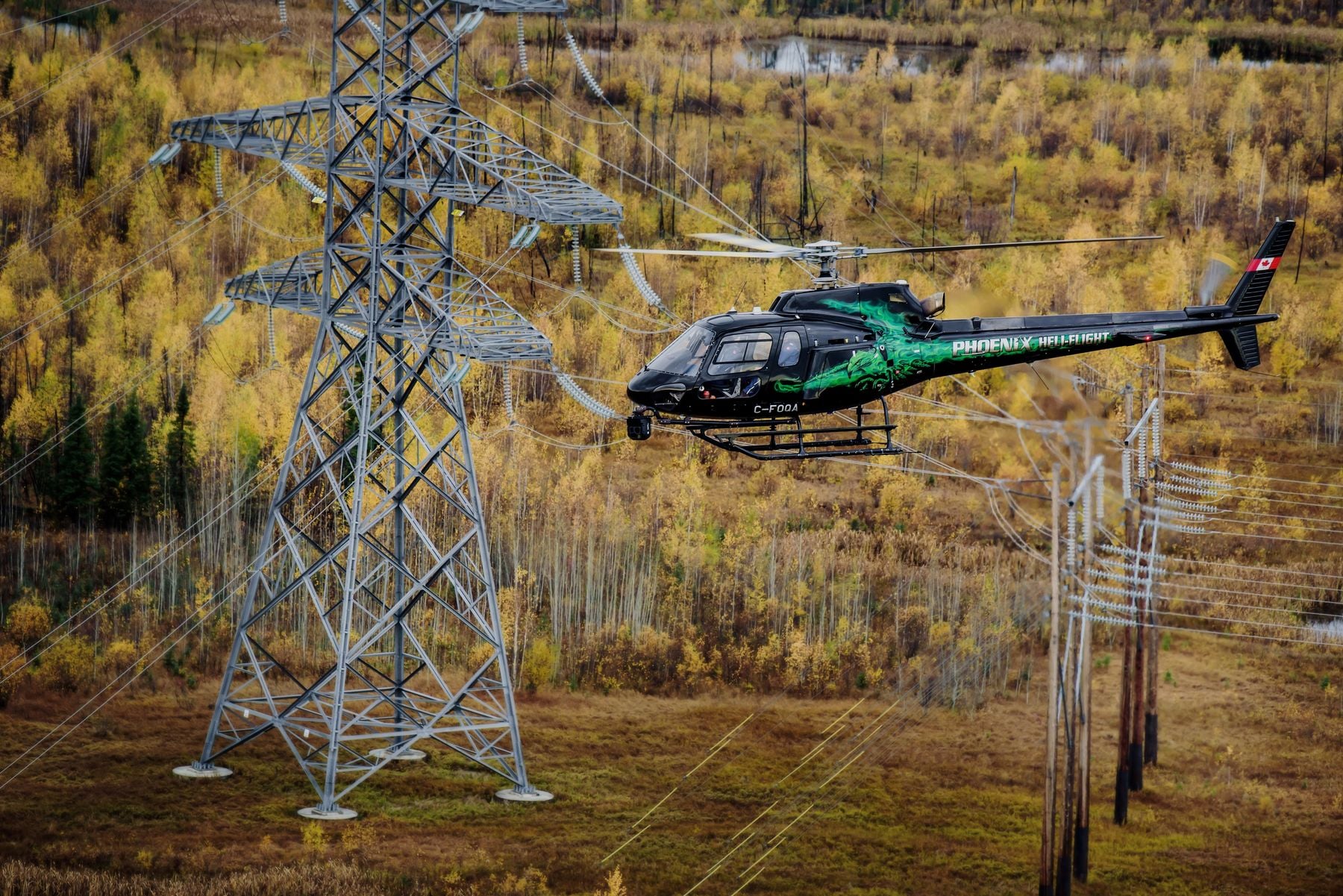
Utility helicopter missions represent some of the most unforgiving flight profiles in civil and commercial aviation, whether stringing high-tension power lines, maintaining hover references in dense wildfire smoke, or conducting external-load operations with precision, all within a razor-thin operating envelope. As the industry navigates increasingly complex operating environments, emerging technologies and evolving mission requirements, one priority remains constant: ensuring operators have the tools, training and expertise to perform these missions safely and effectively.
These shared priorities were at the centre of Airbus Helicopters’ third annual International Utility Summit, held in Vancouver, Canada, in October 2026. Bringing together more than 100 operators, industry experts and regulatory representatives from across North America and beyond, the event explored the challenges and opportunities shaping the future of utility aviation, with a focus on safety, evolving operational demands and the people behind every mission.
SAFETY FROM THE GROUND UP
Central to the conversations throughout the summit was organisational safety culture, which extends far beyond the aircraft itself. It is a culture built through leadership, training, experience and the collective responsibility of everyone involved in the mission. While manufacturers play a critical role in delivering reliable, mission-proven aircraft, operational safety begins well before take-off, with every aspect of an organisation, from maintenance and engineering to mission planning and crew coordination, contributing to an environment where safety remains the priority.
“Enhancing operational safety starts with the culture on the ground,” said Gabriel Zuber, Safety Enhancement Senior Manager at Airbus Helicopters, echoing the view that sound judgement and disciplined decision-making are essential to building a strong safety culture.
For operators, this includes empowering crews to make difficult decisions, particularly when operational demands and commercial pressures intersect. “Power outages are not emergencies. Even if there are 20,000 people out of power, if it’s not safe, don’t go,” emphasised Pete Anderson, Senior Manager, Helicopter Operations at Pacific Gas & Electric Company. “I want them to hear that culture from us, from me.”
Developing this culture also requires a deliberate approach to training and mentorship. Beyond technical qualifications and flight hours, personnel must understand the operational realities, customer expectations and organisational standards that guide their work. For experienced crews and those entering the industry, the ability to recognise limitations, speak up and make informed decisions is as important as technical proficiency.
ADAPTING TO NEW OPERATIONAL REALITIES
Increasingly, the missions themselves are evolving, with wildfire fighting standing out as a repeated focus across many discussions. With wildfires placing increasing demands on emergency response resources, operators are exploring new technologies and approaches to strengthen aerial firefighting capabilities.
Helicopters play an essential role in initial attack, transporting personnel and equipment, conducting reconnaissance and delivering water to areas that may be difficult to access from the ground. Airbus helicopters such as the single-engine H125 and the heavy-lift twin-engine Super Puma have become trusted platforms for these missions, offering the versatility, performance and range required to operate in challenging terrain and demanding conditions.
But as wildfire response strategies evolve, greater coordination between aerial and ground resources is becoming increasingly important. Emerging technologies that connect information from satellites, uncrewed aircraft, ground crews and helicopters offer opportunities to strengthen situational awareness and support faster, more informed decision-making, including extending aerial firefighting operations beyond traditional daylight hours.
“Fires are a 24-hour problem. Why does it stop at sunset?” asked Chuck MacFarland, former Chief of Air Operations, San Diego Fire Rescue, during discussions on night firefighting operations. While darkness has historically limited aerial suppression activities, advancements in night vision technology, specialised training and operational procedures are enabling some operators to extend their missions after dark; cooler temperatures, increased humidity and calmer winds can also create more favourable conditions for suppression during nighttime hours.
At the same time, as crewed and uncrewed aircraft increasingly operate in overlapping environments, ensuring their safe integration requires greater coordination and situational awareness. The growing presence of uncrewed aerial systems, particularly at low altitudes, presents new opportunities and challenges for operators, regulators and industry. With commercial drone registrations now vastly outnumbering conventional civil helicopters, regulators including the US Federal Aviation Administration and Transport Canada Civil Aviation are moving away from ad hoc operational waivers toward standardised integration frameworks.
To explore evolving regulatory developments, tactical deconfliction and the future of airspace integration, Airbus welcomed Pamela Gomez, Director of UAS Technologies at the FAA, and Ryan Coates, Executive Director of Strategy and Emerging Technologies at Transport Canada Civil Aviation. A key point of discussion centred on resolving the historical imbalance in which low-flying helicopters bore the primary burden of visual avoidance while drones only required visual reference to crewed aircraft; regulators emphasised that the modern aviation system can no longer permit anonymity in shared airspace.
“Future success really means that drones become a legitimate part of the aviation ecosystem. They’re not just one, or a technology that will create its own ecosystem that will be constrained to low-level aerospace, because the efficiencies can be gained by allowing them to have more space,” said Ryan Coates. “The challenges that we’re faced with are making sure that unlocking this potential doesn’t unintentionally introduce safety risks to the system.”
PASSION, PATIENCE AND HUMILITY: THE HUMAN ELEMENT AT THE HEART OF EVERY MISSION
While innovation continues to expand what is possible, a common theme ran throughout the two-day summit: the expertise and experience of the people behind these missions remain fundamental to the industry’s success. Three principles resonated throughout: passion, patience and humility, together reflecting the mindset required to navigate demanding operations, recognise limitations and continually learn from experience. As the industry looks to the future, preserving this knowledge and passing it on to the next generation will be just as important as advancing the technologies that support these missions.
As Jodie Granley, Chief Pilot with Edmonton Police Services and a utility helicopter pilot for more than 35 years, reflected: “Aviation doesn’t only pass on its knowledge through manuals; it passes it down through people.”
Source and Images: Airbus