
Pipistrel, a Textron Inc. company, has made the world debut of the Voyager training aircraft at EAA AirVenture Oshkosh 2026, introducing an IFR-capable, spin-certified training platform equipped with the new Garmin AXIS flight display avionics, designed to align with anticipated MOSAIC regulations and priced at €240,000 for entry into service in 2027.
WORLD DEBUT AT OSHKOSH FOR A TRAINING WORKHORSE BUILT FOR THE MOSAIC ERA
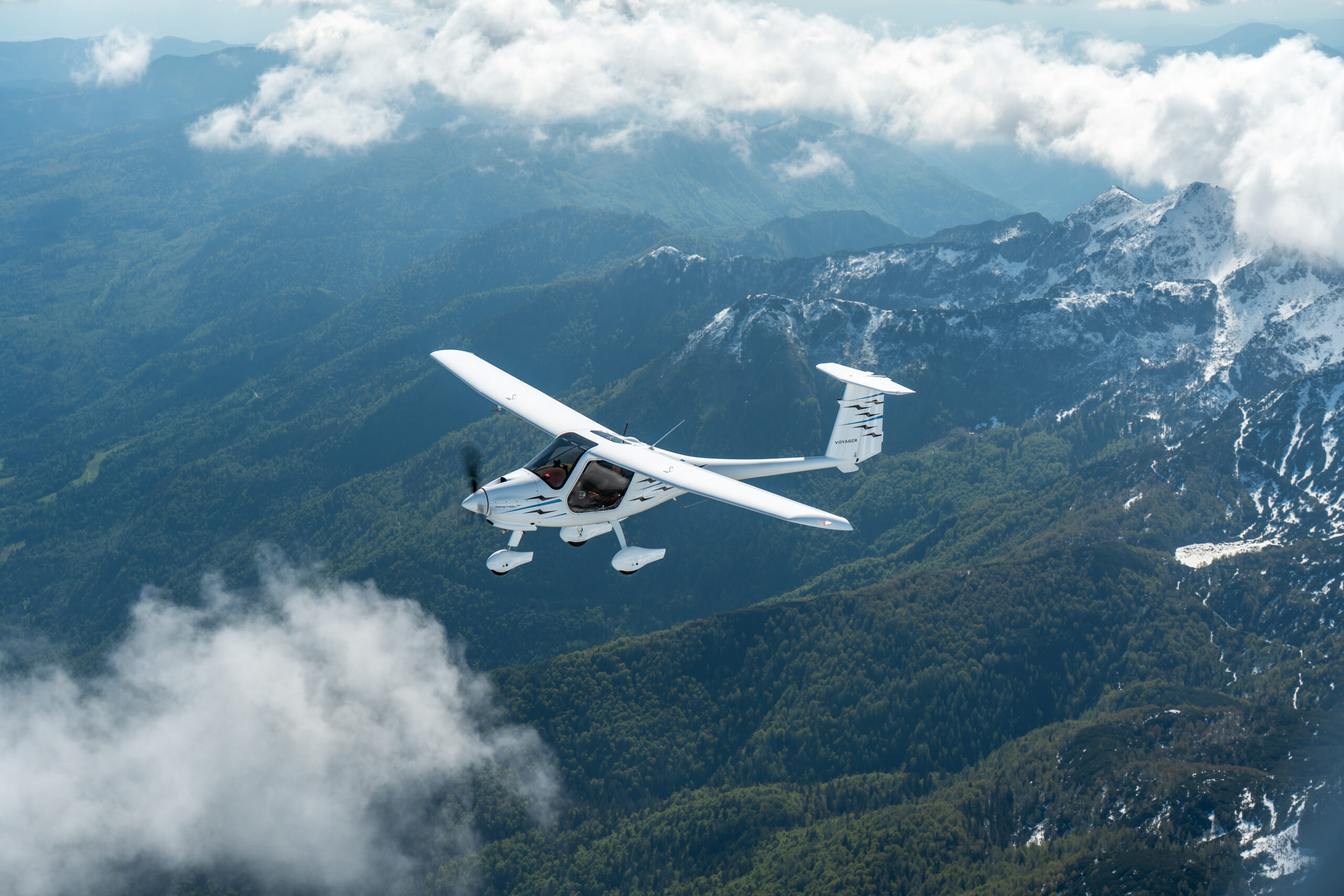
Pipistrel, headquartered in Ajdovščina, Slovenia and operating as an affiliate of Textron Aviation Inc., has introduced the Pipistrel Voyager at EAA AirVenture Oshkosh 2026, where it is on display at the Textron Aviation booth, stand 78. The Voyager is a purpose-built two-seat training aircraft designed to expand the capability range of flight school fleets while maintaining the efficiency and simplicity associated with Pipistrel’s existing trainer portfolio. It is expected to enter into service in 2027, and is available at a 2026 base price of €240,000.
Chris Crow, Vice President of Pipistrel Sales, said the Voyager was built to be a training workhorse — giving flight schools the ability to expand capability while maintaining the efficiency, accessibility and reliability Pipistrel was known for, while also providing owner-operators with a modern, capable aircraft at an accessible price point. The aircraft is designed to complement, rather than replace, the iconic Cessna Skyhawk in flight school fleets, extending capability into IFR training, intentional spin training and advanced mission phases that the Skyhawk serves less efficiently.
MOSAIC ALIGNMENT AND TRAINING CAPABILITY SPECTRUM
The Voyager’s most strategically significant design decision is its alignment with the FAA’s anticipated Modernization of Special Airworthiness Certification (MOSAIC) regulations, which are expected to broaden the missions and capabilities permitted for Light Sport Aircraft and create new pathways for more capable training aircraft to reach market faster and at lower certification cost. Chris Hearne, Senior Vice President of Engineering at Textron Aviation, said MOSAIC represented a fundamental shift in how aircraft are developed and brought to market, enabling more capable aircraft, faster introduction of new technology and greater flexibility in how aircraft are used across training and operations.
The Voyager’s training capability spans beginner through advanced phases from a single platform. It carries instrument flight rules (IFR) training capability and intentional spin certification for advanced instruction — a combination that reduces fleet complexity for schools seeking to consolidate training on fewer types. The integral ballistic parachute provides an additional safety layer, and the Rotax 912 ULS engine delivers the proven reliability and low operating cost that high-frequency training operations demand.
GARMIN AXIS AVIONICS AND PERFORMANCE SPECIFICATION
The Voyager is the first Pipistrel aircraft to be equipped with the new Garmin AXIS flight display avionics system — announced by Garmin earlier this month — integrating multiple avionics functions including GPS, NAV/COMM and audio panel into a single display. The installation features a three-axis autopilot with a blue-level (LVL) button and electronic stability and protection, a haptic stall warning system, single-lever throttle control and a highly responsive touchscreen display with physical controls for quick access to key functions. The AXIS display provides pilots with full-screen or split-screen operating modes and integrates seamlessly with external systems.
The Voyager has a maximum take-off weight of 1,389 lb, a useful load of 552 lb, and a maximum range of 740 nautical miles with IFR reserves — a useful endurance figure for cross-country training and extended dual instruction flights. These attributes are designed to help operators maintain a low cost per flight hour while supporting growing training demand. The two-seat configuration is optimised for flight instruction, with the cockpit layout and avionics suite designed to build cockpit familiarity and consistency across training phases, reducing the cognitive gap when students transition to more complex aircraft in airline pipelines.
Source and Images: Pipistrel / Textron Aviation