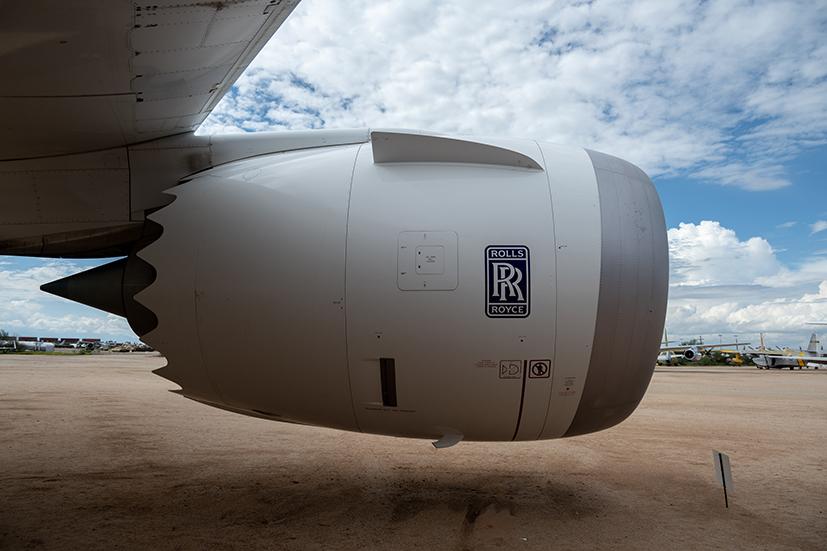
Rolls-Royce is spearheading a UK-based initiative aimed at finding smarter ways to use sustainable aviation fuel (SAF) to maximise environmental benefits, including reducing non-CO2 emissions linked to contrail formation.
The Quantifying Reduction in Thermal Contrails by Optimising SAF (QRITOS) project brings together Rolls-Royce, British Airways, Imperial College London, and Heathrow Airport. Co-funded through the Non-CO2 Programme under the Aerospace Technology Institute (ATI), the two-year project will run until April 2027.
While SAF is recognised for lowering end-to-end CO2 emissions, in-flight measurements have shown its potential to reduce the number of ice crystals in contrails, mitigating the climate impact of these thin clouds. However, the current supply of SAF is limited, often blended at low ratios with conventional jet fuel. The QRITOS project seeks to prioritise SAF deployment on flights most likely to form persistent contrails, enhancing the climate benefits of the fuel currently available.
The initiative will combine British Airways flight trials, advanced modelling, and satellite observations to monitor contrail formation, aiming to demonstrate the feasibility of targeting SAF where it delivers the greatest environmental advantage.
Alan Newby, Rolls-Royce Research & Technology Director, said: “SAF will not only play a vital role in decarbonising aviation, but has also been shown to reduce certain non-CO2 emissions. This project will demonstrate smarter ways of using SAF which could unlock additional value through reducing non-CO2 climate effects as well.”
Marcin Dutka, Rolls-Royce Environmental Sustainability Technologist and QRITOS project manager, added: “Measurements have already shown that fuel composition can influence contrail properties. This project aims to demonstrate how contrail climate impact might be reduced by targeting SAF at flights predicted to form persistent contrails.”
Tom Byrne, British Airways Head of Net Zero and Environment, said: “Through the QRITOS project, we’re exploring how SAF can go beyond reducing carbon emissions to also help minimise the climate impact of contrails. By combining cutting-edge research, satellite data and real-world flight trials, we’re working to unlock smarter, more targeted use of SAF—ensuring that every drop delivers maximum benefit.”
Matt Gorman, Director of Carbon Strategy at Heathrow, noted: “As SAF continues to scale, it is important to take a closer look at how we can use it to deliver the greatest climate benefit. As one of the world’s busiest airports, we’re proud to participate in this project to demonstrate how targeted SAF use could help address non-CO2 emissions.”
Imperial College London will develop and trial advanced computational contrail modelling and satellite image analysis techniques, aiming to predict and assess the effectiveness of targeted SAF deployment. Air bp will provide technical expertise on SAF for the project team.
The QRITOS project represents a collaborative approach between government, industry, and academia to enhance aviation sustainability, improve forecasting of contrail formation, and advance climate impact mitigation strategies.
SOURCE: ROLLS ROYCE IMAGE: Stock.adobe.com/Joseph Creamer