
Omar Ali Adib, Rolls-Royce’s Senior Vice President for the Middle East, Africa and Central Asia, has outlined the operational intelligence and engineering improvement programme underpinning the Trent engine family’s continuous development, with verifiable data showing the Trent XWB-84’s Enhanced Performance standard delivering nearly double its fuel-burn improvement target and the Trent 1000 XE achieving up to three times the durability in certain environments.
DATA FROM LIVE OPERATIONS, NOT TEST BEDS, DRIVES TRENT ENGINE IMPROVEMENTS
In an article distributed by APO Group to African media, Omar Ali Adib, Senior Vice President for the Middle East, Africa and Central Asia at Rolls-Royce Civil Aerospace, has set out the philosophy and engineering methodology behind the continuous improvement of the Trent engine family — and has backed it with quantified operational results that illustrate the financial significance of incremental engineering progress at fleet scale.
The argument begins with a premise that challenges a common assumption about aerospace development: rather than viewing engine certification as the end of the development process, Rolls-Royce treats the entry into service of a new engine as the beginning of a new and more data-rich phase of learning. Every take-off, climb, cruise and landing on every aircraft in the global fleet generates operational information that deepens understanding of how engines perform in real-world conditions — across oceans and in hot, high, humid and dusty environments that laboratory testing can only approximate.
TRENT XWB-84 ENHANCED PERFORMANCE: 1.8% IMPROVEMENT, $9 MILLION IN FLEET SAVINGS
The most commercially concrete result cited by Adib concerns the Trent XWB-84, which powers every Airbus A350 in commercial service. The Trent XWB-84 Enhanced Performance standard — now the current production configuration — has exceeded its certified fuel-burn improvement target. Data from everyday airline operations demonstrated savings of approximately 1.8%, nearly double the original target. At fleet scale, the translation is significant: for a single aircraft, the improvement delivers around $450,000 in annual fuel savings. For a typical fleet of 20 Airbus A350-900s, the benefit amounts to approximately $9 million per year.
This improvement did not emerge from a redesign; it emerged from the disciplined observation of what operational data revealed about how the engine’s components actually aged and performed under diverse real-world loads. The same learning philosophy has driven Rolls-Royce to commit more than £1 billion to a comprehensive improvement programme spanning the Trent 1000, Trent 7000 and Trent XWB-84 engine families simultaneously.
TRENT 1000 XE: UP TO THREE TIMES THE DURABILITY, 30% OF FLEET RETROFITTED
For operators of the Boeing 787 Dreamliner powered by the Trent 1000, the most tangible outcome of the improvement programme is the Trent 1000 XE standard. The XE package incorporates improved cooling, lighter high-pressure turbine blades that reduce centrifugal loading, advanced thermal-barrier coatings, redesigned combustor interfaces and updated control software. The result is up to three times the durability of the previous standard in certain operating environments — a step change in Time on Wing, the metric that most directly affects airline economics by determining how long an engine can remain in service before scheduled removal for overhaul.
As of April 2026, approximately 30% of in-service Trent 1000 engines had received the first phase of the XE upgrade through a coordinated programme across Rolls-Royce’s global maintenance network, with the fleet moving progressively towards the full XE standard. These improvements are being installed in new engines and progressively retrofitted across the existing Trent 1000 fleet, and are covered by standard TotalCare agreements for existing customers — meaning operators receive the durability benefits without bearing additional cost.
SHARED LEARNING ACROSS THE TRENT FAMILY AND THE AFRICA RELEVANCE
Adib identifies the Trent 7000 — the newest member of the family, powering the Airbus A330neo — as both a beneficiary of decades of accumulated Trent experience and an active contributor to the engineering ecosystem, validating the latest durability enhancements whose lessons are then incorporated into the Trent 1000 XE for wider customer benefit. For operators in the Africa region, where aircraft frequently operate in demanding conditions including high ambient temperatures, dust-laden air and intensive utilisation on hub-to-hub connections, the durability improvements carry particular commercial significance. Reduced Time on Wing requirements translate directly into lower spare-engine inventory requirements, fewer maintenance events and greater route reliability — all of which matter more in markets where maintenance infrastructure is more limited and disruption costs are disproportionately high.
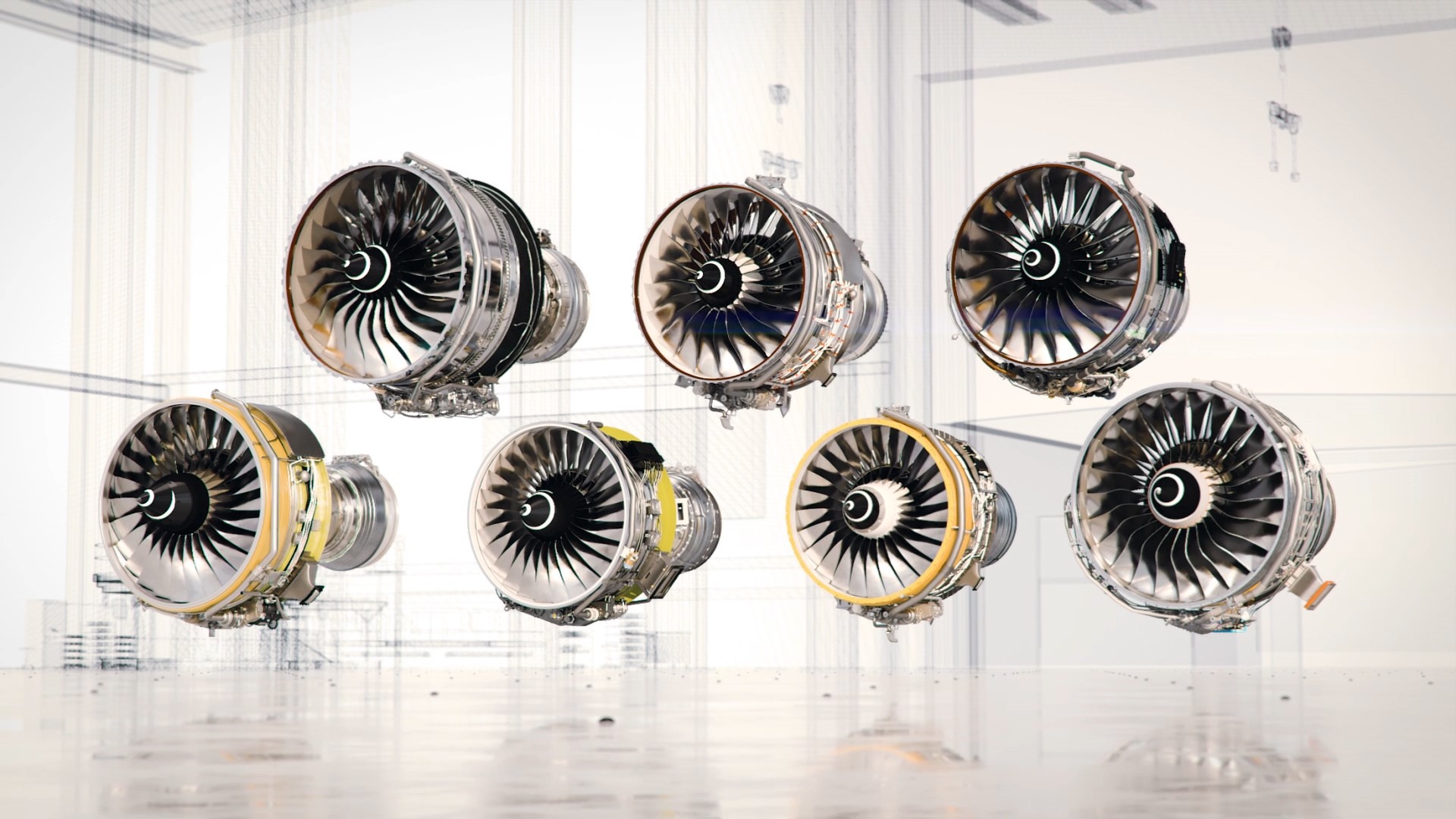
Rolls-Royce is expanding its MRO network globally through a combination of its own facilities, joint ventures, strategic partnerships and authorised maintenance centres, with the stated objective of bringing capability closer to customers, transferring skills and developing local talent. The company’s Civil Aerospace division currently powers the world’s leading widebody aircraft across the full Trent family — the Trent 1000 on the 787, the Trent XWB on all A350s and the Trent 7000 on the A330neo — giving it a breadth of operational data across Boeing and Airbus platforms that Adib identifies as a core competitive advantage in engineering development.
Source and Images: Rolls-Royce / APO Group