

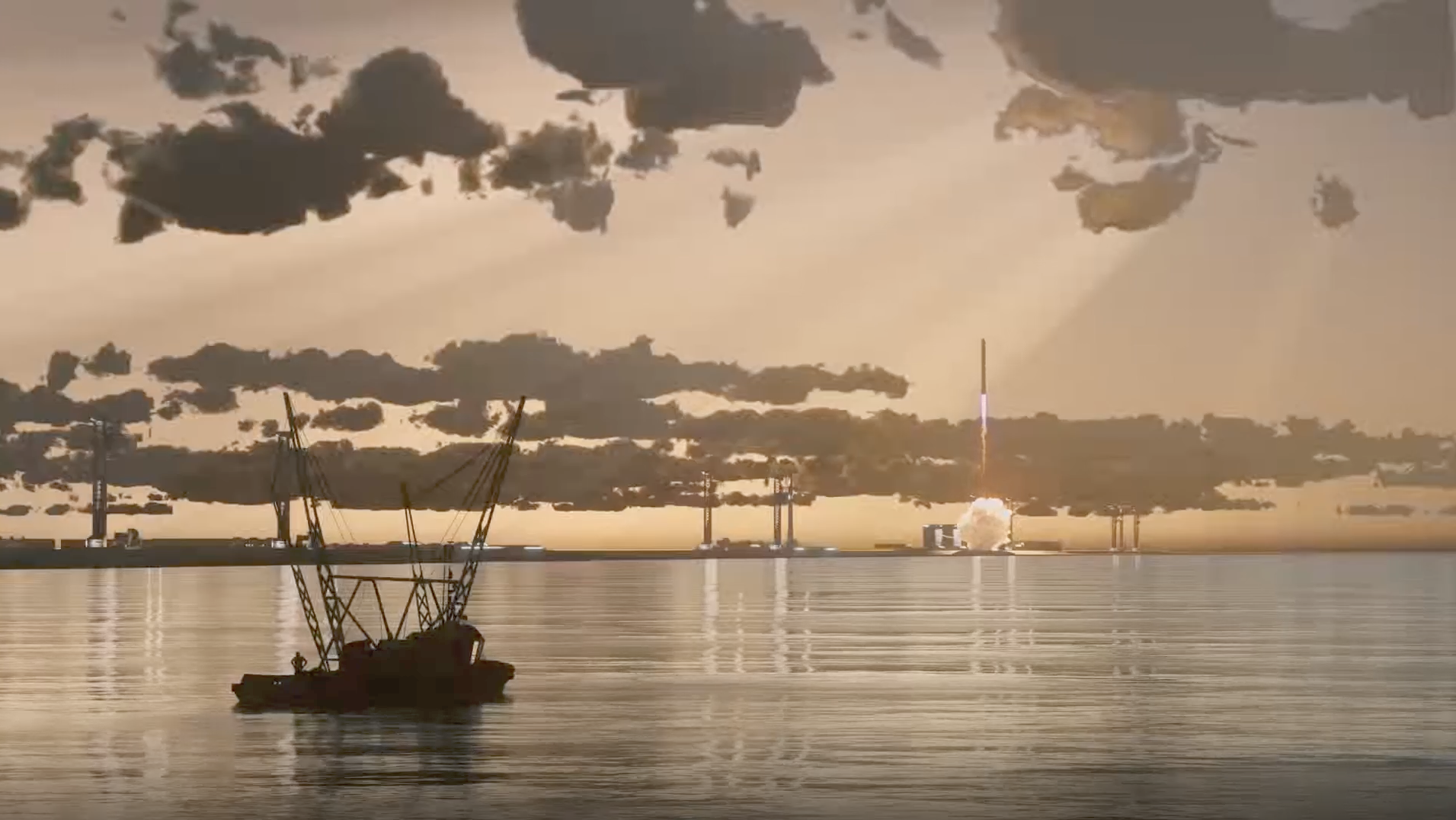
SpaceX and the state of Louisiana have announced plans for a high-cadence Starship spaceport in Vermilion Parish, designed for thousands of launches a year with ten launch pads, onsite methane production, power generation, deep-water shipping and an airport. Civil work is expected to begin in 2027, with first launch as soon as 2029.
A SITE DESIGNED AROUND LAUNCH RATE
SpaceX and the state of Louisiana have announced plans to develop a high-cadence spaceport for Starship on the Louisiana Gulf Coast, in an expansion the company states will directly enable its ability to launch Starship thousands of times per year. The announcement was made by SpaceX President and Chief Operating Officer Gwynne Shotwell alongside Louisiana Governor Jeff Landry and Susan Bourgeois of Louisiana Economic Development.
The design premise is the significant part. Starbase, Louisiana is described as self-sustaining and designed from the ground up around launch rate rather than around a launch pad: ten Starship pads, deep-water shipping capability, vehicle processing facilities, an airport, power generation and onsite propellant production. SpaceX states the company is committed to investing at least $100 billion and creating more than 3,000 jobs at the site, hiring heavily from nearby communities.
Propellant is the element that explains the location. Southern Louisiana has abundant natural gas, which SpaceX intends to use both for the site’s power stations and to liquefy on site into the liquid methane that fuels Starship. A vehicle flown at high cadence consumes propellant at a rate that makes trucking it in impractical, and a launch site that manufactures its own fuel from a local feedstock removes a logistics chain that would otherwise constrain how often it can fly. The same logic applies to deep-water shipping access and to onsite power: each is a dependency being brought inside the perimeter.
SpaceX states the site will enable frequent missions to Earth orbit supporting the expansion of internet connectivity, the launch of Starmind (the company’s AI data centre programme) and its longer-term ambitions around lunar and interplanetary operations.
A COASTLINE THAT IS DISAPPEARING
The environmental commitments accompanying the announcement are unusually detailed for a development of this kind, and the reason is the condition of the land itself. SpaceX notes that shoreline in Vermilion Parish is eroding at between 3.3 and 23 feet per year, a rate at which the coastline visibly retreats within a single career, and one that reflects a combination of subsidence, sediment starvation and historic canalisation across the Louisiana coast.
The company states it is partnering with state and federal agencies to expand Louisiana’s Coastal Master Plan and Coastal Wetlands Planning, Protection and Restoration Act projects, including Gulf shoreline protection breakwaters intended to reduce wave energy and slow loss along the Gulf edge. It also describes plans for thousands of acres of marsh creation using beneficial-use placement of dredged material and offshore sediment sources, alongside interior marsh bank stabilisation and rebuilding of marsh in remnant canals – work intended to reconnect fragmented wetlands, restore natural storm buffers and return habitat lost to erosion.
On wildlife, SpaceX states that Pecan Island and nearby wetlands are high-value habitat for migratory waterfowl, shorebirds and wading birds, that it will not develop the full footprint of the land, and that it will preserve wetlands and wildlife habitat. It cites experience at existing launch sites where waterfowl continue to use nearby habitat during operations, and states it will support monitoring and management alongside wildlife agencies, landowners and conservation groups so that hunting, fishing, birding and other recreational uses can continue.
TIMELINE
Initial civil work is expected to begin as soon as next year, with construction dated to 2027 and first launch from the site as soon as 2029. Both dates are SpaceX’s own projections and are subject to permitting, environmental review and the pace of Starship development.
Source and Images: SpaceX