
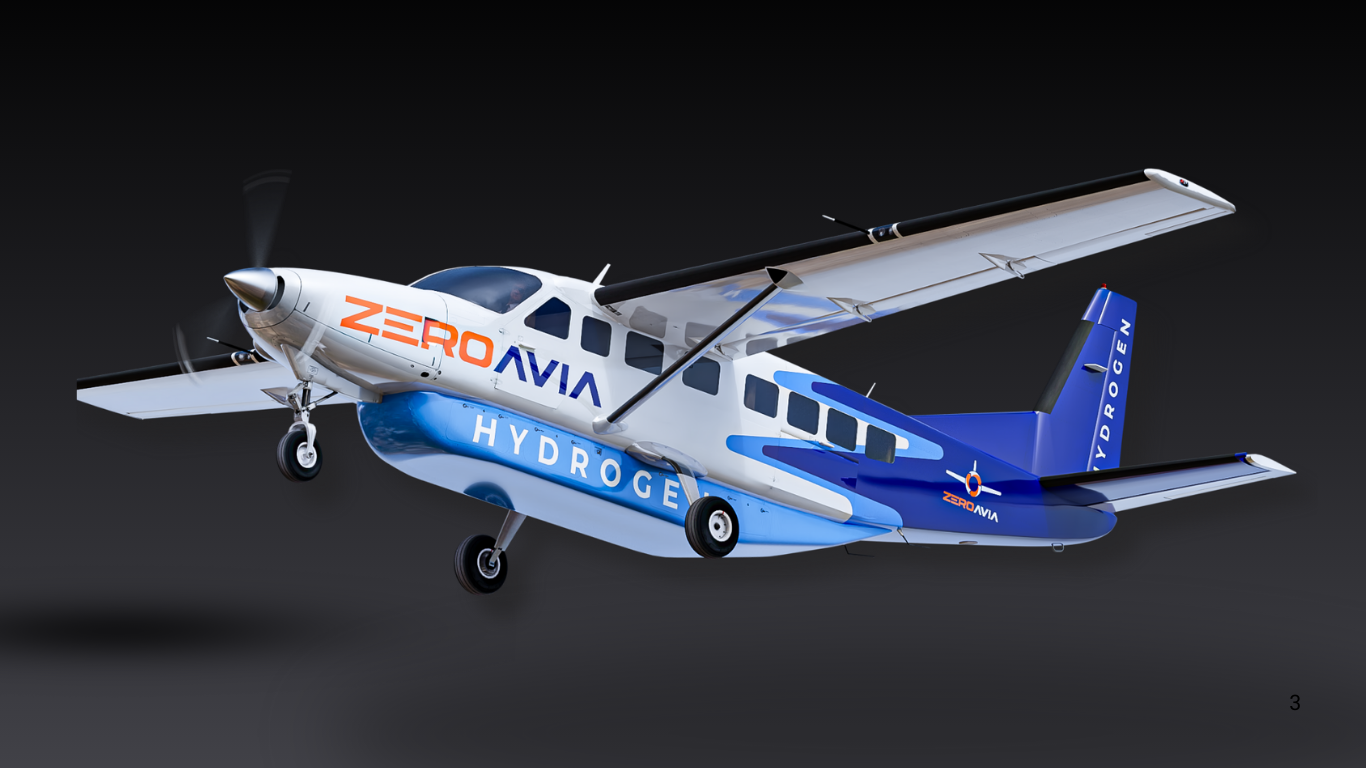
ZeroAvia and Safran have announced a technology partnership combining ZeroAvia’s aerospace fuel cell systems expertise with Safran’s certified electric propulsion heritage, focused on accelerating hydrogen-electric propulsion development — with particular emphasis on High-Temperature fuel cell architectures suited to the most demanding aviation applications.
TWO COMPLEMENTARY PORTFOLIOS UNITE BEHIND HYDROGEN-ELECTRIC MATURATION
ZeroAvia and Safran have announced the launch of a formal collaboration dedicated to hydrogen-electric propulsion technologies for aviation, combining two organisations with complementary but distinct positions in the zero-emission flight development landscape. ZeroAvia brings expertise in aerospace-grade hydrogen-electric propulsion and power systems, Design Organization Approval from both the FAA and the UK CAA, and more than 3,000 preorders for its propulsion and power systems from operators, OEMs and defence customers globally. Safran contributes its historic pedigree in propulsion and electrification, and most significantly, the achievement of the world’s first certification of an electric propulsion system — its ENGINeUS platform — alongside an established technology roadmap in High-Temperature hydrogen fuel cells specifically for aviation.
Christine Ourmières-Widener, Executive Chair of ZeroAvia, said hydrogen-electric propulsion had the potential to transform aerospace and defence applications and that collaboration was essential to accelerating that transition. She said the partnership with Safran would help advance technologies critical to building a better, cleaner future for flight. Éric Dalbiès, Chief Technology Officer of Safran, said the company had achieved world-leading progress in aerospace electrification and was pursuing a solid technology roadmap toward the maturation of High-Temperature hydrogen fuel cells for aviation. He described collaboration with ZeroAvia as an exciting opportunity to build on those advances, foster synergies and drive further innovation in zero-emission technologies.
HIGH-TEMPERATURE FUEL CELLS AND WHY THEY MATTER FOR AVIATION
The specific focus of the partnership on High-Temperature (HT) fuel cells is significant in the context of aviation’s decarbonisation technology landscape. Conventional Proton Exchange Membrane (PEM) fuel cells — the dominant hydrogen fuel cell architecture in ground transport applications — operate at relatively low temperatures and face challenges around heat management and power density in aviation environments, where thermal efficiency and system weight are more tightly constrained than in road vehicles. High-Temperature fuel cell architectures operate at elevated temperatures, which can improve electrical efficiency, simplify heat management and increase tolerance for fuel impurities, making them potentially better suited to the most demanding aviation applications — including larger commercial aircraft, defence platforms and long-endurance missions.
The partnership is intended to act as a catalyst for the maturation of fuel cell electric propulsion systems across several aviation applications, with the two companies investigating collaboration across advanced HT fuel cell development, integration and testing activities. Both parties described the collaboration as reflecting the industry’s growing momentum towards hydrogen-powered aviation and their shared commitment to developing the technologies required to support the sector’s long-term decarbonisation goals.
Source and Images: ZeroAvia / Safran