
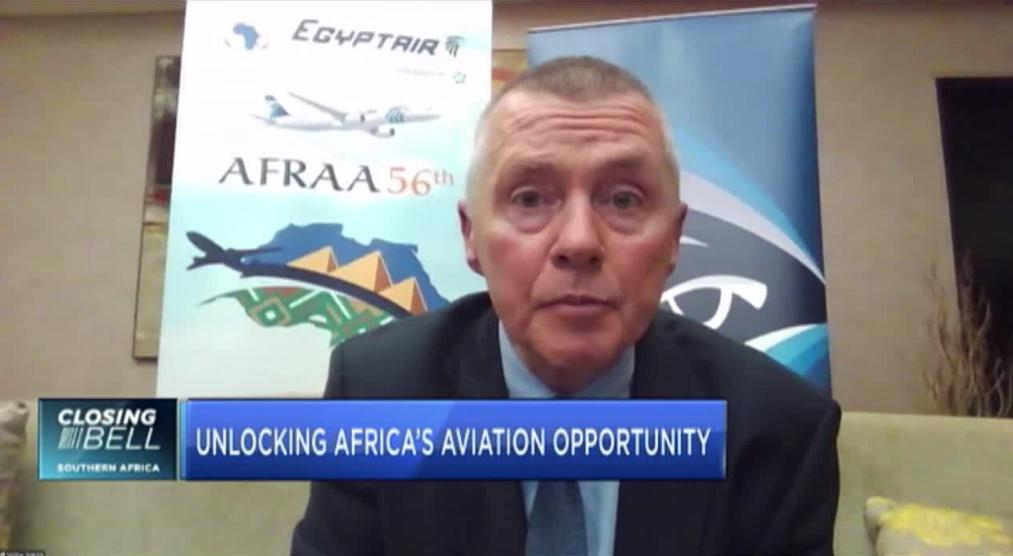
In a compelling address at the 56th African Airlines Association (AFRAA) Annual General Assembly (AGA) held in Cairo on November 18, 2024, Willie Walsh, Director-General of the International Air Transport Association (IATA), called on Africa’s aviation leaders to leverage the continent’s untapped potential while addressing key challenges.
Walsh opened his speech by acknowledging the immense opportunity Africa holds for aviation. Despite being home to 18% of the world’s population, Africa contributes only 3% to global GDP and accounts for a mere 2% of global air transport. “As Africa’s airline leaders, I know you are ready to harness this potential to grow your airlines and connect the continent. However, we recognize the challenges—high taxes and costs, inadequate infrastructure, and low adoption of global safety standards,” Walsh stated.
In line with IATA’s mission to support its members, Walsh highlighted three critical areas for Africa’s aviation industry to focus on: safety, blocked funds, and sustainability.
Safety First: Raising the Bar
Walsh underscored the need to prioritize safety through global standards like the IATA Operational Safety Audit (IOSA). He praised Africa for its safety improvements, citing no hull losses or fatal accidents between 2020 and 2023. However, he cautioned that 2024 saw setbacks, particularly with turboprop hull loss rates.
“Safety thrives with global standards, and IOSA is a testament to that. Airlines on the IOSA registry consistently outperform those that are not,” he explained, encouraging more African airlines to sign the IATA Safety Leadership Charter and contribute data to the Global Aviation Data Management (GADM) initiative.
Walsh also called on African governments to fulfill their responsibilities under ICAO Standards and Recommended Practices (SARPS), noting that 20 African Civil Aviation Commission (AFCAC) states have yet to meet the required implementation threshold.
The Challenge of Blocked Funds
Blocked funds remain a significant hurdle, with $950 million of airline revenues trapped in African countries—more than half of the global total of $1.662 billion. Walsh identified the XAF and XOF currency zones as areas with the largest withholding, amounting to over $300 million.
“Airlines are not charities,” Walsh emphasized. “Connectivity drives economic prosperity, and if airlines cannot repatriate revenues, they cannot sustain operations. This impacts economies directly.”
Walsh acknowledged progress through collaboration with stakeholders but stressed the need for governments to expedite the release of these funds to preserve critical aviation links.
Sustainability: A Path to Growth
Addressing sustainability, Walsh affirmed that aviation’s commitment to achieving net-zero carbon emissions by 2050 remains unwavering. He highlighted the pivotal role of Sustainable Aviation Fuel (SAF), which is expected to contribute over 60% of aviation’s decarbonisation efforts. However, Africa currently lacks SAF production.
“This must change, and Africa has the resources and workforce to lead the way in SAF production. With the right financing and government incentives, Africa could emerge as a global hub for SAF,” Walsh said. He called on stakeholders like Afreximbank to champion SAF initiatives as part of their mission to develop African trade.
Walsh also detailed IATA’s efforts to build a global SAF market, strengthen its sustainability team, and provide airlines with tools to meet their carbon reduction commitments.
A Vision for Africa’s Aviation Future
Concluding his address, Walsh emphasized the transformative potential of Africa’s aviation sector. “Africa has the greatest unused potential for aviation development in the world. This is a profound motivation for us all,” he said.
His speech served as both a rallying cry and a roadmap for Africa’s airline leaders to overcome challenges and unlock the continent’s aviation potential. With a focus on collaboration, innovation, and sustainability, Walsh reaffirmed IATA’s commitment to supporting Africa on its journey toward becoming a major player in the global aviation industry.
IMAGE: © CNBC AFRICA