
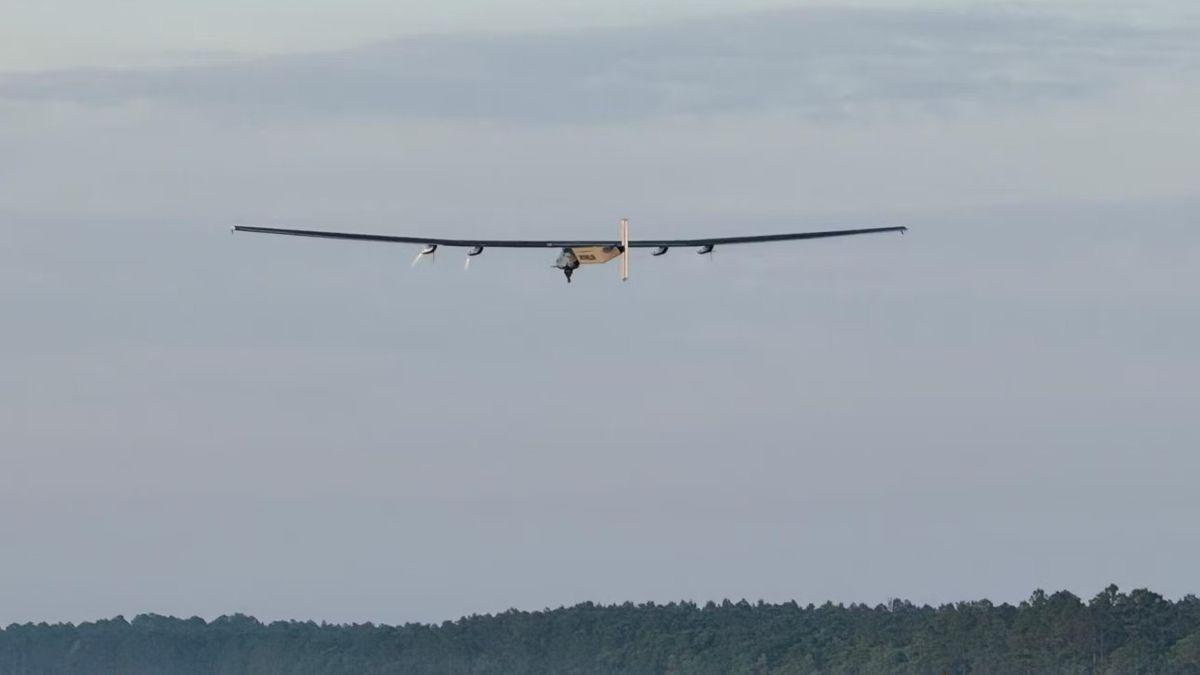
STENNIS, Mississippi — The US Navy has completed a landmark test of the solar-powered Skydweller drone, achieving 73 hours of continuous flight without refuelling. The demonstration, carried out in partnership with Skydweller Aero, launched from Stennis, Mississippi, and showcased the platform’s ability to operate exclusively on solar energy.
Throughout the three-day flight, Skydweller maintained communication links, operated autonomously, and adapted effectively to changing weather conditions. The test, conducted under the Naval Air Warfare Center Aircraft Division (NAWCAD), confirmed that the drone’s energy system consistently generated more power than it consumed, ensuring a positive energy balance.
“This demonstration is an excellent example of how NAWCAD partners with industry to provide the fleet with what it needs,” said NAWCAD Commander Rear Admiral Todd Evans. “It also reflects the technical expertise of our personnel and our ability to turn ideas into real capabilities.”
According to Bill Macchione, head of NAWCAD’s Special Unmanned Aircraft Systems division, Skydweller’s integration into the US Navy’s maritime intelligence, surveillance, and reconnaissance (ISR) network will strengthen operational resilience. “This collaborative approach ensures we have the right platform for the right mission, optimising our resources and enhancing our overall understanding of the maritime domain,” he said.
Designed for extended patrols over large maritime areas, Skydweller’s endurance reduces reliance on manned aircraft and high-performance assets, freeing them for urgent or complex missions. Testing began in 2020 following requests from US Southern Command (SOUTHCOM) to bolster counter-smuggling and border protection efforts.
The drone’s capacity for continuous surveillance over vast regions provides enhanced situational awareness for both US forces and allied partners. A new phase of trials is scheduled for later this summer in SOUTHCOM’s area of responsibility.
SOURCE AND IMAGE: SOUTHCOM