
Florida, USA – 29 September 2025 – BAE Systems today celebrated the successful launch of two advanced spacecraft from Kennedy Space Center, Florida, in support of NASA and NOAA space weather research. The Carruthers Geocorona Observatory and the Space Weather Follow On – L1 (SWFO-L1) mission lifted off aboard a SpaceX Falcon 9 rocket, bound for Lagrange point 1, approximately one million miles from Earth toward the Sun.
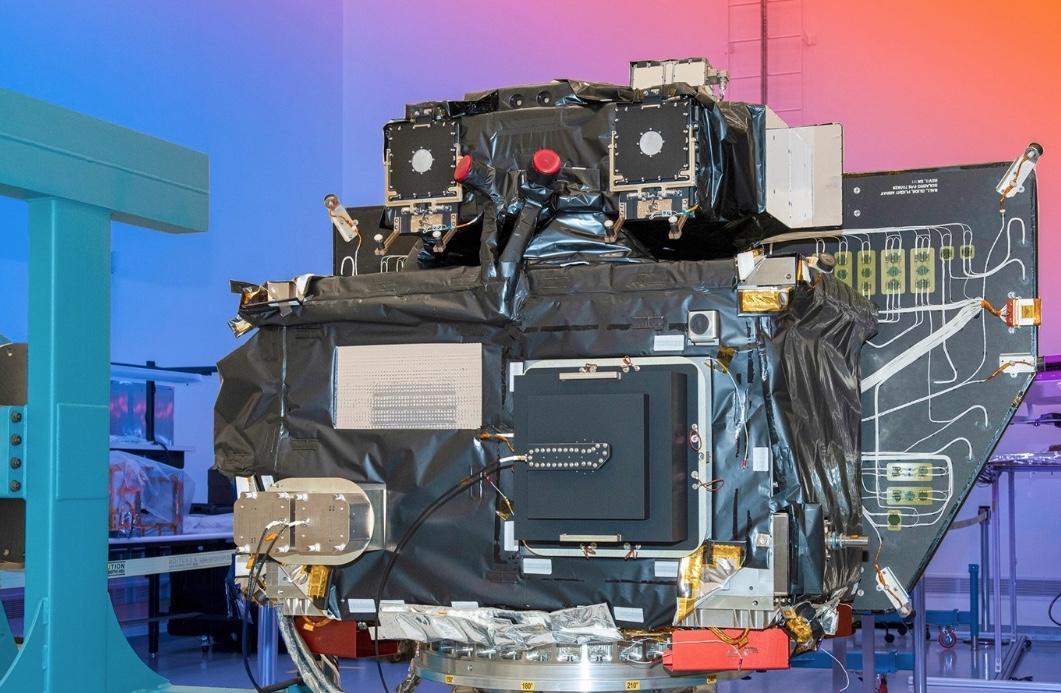
Designed and built by BAE Systems, both spacecraft will deliver new capabilities to monitor and understand the Sun’s influence on Earth and near-Earth space. The Carruthers Geocorona Observatory will investigate the outermost layer of the atmosphere — the exosphere — during periods of both calm and heightened solar activity. By mapping the exosphere’s shape, size, density, and response to energetic solar events, the mission aims to fill critical gaps in our understanding of how solar activity interacts with Earth’s upper atmosphere.
Meanwhile, the NOAA-led SWFO-L1 mission will provide continuous monitoring of space weather, tracking coronal mass ejections and measuring solar wind. Its observations are expected to deliver early warnings of disruptive solar events, helping to protect infrastructure both on Earth and in orbit.
“Through the launch of both the Carruthers Geocorona Observatory and SWFO-L1, we will enhance our understanding of the Sun, the Earth’s exosphere, and how space weather can impact our lives,” said Bonnie Patterson, vice president and general manager of Civil Space for BAE Systems Space & Mission Systems. “We are proud to support the missions of NASA and NOAA and the next generation science programs that these space weather missions will enable.”
Both spacecraft were developed on BAE Systems’ heritage Evolve platform, utilising a common bus and standardised payload interfaces to reduce cost and accelerate delivery. Rigorous design, test, and build processes, coupled with commercial best practices, ensured the successful delivery and launch. BAE Systems also provided training for flight operations teams and will support ongoing mission operations.
The Carruthers Geocorona Observatory is a collaboration with the University of Illinois, Urbana-Champaign, with Dr. Lara Waldrop serving as principal investigator, alongside the University of California, Berkeley, and NASA’s Goddard Space Flight Centre. SWFO-L1 is managed by NOAA in partnership with NASA’s Goddard Space Flight Center and commercial partners. Both spacecraft launched as rideshares alongside NASA’s Interstellar Mapping and Acceleration Probe (IMAP) mission.
SOURCE NAD IMAGE: BAE SYSTEMS