
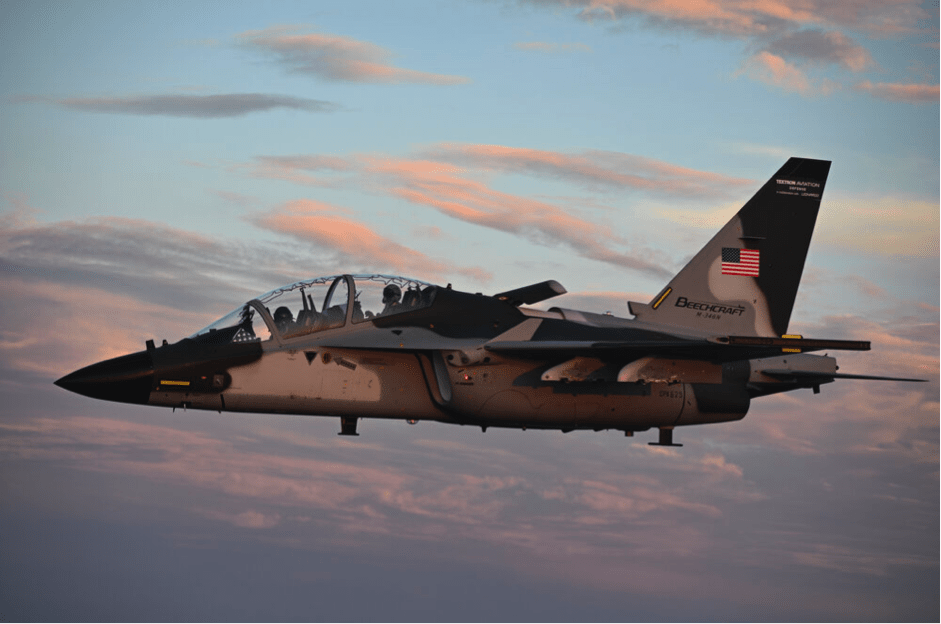
The M-346 advanced jet trainer is transforming fighter pilot training by integrating operational-level performance, sensors and networked systems to produce mission-ready pilots for modern air combat environments.
Advanced trainer integration reshapes pathway from student pilot to operational combat aviator
Advanced military training systems are reshaping the transition from student pilot to operational combat aviator, with the M-346 playing a central role in transforming training philosophy and delivery at the Italian International Flight Training School (IFTS).
Experience from the Italian Air Force indicates that the introduction of the M-346 represented a shift beyond replacing legacy MB-339 trainers. Instead, it enabled closer integration between training and operational environments, supporting the development of pilots prepared for modern, networked air warfare.
According to Lt Col Gianpaolo Pantaloni, Squadron Flight Safety Officer at IFTS and one of the first Italian Air Force pilots selected for the M-346, the aircraft introduced a training environment closely aligned with real operational requirements.
Within months of entering service, instructors were participating in tactical missions alongside frontline aircraft including F-16s, Tornado and Eurofighter platforms during NATO Tactical Leadership Programme activities in Spain.
Traditional pilot training historically followed a segmented structure, beginning with basic flight training before progressing to increasingly complex aircraft. Operational avionics, sensors and weapons systems were typically introduced only at the operational conversion phase. This created longer timelines to combat readiness and increased costs, as tactical training had to be conducted on high-cost frontline fighters.
The M-346 changes this model through a combination of near-fighter performance and advanced systems integration. The aircraft delivers subsonic performance characteristics comparable to operational fighters across most tactical scenarios, enabling pilots to learn manoeuvres and energy management in a platform closely aligned with operational aircraft behaviour.
The platform also integrates modern avionics, including glass cockpit architecture, advanced radar, targeting pods, helmet-mounted displays and full data link integration. When equipped with Air Combat Manoeuvring Instrumentation (ACMI), the aircraft can track and display other aircraft within the training environment, improving situational awareness and tactical decision-making.
Operational validation was demonstrated during Italian participation in NATO tactical training exercises, where M-346 aircraft operated as adversary platforms alongside frontline fighters. This enabled training units to contribute operationally while feeding lessons learned back into training programmes.
The training philosophy enabled by the M-346 supports a shift from skill-based to mission-based pilot development. Modern fighters increasingly reduce pilot workload associated with aircraft handling, while increasing demands related to information management, sensor fusion, data link integration and tactical decision-making.
Graduates from M-346-based training programmes can leave the training environment with experience in radar operation, data link employment, precision weapon concepts, beyond-visual-range tactics, electronic warfare awareness and multi-ship mission coordination.
This reduces the time required for operational conversion and enables pilots to focus on advanced tactical training earlier in their operational careers.
Cost efficiency is also a major driver. Training on advanced jet trainers typically costs significantly less per flight hour than operational fighters. By shifting a large portion of tactical training to advanced trainers, air forces can reduce training costs while improving training outcomes.
Ongoing development of the M-346 platform is expected to further align training with fifth- and sixth-generation fighter operational requirements. Planned Block 20 upgrades include large-area cockpit displays, enhanced helmet-mounted display capability, improved weapons simulation and expanded data integration and network architecture.
The M-346’s development model focuses on maintaining a mature airframe while continuously upgrading mission systems and avionics, allowing the aircraft to evolve alongside operational fighter requirements.
Modern air combat increasingly depends on information management across highly networked operational environments. Training platforms must therefore replicate data-rich environments, enabling pilots to learn how to filter, prioritise and act on large volumes of information.
The M-346 supports this approach through integration with networked training environments and ground-based real-time monitoring systems that support mission analysis and training feedback.
The aircraft has also gained international adoption, with multiple nations selecting the platform as part of modernised training strategies. Shared use of advanced trainers across partner nations can support improved interoperability and joint training outcomes.
The evolution of the M-346 reflects a broader shift in military pilot training, where advanced trainers are increasingly viewed as operationally relevant platforms rather than transitional training aircraft. The integration of advanced performance, sensors, simulation and network capability enables training environments that more closely reflect modern combat operations.
SOURCE: International Flight Training School IFTS IMAGE: LEONARDO