
China Manned Space Agency outlines 2026 plans including two crewed missions, one cargo flight and continued progress towards a crewed lunar landing by 2030.
Two crewed missions and one cargo flight planned
China is scheduled to launch two crewed missions and one cargo spacecraft mission in 2026 as part of its space station operations, according to the China Manned Space Agency (CMSA).
The agency stated that an astronaut from the Hong Kong or Macao Special Administrative Region is expected to undertake a space station flight mission as early as this year. In addition, one astronaut from the Shenzhou-23 crew will conduct a year-long in-orbit stay experiment.
CMSA confirmed that China’s space station is operating stably in orbit with sound performance.
Operational record and extravehicular activities
Since entering its application and development phase, China’s manned space programme has completed six crewed missions, four cargo resupply missions and seven spacecraft return missions. The programme also carried out its first emergency launch in 2025.
Across six astronaut crews, long-duration stays in orbit have been conducted. Astronauts have performed a total of 13 extravehicular activities (EVAs), alongside multiple transfers of application payloads outside the spacecraft. Several extravehicular repair missions have been completed, and a new world record for the longest single EVA by astronauts has been achieved.
The selection of a fourth batch of astronaut candidates, including payload specialists from Hong Kong and Macao, has also been finalised.
Progress towards crewed lunar landing by 2030
China is targeting a crewed lunar landing by 2030. CMSA reported that development work on the country’s crewed lunar exploration programme is progressing smoothly, with phased breakthroughs achieved.
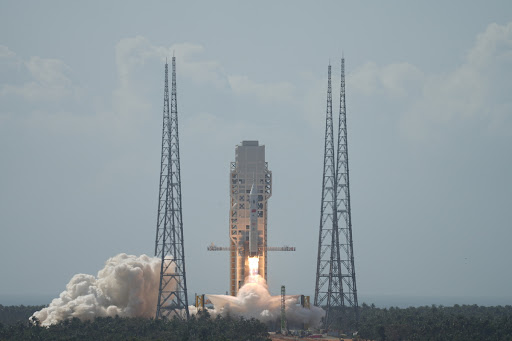
Major flight systems under development include the Long March-10 carrier rocket, the Mengzhou crewed spacecraft and the Lanyue lunar lander. Key tests have been completed, including the zero-height abort test for the Mengzhou spacecraft, the landing and take-off test for the Lanyue lunar lander, and both static fire and low-altitude demonstration and validation tests for the Long March-10 rocket system. The maximum dynamic pressure escape test for the Mengzhou spacecraft system has also been completed.
In 2026, China will intensify construction of supporting facilities and equipment for the lunar mission at the Wenchang Spacecraft Launch Site in Hainan Province, alongside the development of ground support systems.
International cooperation and astronaut exchange
Since its inception, China’s manned space programme has stated that it upholds the principles of peaceful use, equality, mutual benefit and common development, and continues to promote international cooperation in human spaceflight.
In 2025, China and Pakistan signed an agreement covering the selection and training of astronauts. The selection process is progressing, and CMSA confirmed that a Pakistani astronaut will participate in a short-term space station mission as a payload specialist, conducting scientific experiments aboard China’s space station.
SOURCE AND IMAGE: Xinhua