
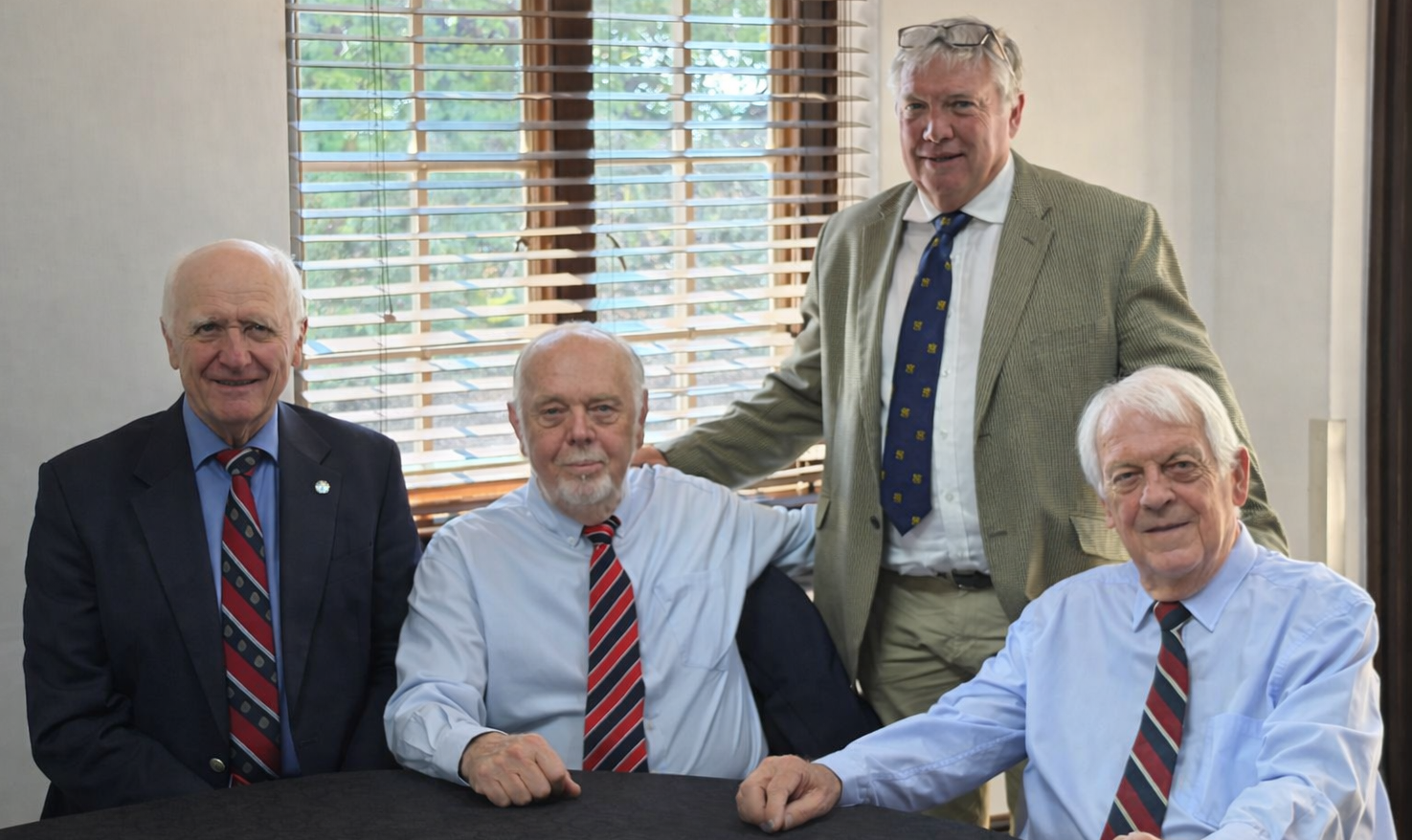
Vic Zazeraj’s address and spirited toasts mark a memorable RAF anniversary gathering in Johannesburg.
The Royal Air Force Officers’ Club (RAFOC) Annual Dining-In Luncheon, held on Saturday, 11 April 2026 at the Wanderers Club in Johannesburg, offered far more than a formal commemoration. Marking the 108th anniversary of the Royal Air Force, the event combined historical reflection, personal narrative, and a distinctly aviation-infused camaraderie that resonated across generations of attendees.
At the centre of the afternoon was a compelling keynote address by Vic Zazeraj, a retired South African career diplomat, whose remarks were widely regarded as one of the most engaging delivered at the club in recent years.
A SOUTH AFRICAN THREAD IN THE FOUNDATIONS OF AIR POWER
Zazeraj’s address anchored itself in the establishment of the RAF on 1 April 1918, framing it as a defining moment not only in military history, but in the broader trajectory of aviation.
His reflections on Jan Smuts drew particular attention. Smuts’ 1917 report, which laid the intellectual foundation for an independent air arm, was presented not as an abstract policy milestone, but as a decisive contribution by a South African to global aviation history.
As one respondent later noted during the luncheon, it is “rather splendid” that the individual who helped give birth to the world’s first independent air force was South African—something, as he put it, “we can all quietly boast about around this table.”
Zazeraj’s narrative moved seamlessly from the “Smuts report” through to lesser-known but deeply human episodes, including the diversion of aircraft to Finland during the Winter War, an act of solidarity that left a lasting impression on those who received them.
FROM WARSAW TO TABLE MOUNTAIN – HISTORY THROUGH PERSONAL LENS
What elevated the address was its ability to connect major historical events with personal experience.
Zazeraj reflected on the Warsaw airlift missions, where South African and British crews flew Liberator bombers from Italy to deliver supplies to besieged civilians—often at great personal cost. These missions, he noted, remain deeply honoured in Poland, where remembrance continues with a level of reverence that leaves a lasting impression on visiting dignitaries.
Equally memorable were the more unexpected connections. A diplomatic encounter with Queen Sofía of Spain revealed her childhood memories of South Africa, where, as a young Greek princess, she spent formative years under the care of Jan Smuts’ family—learning, as recalled during the luncheon, “her botany on the slopes of Table Mountain.”
These moments served to illustrate how aviation history is interwoven with personal narratives, diplomacy, and shared international experience.
TOASTS, TRADITION, AND A TOUCH OF HUMOUR
The formal toasts formed a highlight of the afternoon, delivered with both respect and a characteristic sense of humour that reflected the shared culture of military aviation.
The loyal toast was proposed by Colin Ackroyd, Secretary of RAFOC, with the response delivered by Norman Ingledew RNAS, Treasurer of RAFOC.
Ingledew’s reply struck a careful balance between tribute and light-hearted inter-service rivalry. Speaking as a former Royal Navy pilot, he paid tribute to the RAF’s distinguished history—from the Battle of Britain to long-range operations such as the Falklands campaign—while adding a familiar naval perspective.
With understated humour, he reminded attendees that the RAF was founded on 1 April—“April Fool’s Day”—a detail, he noted, that the Royal Navy has “never allowed them to forget.” The contrast between naval aviators landing on moving carriers and RAF pilots favouring “long, stationary runways and a decent cup of tea at the end” drew appreciative laughter, while reinforcing the longstanding camaraderie between services.
Yet the tone remained firmly respectful. Ingledew acknowledged that without the independent air capability envisioned by Smuts, naval operations would not have benefited from the air cover that proved critical in numerous conflicts.
A SHARED IDENTITY IN AVIATION
Beyond the humour, the response captured something more fundamental: a shared identity among aviators, regardless of service or nationality.
As expressed during the closing remarks, those gathered shared “the same love of flight, the same black humour when things go wrong at 500 knots, and the same quiet pride in having served something greater than ourselves.”
It was this sentiment—more than ceremony—that defined the afternoon. The stories of Polish airmen, Finnish veterans, South African crews over Warsaw, and the enduring bonds of remembrance brought a collective recognition of aviation’s human dimension.
A MEMORABLE OCCASION
The luncheon concluded with a renewed toast to the Royal Air Force, honouring not only its founding in 1918, but the generations of airmen and women who have contributed to its legacy.
As one attendee remarked in closing, the addresses delivered were “among the best heard at a luncheon”—a reflection not only of the quality of the speakers, but of the depth and relevance of the themes explored.
For those present, the RAFOC Annual Luncheon was a reminder that aviation history is not static. It lives on through shared memory, personal connection, and the continued gathering of those who understand its significance.
SOURCE AND IMAGES: WAN ©