
AFRAA and South African Airways have opened the 14th Aviation Stakeholders Convention in Johannesburg, focusing on profitability, resilience, connectivity, and collaboration across African aviation.
Industry leaders focus on resilience, profitability and collaboration across African aviation
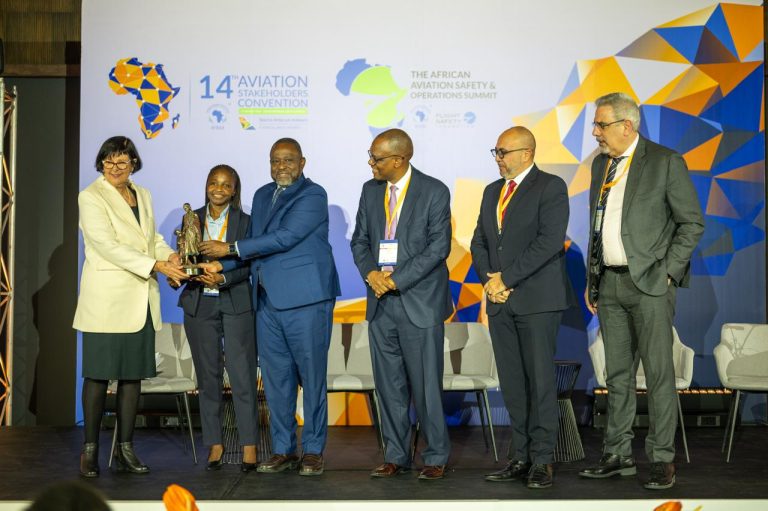
The African Airlines Association and South African Airways officially opened the 14th Aviation Stakeholders Convention (ASC) in Johannesburg on 18 May 2026, bringing together aviation leaders from across Africa and international markets to address the continent’s aviation growth challenges and opportunities.
Held under the theme “Resilient African Aviation: Partnerships – Empowerment – Profitability”, the three-day convention has attracted more than 500 delegates from close to 50 countries, including airlines, regulators, airport authorities, financiers, OEMs, and aviation service providers.
The convention was formally opened by South African Minister of Transport Barbara Creecy, who reaffirmed government support for strengthening South Africa’s and Africa’s role within the global aviation sector.
Industry faces profitability and structural challenges
AFRAA Secretary General Abdérahmane Berthé described African aviation as operating within an increasingly complex global environment shaped by geopolitical tensions, supply chain disruptions, aircraft availability shortages, currency pressures, rising operating costs, and infrastructure limitations.
Berthé also highlighted structural fragmentation across the continent, noting that Africa’s 54 states, multiple regulatory systems, and restrictive bilateral air service agreements continue to limit connectivity and operational efficiency.
He urged governments to recognise aviation as an economic multiplier rather than primarily a tax source and called for greater investment in retaining African aviation professionals including pilots, engineers, safety specialists, and commercial managers.
According to Berthé, the long-term objective for African aviation extends beyond survival toward building a sustainable, affordable, and competitive intra-African air transport system.
Focus on collaboration and growth
Matshela Seshibe, Acting CEO of South African Airways, welcomed delegates to Johannesburg and emphasised the importance of continental collaboration in achieving long-term operational sustainability and competitiveness.
Captain George Kamal, Acting Group CEO of Kenya Airways and Chairman of the AFRAA Executive Committee, together with Kamil Al-Awadhi, Regional Vice President for Africa and the Middle East at International Air Transport Association, also called for accelerated liberalisation, infrastructure investment, and stronger cross-industry cooperation.
AFRAA noted that despite strong passenger growth forecasts, African airlines are collectively expected to generate net profits of approximately US$200 million in 2026, representing an average margin of only 1.3% or roughly US$1.30 per passenger, compared with the global average of US$7.90 per passenger.
Convention programme addresses operational priorities
The convention programme includes panel discussions, executive interviews, masterclasses, and business-to-business sessions focused on structural profitability, fleet optimisation, digital transformation, sustainable financing, market access, air connectivity, cargo growth, and aviation safety.
Prior to the official opening, AFRAA committees covering technical operations, training, distribution, route coordination, and cargo operations also held working sessions aimed at aligning operational priorities among African carriers.
A dedicated consultative session on fleet selection, acquisition, and financing was facilitated by Jetcraft Commercial President Raphael Haddad, focusing on fleet planning strategies, aircraft acquisition models, and financing structures available to African airlines.
The event will conclude with the 3rd African Aviation Safety & Operations Summit organised in partnership with the Flight Safety Foundation.
SOURCE AND IMAGE: AFRAA