
Airbus Helicopters has outlined its long-term strategy for integrated rotorcraft and uncrewed systems as defence operators adapt to evolving military and disaster response requirements.
Company strategy highlights integration of crewed and uncrewed systems in evolving security environments
Airbus Helicopters has outlined its long-term strategy for military and dual-use rotorcraft operations, emphasising the growing importance of integrated air systems, uncrewed aerial systems (UAS), and adaptable mission platforms in increasingly complex global security environments.
The company says helicopters will remain central to both defence and disaster response operations as operators adapt to evolving military tactics, hybrid warfare scenarios, and climate-related emergencies.
Mathilde Royer, Executive Vice President Strategy and Sustainability at Airbus Helicopters, said defence and security forces are facing a broader range of operational threats than in previous decades.
According to Royer, climate-related natural disasters continue to increase globally while many nations are simultaneously strengthening military preparedness and adapting to the growing use of uncrewed systems in modern conflict environments.
Rotorcraft role evolving beyond traditional operations
Royer stated that helicopters continue to provide operational flexibility across military, humanitarian, and infrastructure support missions.
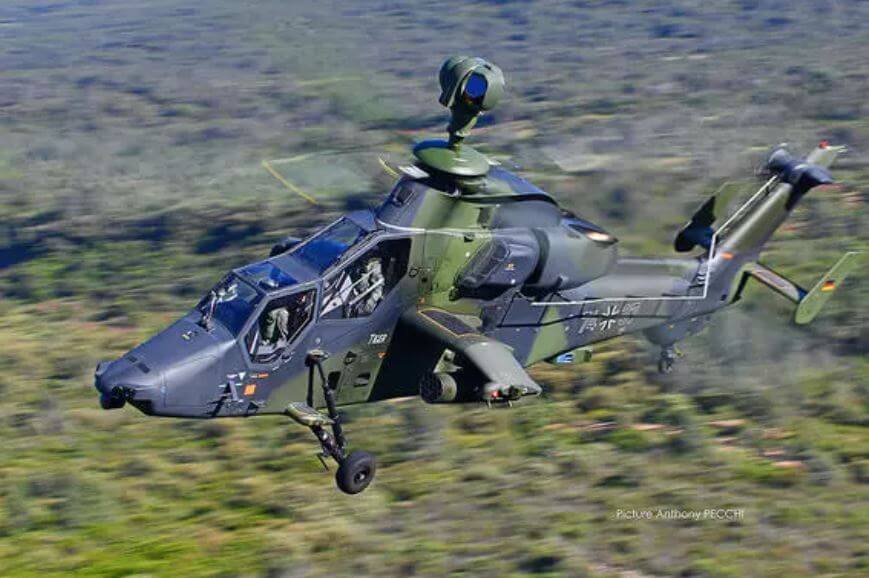
She highlighted aircraft including the NH90, Eurocopter Tiger, Airbus H160M, Airbus H145M, and Airbus H225M as examples of platforms designed for multi-role operational requirements.
The company noted that modular mission systems and adaptable configurations are becoming increasingly important as military operators seek platforms capable of transitioning between combat, tactical transport, firefighting, and rescue operations.
Airbus also referenced recent deployments involving Hungary’s use of H225M helicopters in Albania as an example of operational flexibility.
Integration of uncrewed systems
Airbus Helicopters believes integration between crewed helicopters and tactical UAS platforms will become a defining feature of future military aviation operations.
Royer identified systems including Flexrotor, Capa-X, and VSR700 as part of Airbus Helicopters’ expanding UAS portfolio.
The company expects these systems to support intelligence, surveillance, reconnaissance (ISR), cargo transport, and collaborative teaming missions.
According to Airbus, future concepts could see helicopters operating as airborne coordination hubs controlling multiple uncrewed systems and stand-off effects in contested operational environments.
European strategic autonomy
Airbus Helicopters also reiterated its support for Europe’s Next Generation Rotorcraft Capability (NGRC) initiative, aimed at developing future sovereign military rotorcraft solutions within Europe.
The company said its involvement in the European-funded ENGRT project is focused on developing technologies including modular open systems and advanced connectivity for future military aviation programmes.
Airbus stated that the objective is to reduce long-term reliance on non-European defence platforms while strengthening European aerospace and defence industrial capability.
SOURCE AND IMAGE: AIRBUS HELICOPTERS