
Rotron Aerospace has successfully completed a flight trial of its SkyLance One Way Effect system under the UK Ministry of Defence’s Project Brakestop, marking a significant milestone in the development of sovereign long-range strike capabilities and agile defence innovation.
SKYLANCE SYSTEM COMPLETES PROJECT BRAKESTOP TRIAL
Flight test validates core technologies
Rotron Aerospace has announced the successful trial of its SkyLance One Way Effect system as part of Project Brakestop, a UK Ministry of Defence initiative funded through Task Force Kindred. The company said the achievement represents a significant step in the development of next-generation long-range strike capabilities and demonstrates the effectiveness of rapid, industry-led defence innovation.
According to Rotron, the successful flight trial validated the core technologies underpinning the SkyLance capability while highlighting the role of collaboration between the Ministry of Defence, government stakeholders and industry partners in accelerating the delivery of operationally relevant defence systems.
PROGRAMME DRIVES INDUSTRIAL EXPANSION
More than 160 skilled jobs created
The company reported that Project Brakestop has directly contributed to the creation of more than 160 highly skilled jobs across the United Kingdom’s defence aerospace sector. Rotron stated that the expansion has strengthened domestic industrial capability while supporting growth in specialist engineering, manufacturing and technology disciplines.
The programme has also been cited by the company as an example of how alternative procurement approaches and rapid development cycles can support smaller defence technology firms in delivering operational capabilities more quickly than traditional acquisition models.
SOVEREIGN PROPULSION TECHNOLOGY AT THE CORE
UK-designed system supports extended range
A key element of the SkyLance system is its propulsion technology, which Rotron says provides substantially greater operational range than comparable systems within its category. The propulsion system has been designed, developed and manufactured entirely within the United Kingdom, maintaining sovereign control over production, technology development and future upgrades.
The company noted that sovereign ownership of critical technologies remains an important factor in supporting national security objectives and ensuring long-term industrial resilience.
INDUSTRY COLLABORATION HIGHLIGHTED
Project seen as model for future innovation
Commenting on the programme, Rotron Aerospace Chief Executive Officer Alex Head described Project Brakestop as one of the most innovative programmes delivered by the UK Ministry of Defence in recent years. He emphasised the importance of collaboration between the Ministry of Defence, wider government, QinetiQ and industry participants in achieving the programme’s objectives.
Head stated that the project demonstrated how agile small and medium-sized enterprises can deliver complex defence capabilities rapidly through sovereign technology development, lower-cost delivery models and accelerated product development cycles.
EXPORT POTENTIAL IDENTIFIED
Global demand expected to support growth
Rotron believes the technologies developed through Project Brakestop could create future export opportunities for British industry as international demand for long-range strike capabilities continues to grow. The company said investment in sovereign defence innovation has the potential to strengthen both national security and economic growth through future export activity.
Founded in 2008, Rotron Aerospace develops unmanned aerial systems, autonomous platforms and propulsion technologies. The company is a subsidiary of Ondas Inc., a provider of autonomous systems and mission-critical communications technologies serving defence, security and critical infrastructure markets.
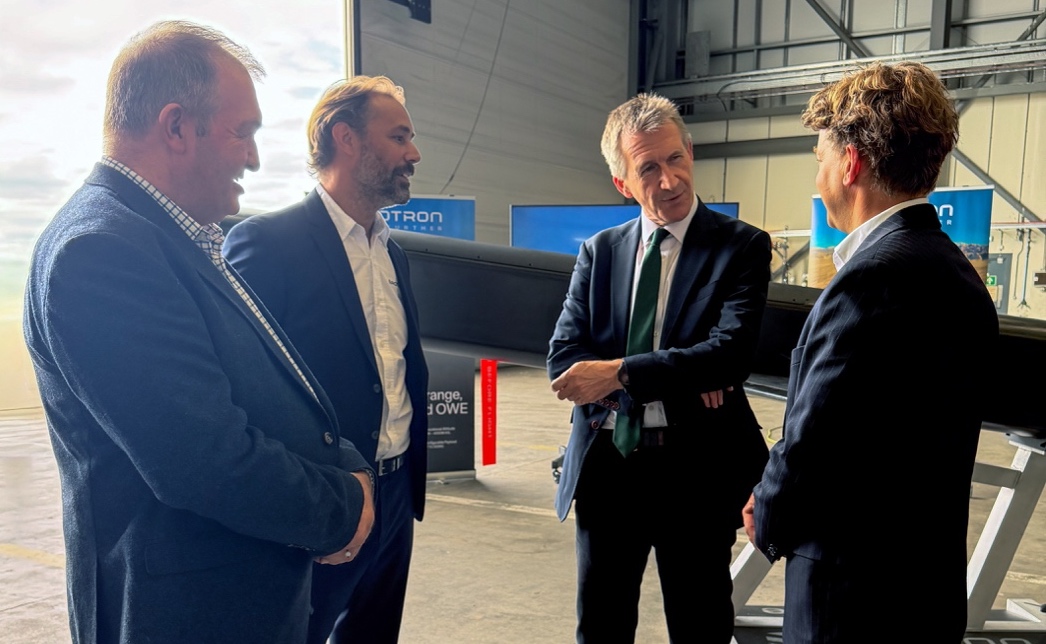
Image Caption: From left to right: John Dixon (Rotron COO), Alex Head (Rotron CEO), Dan Jarvis (Secretary of State for Defence) and Gilo Cardozo (Rotron Founder).
Source and Image Credit: Rotron Aerospace Ltd