
Aviation analyst John Strickland has warned that European and US carriers are likely to strip frequencies from winter schedules and ground more aircraft than usual rather than discount fares to fill them — a judgement underpinned by IATA figures showing the industry fuel bill rising by almost $100 billion in a single year, driven not only by crude prices but by a refining premium for jet fuel at an unprecedented level.
DISCOUNTING CANNOT CLOSE A GAP OF THIS SIZE
European and US airlines could remove more frequencies from winter schedules and ground more aircraft than usual as high fuel costs render weaker services uneconomic, aviation analyst John Strickland has warned. Strickland, who heads JLS Consulting, made the assessment during a World Aviation Festival webinar on 16 July examining how the industry can respond to the current jet fuel crisis. He said that no matter how far airlines reduced prices to stimulate demand, they would still not be covering the cost of the higher fuel price, and that he expected to see more aircraft on the ground as a result.
The observation cuts against the industry’s conventional winter playbook. Airlines typically operate fewer flights during the winter months when weaker demand leaves them with spare capacity, and typically use lower fares to stimulate bookings into that capacity. Strickland’s argument is that the arithmetic no longer supports the second half of that strategy. He said he expected a higher level of cancellations this winter and did not see airlines suddenly cutting prices left, right and centre in order to stimulate demand. Where the marginal revenue from a discounted seat cannot cover the marginal fuel cost of carrying it, the rational commercial response is not to discount but to withdraw the flight.
THE NUMBER BEHIND THE WARNING: A $98 BILLION INCREASE IN A SINGLE YEAR
The scale of the cost movement is set out in IATA’s industry outlook published on 7 June 2026. Airline fuel costs are forecast to rise from $252 billion in 2025 to $350 billion in 2026 — an increase of nearly 40%, or approximately $98 billion, in a single year. Jet fuel’s share of total operating expenses is expected to reach 31.4% in 2026, up from 25.4% in 2025. IATA is explicit that total fuel consumption is expected to remain broadly steady year-on-year, meaning the entire increase in the share of operating expenses is attributable to price rather than to any expansion in the volume of fuel burned.
WHY THIS IS NOT SIMPLY AN OIL PRICE STORY
The most analytically significant element of the IATA data is the divergence between crude and jet fuel. Brent crude is expected to average $95 per barrel across 2026, up 37% from $69 in 2025. Jet fuel, however, is expected to average $152 per barrel — up almost 70% on the $90 recorded in 2025. The difference is accounted for by the crack spread, the refining premium charged for aviation-grade kerosene over crude, which IATA expects to average $57 per barrel across the year and describes as an historic high.
This distinction matters considerably for how airlines can respond. A pure crude price shock is a macroeconomic event that affects all energy consumers and can reasonably be expected to correct as supply adjusts. A record crack spread is a refining capacity and product-specific constraint, and it means aviation is bearing a disproportionate share of the energy cost increase relative to other sectors. It also means that a fall in crude prices would not, on its own, deliver proportionate relief to airline fuel bills. IATA notes that airlines globally have hedged roughly one third of expected fuel consumption for 2026 — sufficient to smooth short-term volatility but not to eliminate exposure to a sustained price increase, and covering only a minority of the exposure in any case.
UNEVEN EXPOSURE AND A DETERIORATING MACROECONOMIC BACKDROP
Strickland stressed that exposure is not uniform across the industry. Some markets and cabin classes have already seen greater price increases than others, and individual airlines’ positions vary according to their hedging strategies and their ability to pass additional costs through to passengers. Carriers with strong pricing power in premium cabins or on routes with limited competition are materially better placed than those operating price-sensitive leisure routes where demand elasticity constrains fare increases.
The wider economic environment offers little offsetting relief. IATA’s outlook anticipates global GDP growth falling to 2.5% in 2026 from 3.4% in 2025, inflation rising to 5.0% from 4.1%, and world trade growth falling to 1.9% from 4.6%. Passenger ticket revenues are nonetheless expected to reach $839 billion, up 9.2% on $768 billion in 2025 — meaning airlines are successfully raising fares, but not at a rate that keeps pace with the cost increase. Airlines additionally bear CORSIA compliance costs estimated at $1.2 to $1.6 billion and Sustainable Aviation Fuel purchase costs of approximately $4.3 billion for an anticipated 2.4 million tonnes of SAF, representing 0.8% of total fuel consumption.
WHAT HAS HELD SO FAR, AND WHAT CHANGES AFTER SUMMER
Strickland was clear that the industry has performed better than some initially feared. He said airlines had so far prevented the crisis from developing into the immediate supply breakdown some had anticipated, with many carriers finding alternative sources of fuel or using hedging strategies to shield themselves from the full extent of short-term price increases. The number of services removed from schedules has to date been relatively modest. His expectation is that these decisions become materially more difficult as the industry moves beyond the peak summer period, with airlines continuously assessing booking levels and individual route performance to determine which frequencies remain viable.
Strickland will continue the discussion at the World Aviation Festival, held from 13 to 15 October 2026 at FIL in Lisbon, where alongside interviewing several airline chief executives he will moderate the panel ‘Driving the aviation growth of tomorrow’, featuring Len Corrado, CEO of Flair Airlines; Jude Bricker, Board Director of Allegiant; Eivind Roald, CEO of Norse Atlantic Airways; and Tero Taskila, CEO of beOnd.
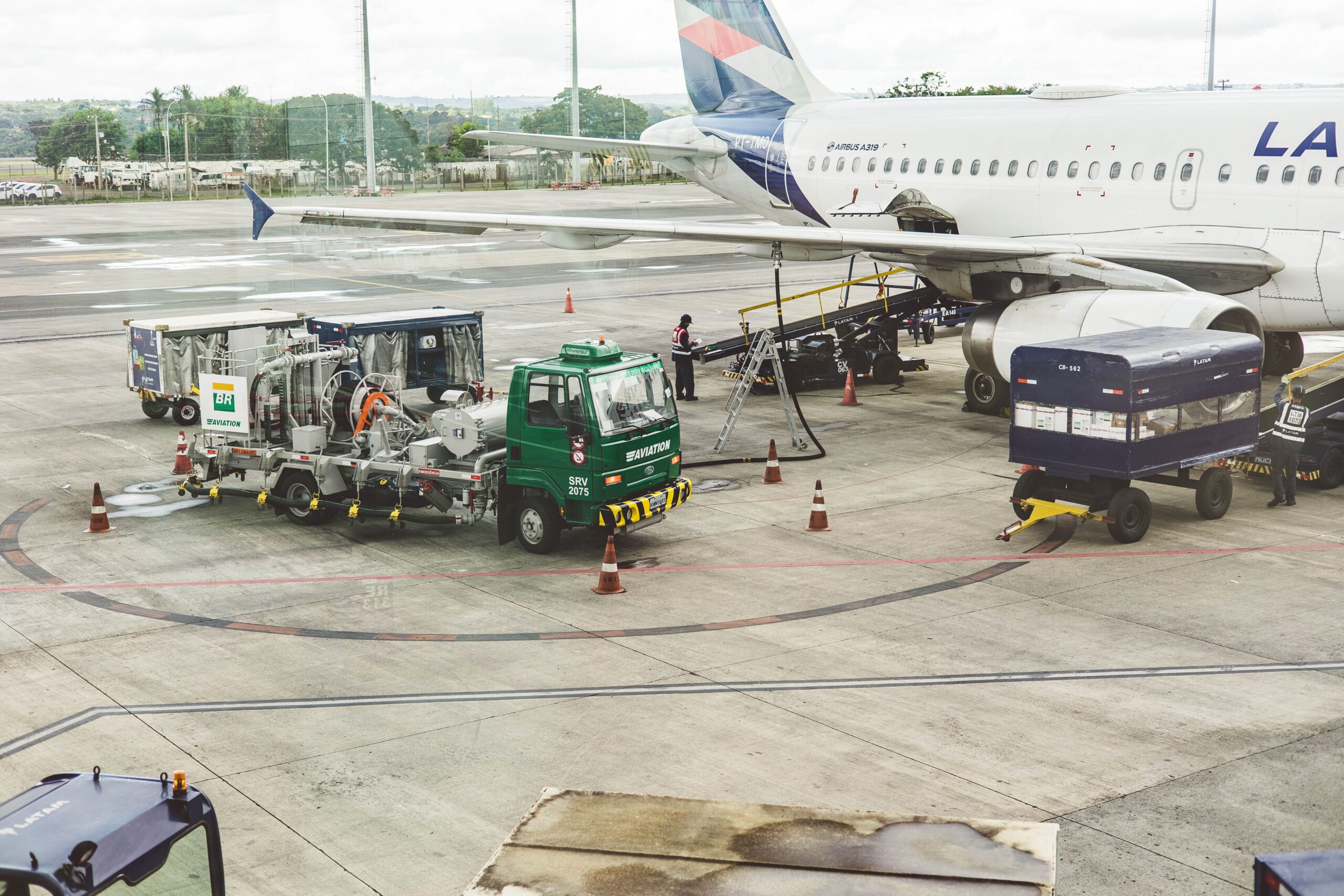
Source: JLS Consulting / World Aviation Festival, IATA, industry financial outlook , Images: Pexels – Rafael Rodrigues