
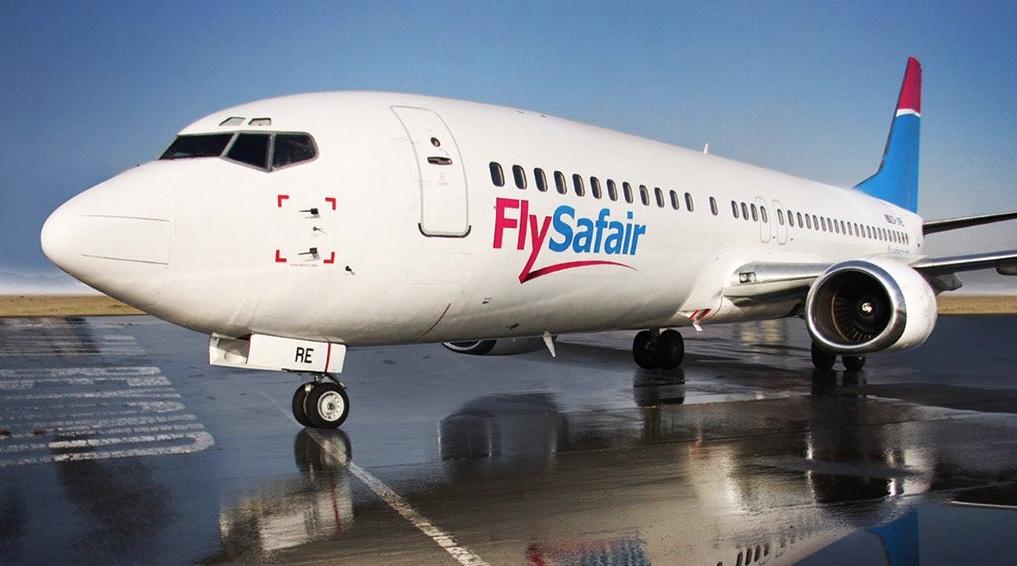
14 January 2025 – Johannesburg. The Air Services Licensing Council of South Africa has made public the reason for its decision on 19 December 2024 that Safair is not in compliance with the Air Services Licensing Act, following a complaint by Lift Airlines. The Domestic Council’s decision mirrors a similar decision by the International Air Services Licensing Council on 31 October 2024, which also notes FlySafair’s non-compliance with similar nationality provisions pertaining to its license for international operations. The International Council’s attempt to impose sanctions was successfully halted by FlySafair through a court interdict process, forcing the International Council to first engage further with FlySafair and provide reasons before proceeding with punitive actions.
It is well understood that at least 75% of voting rights in a domestic airline in South Africa must be held by “Residents of the Republic” of South Africa. While the law clearly references voting rights rather than ownership, this distinction has regrettably been misrepresented to the public in most media reports.
The Domestic Council has now confirmed through a letter and during a meeting with FlySafair and Lift Airlines that it does not meet these nationality provisions, stating the South African Citizenship Act of 1995 requires that only “natural persons” can hold such rights. Central to their argument is the fact that 75% of FlySafair’s shares are held by South African trusts and companies, and, therefore, on the Council’s interpretation, is not compliant with the Act.
If the Council’s interpretation of the Act is indeed correct and upheld by a court, this interpretation would render the majority of South Africa’s airlines non-compliant. For example, South Africa’s largest airline, Airlink, is also substantially owned by trusts and companies in the same manner as FlySafair, while SAA is wholly owned by the State.
Review of these outcomes quickly reveals that the only party that stands to benefit from this interpretation of the act would be Lift Airlines. “There’s no reason that the rest of the industry, the economy, or the flying public should be harmed through drastic and brash decision making.” Says Kirby Gordon, Chief Marketing Officer at FlySafair.
This interpretation would also be highly unique and irregular in the context of global aviation with almost no examples of similar legislation existing in other countries around the world.
The Council’s findings not only ignore established legal precedent — such as the 2014 Comair Court ruling, which clarified that councils should not “look through” layers of ownership— but also displays a lack of understanding of the structures they are tasked with regulating.
“This reasoning raises serious concerns,” says Gordon. “If the council proceeds on this basis and make rulings without a proper understanding of the law, the knock-on impact to the industry at large will be catastrophic”. Realistically, there’s little doubt the courts will issue an injunction, as they have in similar cases in the past.
The nationality provisions have been a source of repeated legal contention in South African aviation. To address the law’s ambiguity, FlySafair has proceeded to apply for a declaratory order late 2024, seeking a judicial interpretation to guide future decisions by the Council. This application, supported by the Minister of Transport, has regrettably faced opposition from Lift Airlines, Airlink and the Councils themselves who have to make decisions that will affect the entre South African flying public.
This current interpretation by the Domestic Council of this ambiguous legislation stands to impact as much as 87% of South Africa’s domestic seat capacity. The hope remains that the Minister of Transport will take note and shepherd this process back on a rational path, seeing that the Councils are appointed by her and acting under her supervision. FlySafair notes in this regard that the Minister has already indicated, through the circulation of a proposed new Air Services Bill, that government policy is leaning in a direction that favours the interpretation advanced by FlySafair in its disputes with the Councils. It is heartening to see that the political will is there to finally address these contentious ambiguities which have been a thorn in the side of the aviation industry for too long.
FlySafair remains committed to adhering to the highest standards of compliance and looks forward to resolving this issue constructively.