
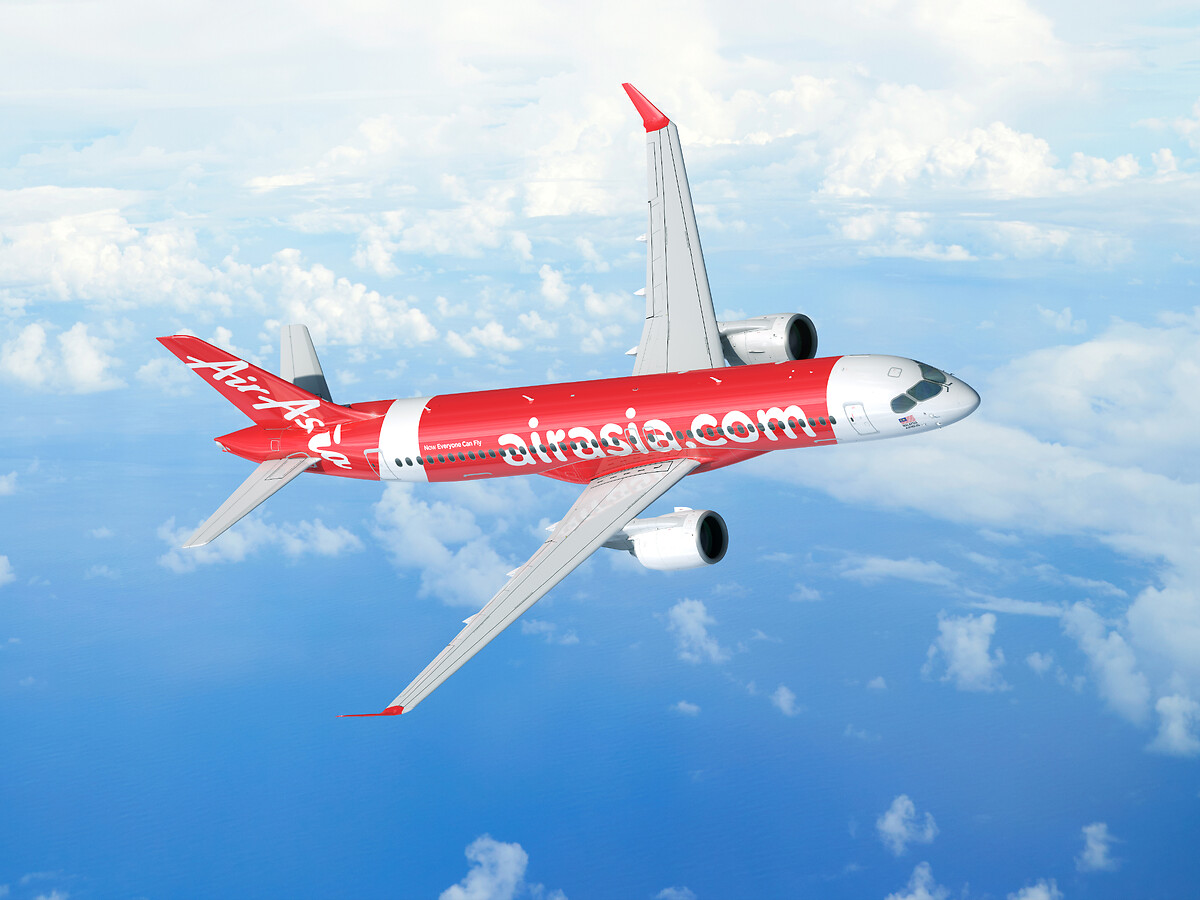
AirAsia has placed a firm order for 150 Airbus A220-300 aircraft, becoming a new customer for the type and launching a new 160-seat cabin configuration.
Malaysia-based low-cost carrier AirAsia has placed a firm order for 150 Airbus A220-300 aircraft, marking the largest single order yet for the A220 programme and pushing total firm orders for the type beyond the 1,000-aircraft milestone.
The agreement was announced during a ceremony at Airbus’ Mirabel facility in Canada, attended by Capital A Chief Executive Officer and AirAsia Group advisor Tan Sri Tony Fernandes and Airbus Commercial Aircraft CEO Lars Wagner. Canadian Prime Minister Mark Carney and Quebec Premier Christine Fréchette were also present at the event.
The order makes AirAsia a new A220 customer and also the launch operator for a new 160-seat cabin configuration on the A220-300. The revised layout increases capacity by 10 seats through the addition of an extra overwing exit on each side of the aircraft.
AirAsia said the A220 fleet will complement its existing Airbus operations and support expansion across ASEAN and Central Asia, while allowing larger aircraft in the group’s fleet to be redeployed onto longer-range routes.
“We have built AirAsia by making bold decisions at the right moment, not the easiest moment,” said Tony Fernandes. “The A220 unlocks new markets and routes and brings us closer to building the world’s first true low-cost network carrier.”
Airbus Commercial Aircraft CEO Lars Wagner said the A220 would provide AirAsia with “low operating costs” and the range capability required to support the airline’s evolving network strategy.
Designed for the 100–160 seat market segment, the A220 offers a range of up to 3,600 nautical miles (6,700 km). Airbus stated that 501 A220 aircraft had been delivered to 25 operators worldwide by the end of March 2026.
Like all Airbus commercial aircraft currently in production, the A220 is already capable of operating on blends containing up to 50% Sustainable Aviation Fuel (SAF), with Airbus targeting 100% SAF capability across its product line by 2030.
SOURCE AND IMAGE: AIRBUS