
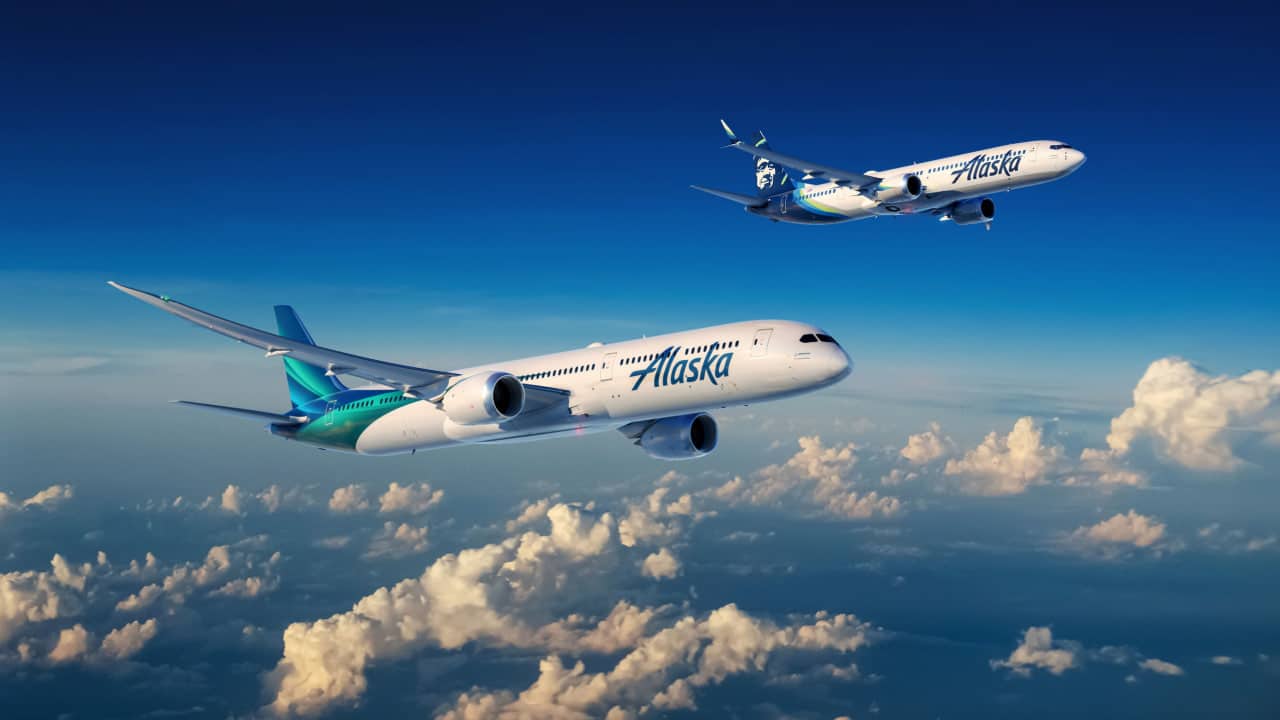
Alaska Airlines has formally adopted Boeing’s Virtual Airplane training platform, enabling pilots to practise procedures remotely using high-fidelity digital training tools.
Alaska Airlines has signed a formal licence agreement for Boeing’s Virtual Airplane (VA) pilot training platform, marking the airline’s transition from development partner to full operational adoption of the system. The announcement was made during the World Aviation Training Summit (WATS) in Orlando, Florida.
Boeing said Alaska Airlines played a significant role in the development of the platform by providing operational feedback throughout the testing and refinement process.
The Virtual Airplane platform is a device-agnostic and modular training system that allows pilots to practise aircraft procedures outside of traditional simulator environments. Through the Procedures Trainer application, pilots can rehearse high-fidelity operational scenarios remotely using computers or tablet devices.
The platform also includes a free-play Flight Management System (FMS), enabling pilots to practise data entry and operational procedures in a realistic digital environment. Boeing said the system is designed to help operators standardise training, reduce simulator familiarisation time and improve pilot readiness.
“Alaska Airlines’ commitment to innovation and safety has been instrumental in the development of Virtual Airplane,” said Chris Broom, Vice President of Commercial Training Solutions at Boeing. “We are proud to see this partnership evolve as they move from beta testing to full adoption.”
Jeff Severns, Managing Director of Flight Operations Training for Alaska Airlines, said the technology would complement traditional simulator sessions and improve training flexibility and pilot proficiency.
Boeing confirmed that Procedures Trainer is currently available for Boeing 737 MAX training, with expansion to additional Boeing aircraft models planned in the future.
The agreement reflects the continued industry shift toward scalable digital training environments designed to supplement full-flight simulator programmes and streamline pilot preparation workflows.
SOURCE AND IMAGE: BOEING