
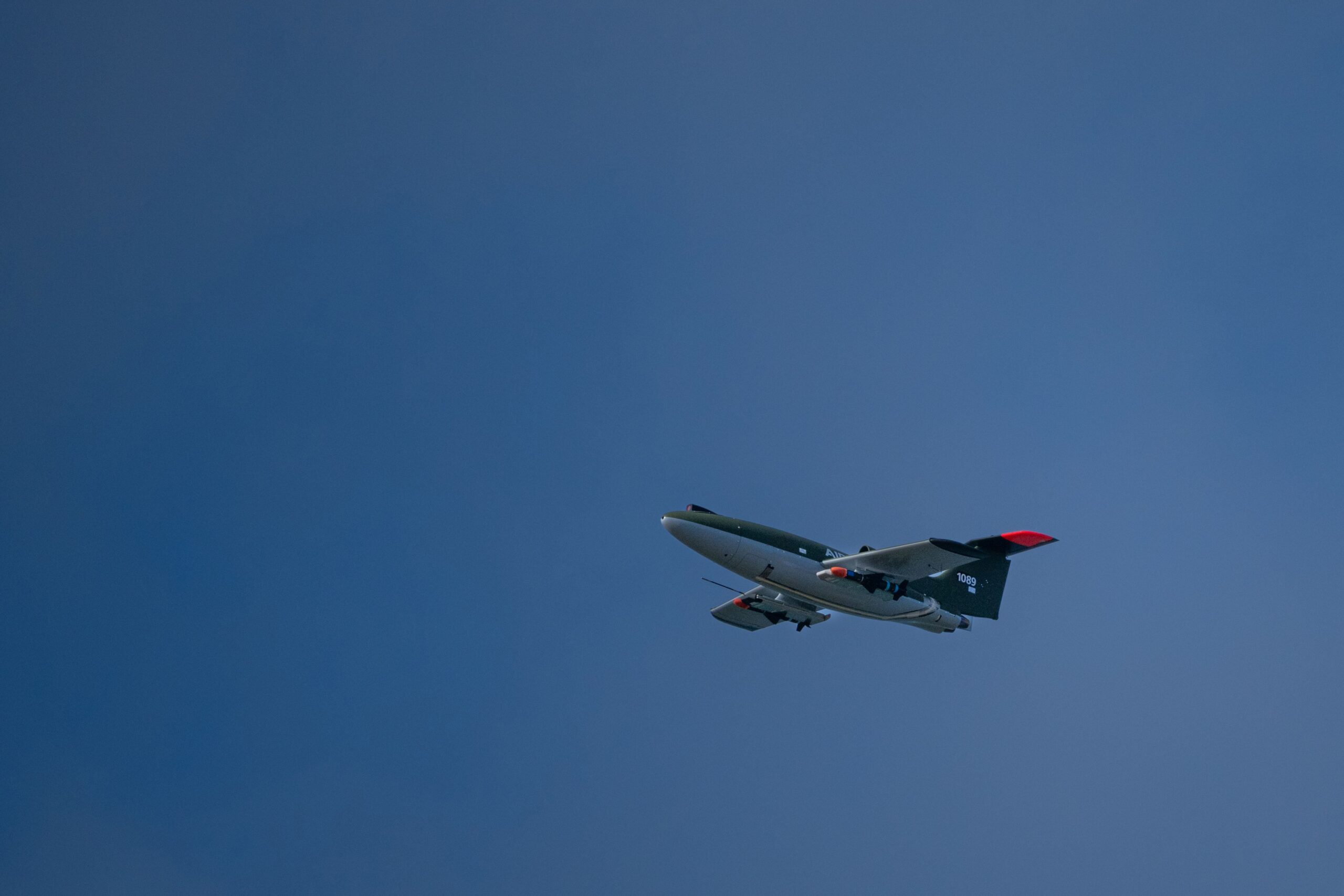
Airbus Defence and Space has completed the first demonstration flight of its uncrewed ‘Bird of Prey’ interceptor drone, which autonomously detected and engaged a target drone during a test conducted in northern Germany.
DEMONSTRATION FLIGHT AND MISSION PROFILE
Autonomous detection and engagement
The demonstration involved a simulated operational scenario in which the interceptor drone autonomously searched for, detected and classified a medium-sized one-way attack (kamikaze) drone.
Following identification, the system engaged the target using a Mark I air-to-air missile developed by Frankenburg Technologies. The engagement was conducted as part of an integrated mission sequence without human intervention in the targeting process.
PLATFORM CONFIGURATION
Modified Do-DT25 test platform
The prototype is based on a modified Airbus Do-DT25 drone. The test configuration features:
- Wingspan: 2.5 metres
- Length: 3.1 metres
- Maximum take-off weight: 160 kg
The demonstration platform was equipped with four Mark I missiles, while the projected operational configuration is expected to carry up to eight.
MISSILE CHARACTERISTICS
Lightweight short-range interceptor
The Mark I missile is described as a high-subsonic, fire-and-forget system with:
- Engagement range: up to 1.5 km
- Length: 65 cm
- Weight: less than 2 kg
The missile is equipped with a fragmentation warhead designed for short-range interception. According to the release, the system is intended to enable multiple engagements per sortie using a reusable drone platform.
SYSTEM INTEGRATION
Compatibility with integrated air defence systems
The Bird of Prey system is designed to operate within NATO integrated air defence frameworks through interoperability with command and control systems.
It is integrated with Airbus’ Integrated Battle Management System (IBMS), allowing it to function as part of a layered air and missile defence architecture.
PROGRAMME DEVELOPMENT
Further testing planned in 2026
The demonstration flight took place approximately nine months after programme initiation. Airbus and Frankenburg Technologies plan additional test flights during 2026, including trials involving live warheads, as part of further system validation and development.
OPERATIONAL CONTEXT
Counter-UAS capability development
The system is positioned as a counter-uncrewed aerial system (C-UAS) capability intended to address the increasing use of small, one-way attack drones in operational environments.
SOURCE AND IMAGE: AIRBUS DEFENCE