
Airbus Asia Training Centre will house an A220 full-flight simulator at its Seletar campus from the fourth quarter of 2027, deployed by Flight Training Alliance and operated by AATC. The arrangement draws four major aviation businesses into a single installation.
WHO ACTUALLY PROVIDES THE TRAINING
Airbus Asia Training Centre, a joint venture between Airbus and Singapore Airlines, will house an A220 full-flight simulator for the Asia Pacific region at its Singapore campus, scheduled to be operational in the fourth quarter of 2027. The announcement was made at the Asia Pacific Aviation Training Summit in Bangkok.
The delivery structure is worth setting out, because it illustrates how training capacity is now assembled. The simulator will be deployed by Flight Training Alliance, the Airbus Authorised Training Provider for the A220, which is itself a joint venture between CAE and Lufthansa Aviation Training. FTA deploys the device; AATC manages operations and training delivery. A single simulator therefore involves Airbus, Singapore Airlines, CAE and Lufthansa Aviation Training, in a joint venture operating a device supplied by another joint venture.
There is a commercial logic to that complexity. A full-flight simulator is among the most capital-intensive assets in aviation training, and its economics depend entirely on utilisation. Spreading the capital and the risk across parties with different strengths, an airframer holding the type data, a training specialist with manufacturing capability, an airline with the operational base and providers with regional demand, is how a device gets placed in a market that may not yet be able to fill it single-handedly.
NINE BAYS ACCOUNTED FOR, ONE REMAINING
Located at Seletar Aerospace Park, AATC is one of the largest flight crew training centres in the Airbus network, offering type rating and recurrent training for all in-production Airbus types across ten full-flight simulator bays. Four are currently dedicated to the A350, two to the A320, and one each to the A330 and A380. A further bay holds an ATR 72-600 device, the ATR being manufactured under a joint venture between Airbus and Leonardo. That accounts for nine of the ten. The centre also operates six fixed cockpit training devices and classroom facilities, with capacity for up to 10,000 trainees a year.
Silvia Meloni, General Manager of AATC, described establishing A220 training capability in the region as a strategic enabler for Airbus’s growth footprint in Asia Pacific. The simulator, she said, would give airline operators across the region convenient access to training closer to home while supporting safe and efficient entry into service of their A220 fleets, and she anticipated increased training demand as the programme continues to gain momentum in the region.
The phrase closer to home carries more weight than it might appear to. Sending a flight crew overseas for type rating or recurrent training means paying for travel, accommodation and, critically, the days the crew are unavailable to fly. For a smaller operator that displacement cost can rival the cost of the training itself. Regional simulator availability changes the arithmetic of operating a type, which is why airframers place devices in markets before demand fully justifies them.
THE AIRCRAFT, AND THE MARKET THESIS
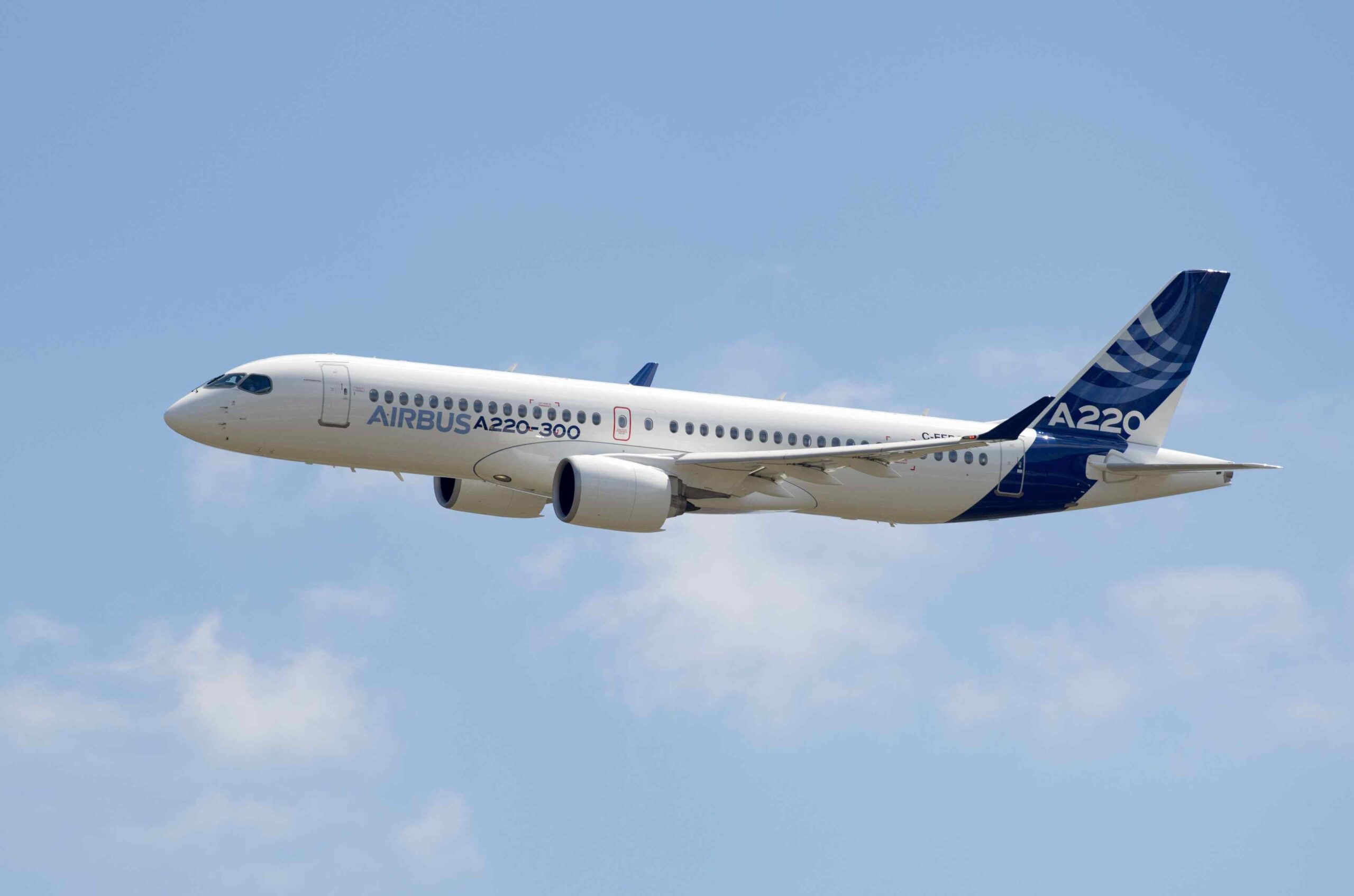
Airbus had delivered 532 A220s to more than 25 operators globally by the end of July 2026, with programme orders passing 1,100 aircraft. The company positions the type around a specific demographic argument drawn from its Global Market Forecast: that over the next twenty years urbanisation will shift toward smaller cities, driving airlines to extend connectivity beyond traditional megacities. With a range of up to 3,600 nautical miles, operating costs per seat 25 per cent below previous-generation aircraft and capacity between 100 and 160 seats, the A220 is presented as the aircraft that makes those thinner routes commercially viable.
AATC and FTA will deliver A220 flight crew type rating and recurrent training, supported by a dedicated team of certified A220 instructors and operations technicians.
Source and Images: Airbus