
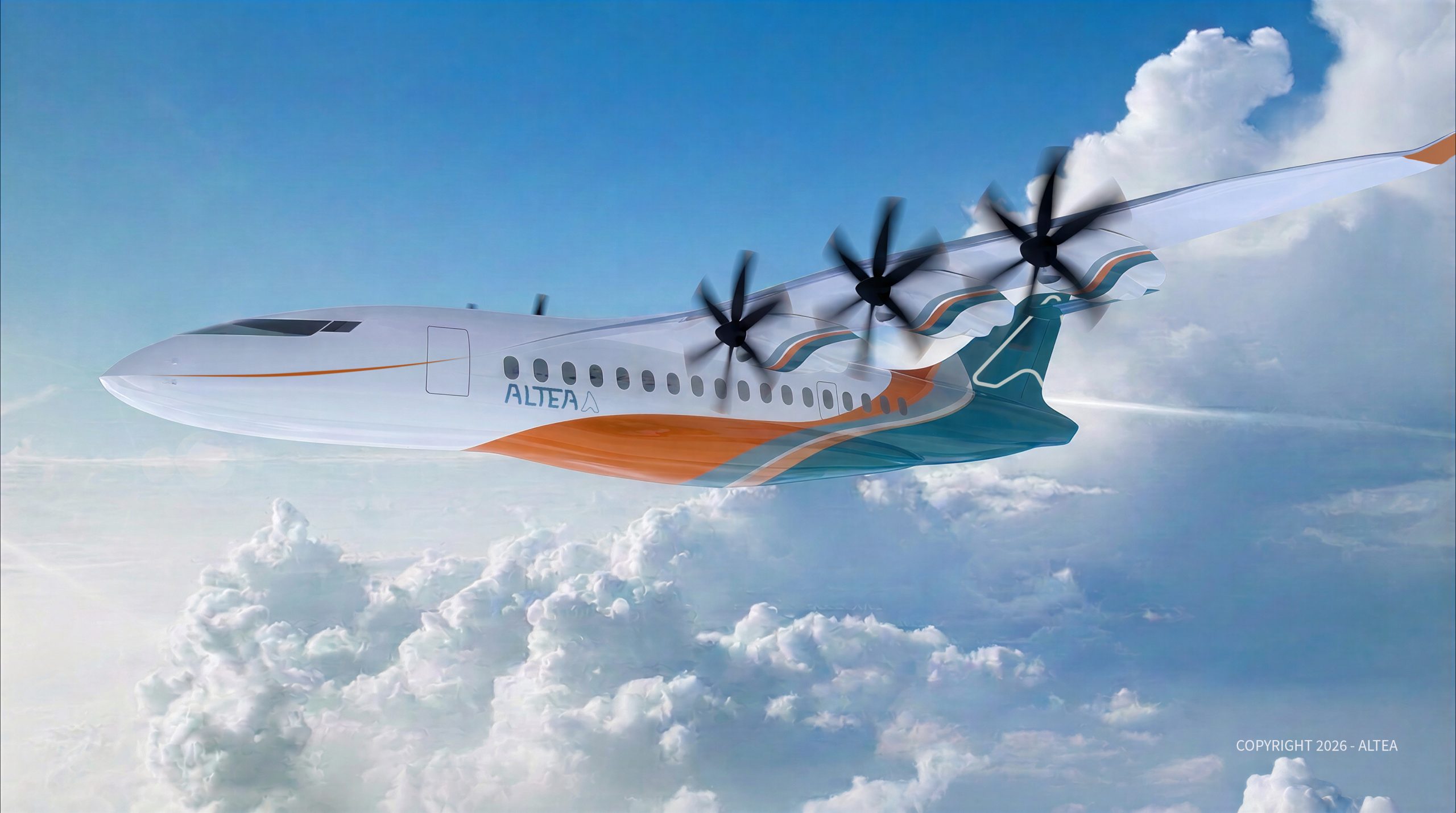
A new white paper from aviation advisory firm ALTEA argues that financing structures and certification timelines, not propulsion technology alone, will determine which electric, hybrid-electric and hydrogen aircraft programmes survive.
Aviation advisory firm ALTEA has published a white paper, “Beyond the Hype: The Real State of Alternative Propulsion for Regional Aviation,” examining the electric, hybrid-electric and hydrogen aircraft landscape as of September 2026. The report identifies a disconnect between the organisations best placed to adopt new propulsion technology first and the routes the technology is ultimately intended to serve: thin regional routes, island connections and essential air services represent natural markets for sub-30-seat electric and hybrid aircraft, but these services often have no fallback capacity if new technology runs into trouble, regardless of how well-resourced the operator happens to be. “The routes with the strongest need for smaller alternative-propulsion aircraft are often those least able to absorb the risk of new technology going wrong, whatever the resources of the operator flying them,” said Chris Holliday, ALTEA Associate, regional aviation specialist and author of the report.
The report also identifies a structural mismatch between aircraft certification timelines and conventional venture-capital return horizons. “Clean-sheet aircraft programmes can require eight to ten years or more to progress from design to entry into commercial service, while venture capital investors typically work against substantially shorter return horizons,” Holliday said. “This mismatch can provide a stronger indication of uncertain programme resilience than propulsion technology alone.” The report examines programmes including Heart Aerospace, BETA Technologies, Electra, Ampaire, ZeroAvia, Aura Aero, Vaeridion, Elysian and JEKTA, distinguishing headline order-book announcements from deeper indicators of programme credibility such as strategic investment, engineering capability, certification progress, established OEM support, manufacturing commitments and the contractual status of customer orders, and cautions against treating letters of intent and memoranda of understanding as equivalent to deposit-backed orders. “Customer interest matters,” Holliday said. “But paper demand and capital depth need to be assessed together.”
WHO OWNS THE BATTERIES
Beyond certification and financing, the report identifies a potential shift in where an aircraft’s lifetime economic value sits: electric and hybrid aircraft manufacturers are forecast to retain control over batteries, powertrain software, health monitoring, operational data and recurring support services. ALTEA’s report cites BETA Technologies’ public-market disclosures, which estimate that an aircraft operating for 20 years could require 18 to 20 sets of replacement batteries and generate approximately $13 million in battery revenue, using the assumptions BETA has disclosed. For lessors and financiers, ALTEA says this raises questions about residual value, battery ownership, second-life value, maintenance economics and the balance of negotiating power between manufacturers and asset owners, compounded by the absence of any transaction history for electric and hybrid aircraft. “Without comparable secondary-market transactions, appraisers and lessors will need much greater access to OEM data – including real-world battery degradation, cycle life, replacement economics and dispatch performance – to establish defensible asset values,” Holliday predicts.
ALTEA does not argue that the industry should wait for every uncertainty to be resolved before investing in alternative propulsion; instead, it says operators, manufacturers, lessors, financiers and public authorities need to decide how those uncertainties are shared, including who should underwrite early-technology risk on vital air-service routes, who carries the downside risk if battery residual-value assumptions prove incorrect, what data manufacturers should provide to appraisers and lessors, and who should finance the infrastructure needed to support new propulsion systems. “The answers could determine not only which aircraft programmes survive, but whether the technology ultimately reaches the regional communities it is designed to serve,” Holliday concluded.
Source and Images: ALTEA