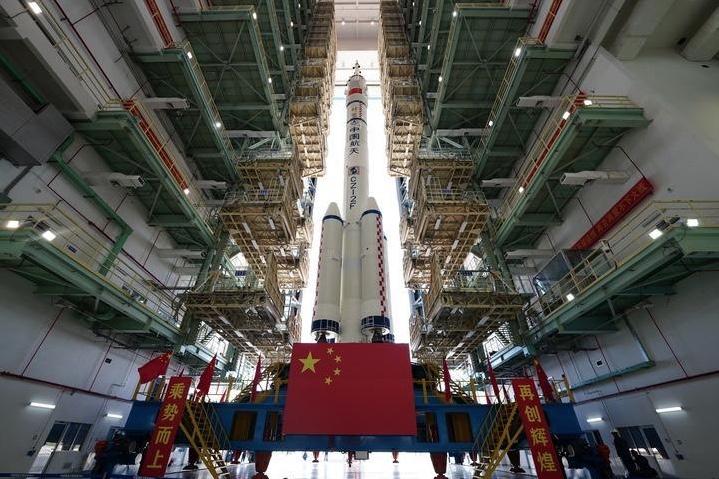
China’s space agency releases a new action plan to boost commercial space development, expand access to national facilities, and promote global cooperation, targeting major growth by 2027.
China has set out an ambitious new roadmap to accelerate the development of its commercial space sector while deepening international collaboration. The action plan, released by the China National Space Administration (CNSA), outlines a two-year programme designed to support commercial space enterprises, expand access to national space infrastructure, and advance emerging space capabilities.
The CNSA has invited China’s commercial space companies to “go global”, encouraging them to work with developing nations to build local satellite-application industries. As part of the initiative, commercial-space projects will be incorporated into China’s broader international cooperation agenda.
Under the plan, the agency will open wider commercial access to its national network of civilian tracking, telemetry and control (TT&C) stations, data-receiving sites, calibration ranges and validation fields. Companies will also be able to utilise major national test assets, including rocket-engine test stands and space-environment simulation facilities.
Commercial players will be selected through open competition to participate in key next-generation space programmes. These areas include advanced propulsion, new satellite platforms and payloads, and integrated communications, navigation and remote-sensing applications.
A national commercial space development fund will be established to accelerate investment across the sector. The government will also broaden procurement to include commercial launch vehicles, satellites, launch sites and TT&C capabilities within national missions. Local authorities have been urged to establish technology-innovation centres focusing on reusable rockets and smart-satellite development, along with open platforms for advanced manufacturing, assembly and testing.
Further support measures include developing commercial launch sites, unifying national space standards, and opening access to space-debris data to enable collision warnings for commercial spacecraft. Companies are encouraged to pioneer new activities such as space-resource utilisation, on-orbit servicing, debris removal, space tourism and in-space biomanufacturing.
The plan targets high-quality development of China’s commercial-space sector by 2027, aligning with the recommendations for the country’s 15th Five-Year Plan (2026–2030), which identifies aerospace as a strategic emerging industry.
SOURC AND IMAGE: Xinhua